Simple Cooking
Tips & Tricks
Shopping list
Simple Cooking
Tips & Tricks
Shopping list
Family Meal Planning: Flexible, Not Perfect
Family Meal Planning: Flexible, Not Perfect
FamFood
|
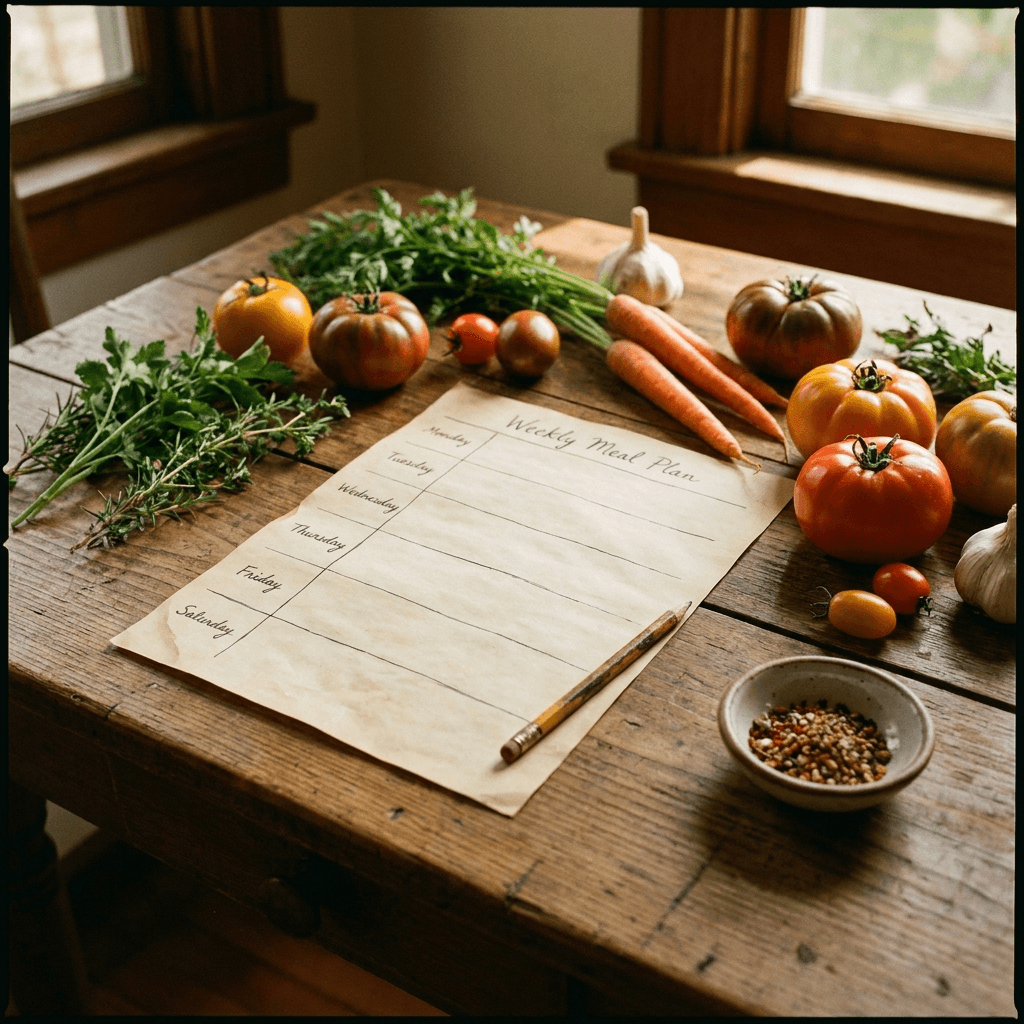
Most families don't fail at meal planning because they lack time. They fail because their system leaves no room for flexibility. A perfect Sunday plan falls apart on Monday the moment a child gets sick or the evening takes longer than expected. And then the entire plan is already in ruins.
With the right structure, meal planning holds up even when the week unfolds differently than planned.
Key Takeaways
German households throw away around €235 worth of food annually, a direct symptom of poor planning (GfK, 2023).
Realistic meal planning takes just 15 to 20 minutes per week, not a hours-long project.
Families with a saved recipe collection plan their week three times faster than those without, according to FamFood user data.
Flexibly planned always beats perfectly planned.
Why Do So Many Families Fail at Meal Planning?
Meal planning fails for most families not from lack of willpower, but from overly rigid weekly plans that leave no room for reality. According to a GfK survey, German households throw away around €235 worth of food annually, a direct symptom of poor meal planning. The "Sunday plan, forgotten by Monday" effect hits families hardest when they view every deviation as failure and abandon the entire system instead of just adjusting one evening.
An elaborate plan that breaks on day one kills the desire to plan again. Usually three reasons lie behind this.
First: too many new recipes at once. When four out of seven dinners are unfamiliar dishes, you get stress instead of relief. New recipes demand concentration, time, and a relaxed kitchen. Not always possible.
Second: missing involvement. When only Mom plans, Dad ends up with the wrong dish and the kids refuse everything anyway. Meal planning works as a family project, not a solo task.
Third: expectations too high. Anyone who believes they'll cook fresh and varied meals every evening from now on overwhelms themselves. What we observe at FamFood: those who plan a maximum of two new dishes per week stick with it far longer. Consistency beats perfection every time.
What Is Family Meal Planning, and What Isn't It?
Family meal planning means roughly planning a week's meals in advance, bundling groceries, and cutting down decision stress at dinnertime. It's not a diet plan, not a cooking course, and not a rigid rulebook. Understanding that relaxes your approach immediately.
A quick look at three related terms often mixed up:
Weekly plan: Overview of which dishes are cooked on which days.
Meal planning: Includes breakfast, lunch, and dinner, often for different family members.
Batch cooking: One or two cooking sessions per week that prepare base ingredients for multiple dishes.
Meal planning can save time, money, and nerves. What it cannot do: replace spontaneity or make every evening run smoothly. If you know that from the start, you'll build a more realistic system.
So the goal is "flexibly planned," not "perfectly planned." Three to four fixed dinners per week, plus one wild-card evening for pizza Friday or a leftover miracle dish: that's meal planning that works in real families.
How Long Does Realistic Meal Planning Take Per Week?
Realistic meal planning takes families roughly 15 to 20 minutes per week, not hours. The decisive difference lies in the recipe collection: those who build on a solid base of 8 to 12 favorite recipes don't have to start from scratch every week. FamFood user data shows that families with a saved pool of at least eight dishes finish weekly planning three times faster than those without. This investment in step two pays for itself starting the very first real planning week.
Blocking a fixed weekday for planning cuts down the mental hurdle considerably. Sunday afternoon, Saturday morning over coffee, Friday evening just before the weekly shop: whatever works, as long as it's on the calendar.
Phase | Time Required | One-Time or Recurring? |
|---|---|---|
Build recipe collection | approx. 60 minutes | One-time (then maintain) |
Create weekly plan | 10 to 15 minutes | Every week |
Put together shopping list | 5 minutes | Every week |
Adjust plan (wild-card evening, leftovers) | 2 to 3 minutes | As needed |
Total ongoing | approx. 15 to 20 minutes | Every week |
Digital recipe collections have a clear time advantage over notebooks here. If you can quickly filter recipes, scale them, and add them to your shopping list, you spend less time on routine. That's no argument against pen and paper for getting started, but an honest note about where the effort grows as your recipe pool expands.
How Do You Build Your First Family Plan?
A good family plan doesn't start with recipes, but with the week itself. Which days are you short on time? When does everyone eat together? Only then come the dishes. Reverse that order and you're planning past reality. In FamFood tests, families who first map out their day types stick to their plan more reliably in week three than in week one.
Day Type | Criteria | Matching Dishes |
|---|---|---|
Quick day | Under 30 minutes, minimal effort | Pasta, skillet dish, soup from leftovers |
Normal day | 30 to 45 minutes, relaxed timing | Casserole, stew, simple wok dish |
Enjoyment day | More time, everyone eats together | Oven dish, more elaborate family recipes |
Wild-card evening | Unpredictable, always plan for one | Pizza, bread, leftovers, delivery |
Involving kids in the choice sharply reduces refusal at the table. When someone gets to pick between two options, they eat the result more willingly. Sounds obvious, but it works reliably in practice.
And: leftovers aren't failure, they're a planning element. Cook a larger pot of lentil soup on Tuesday, and by Thursday you've got the base for a quick meal almost done.
Step 1: Map Out the Week
Look at the week before you open a single recipe. Which days are packed? When does someone come home late? When does everyone eat together? Enter that information before you assign dishes. That creates realistic day types instead of wishful thinking.
Step 2: Build the Recipe Collection
Ten proven favorite recipes are enough to start. Not ten new recipes, but ten dishes your family already knows and likes. This is the pool you draw from every week. Add new recipes gradually, one or two per week, never more at once.
Step 3: Assign Dishes and Plan Leftovers
Now match dishes to days: quick day gets the 20-minute pasta, enjoyment day gets the roast chicken classic. Consciously plan what will come from leftovers. That saves time, money, and a trip to the freezer. With your recipe collection at FamFood, this pool can be built digitally, organized, and fed straight into your shopping list.
What Mistakes Do Families Make When Shopping After Planning?
The most common mistake is an unstructured shopping list sorted by recipe instead of store layout. That costs time, leads to duplicate purchases, and makes you forget items. Wandering back and forth between produce and dairy three times means you skipped an important step in your planning enthusiasm.
Smart shopping lists sort by product category, not by recipe. All vegetables together, all dairy together. Sounds like nitpicking, but with a four-person family it easily saves ten minutes per shop.
Quantity planning is another stumbling block. Larger packs only make sense if the ingredient shows up in several dishes that week, otherwise half lands in the trash. Think about that while planning and you buy more strategically.
Keeping a pantry buffer protects against the "plan completely fell through" evening. Pasta, canned tomatoes, legumes, eggs: a small stock is the quiet safety net for exactly the Wednesday when nothing goes as planned.
According to the Federal Ministry of Food and Agriculture (BMEL), households with structured shopping lists demonstrably make fewer impulse purchases and throw away less food. That's system, not exception.
How Does the Plan Hold Up in Week Two and Three?
Most meal planning systems don't break in week one, but in week three when initial enthusiasm fades and routine hasn't set in yet. Small rituals and a rotating recipe collection prevent exactly that. When you can plan on autopilot, you stick with it.
The rotation principle helps: each week adds one new recipe, the rest comes from the proven pool. No complete reinvention, no creative pressure every Sunday.
A brief family ritual on the weekend, five minutes, where kids get to pick one dish for the week creates buy-in and anticipation. Those who help plan eat with enthusiasm.
What happens if a plan day falls completely through? Nothing. The wild-card evening isn't the exception, it's a fixed part of the plan. Build it in from the start and you don't experience system collapse, just a normal evening.
FamFood user data shows: those with a saved recipe collection of at least eight dishes plan the week three times faster than those without. The investment in step two pays direct dividends.
What Tools Do You Actually Need for Meal Planning?
Pen and paper work for getting started, but quickly hit their limits when recipes need adjusting, sharing, or scaling for different family sizes. A digital solution makes sense once your recipe pool grows. Not before, not after.
Tool | Advantages | Disadvantages | Recommendation |
|---|---|---|---|
Paper weekly plan | No device needed, start immediately | Can't scale, nothing shareable | For your first try |
Excel spreadsheet | Flexible, free | Time-consuming, no recipe pool | For the systematic |
Recipe app | Recipe pool, shopping list, scaling | Learning curve | From week two or three |
What matters isn't the tool, but the saved recipe pool behind it. An empty app account helps as little as an empty notebook. The pool is the system; the tool is just the container.
A recipe app speeds up getting into meal planning exactly when it turns the pool directly into a structured shopping list. That's when digital planning noticeably saves time. What we observe at FamFood: the switch from notebook to app almost always happens when the handwritten pool has grown to twelve or more recipes, you're losing track, and your shopping list no longer writes itself.
Frequently Asked Questions
How Many Meals Should I Plan Per Week?
Start with three to four dinners per week. Anyone planning all seven evenings puts themselves under pressure and quickly loses motivation. Breakfast and lunch typically run more on autopilot and need less planning. Better to plan little and follow through consistently than to plan big and give up.
Can Meal Planning Really Save Money, and If So, How Much?
Yes, noticeably. German households throw away around €235 in food annually according to GfK. Those who plan structurally and shop strategically cut that loss significantly. Realistically you save 30 to 80 euros per month depending on household size, especially through fewer impulse buys and less fresh produce wasted.
What Do I Do If My Kids Reject Certain Dishes?
Involve them beforehand. Give them two options to choose from and you fight far less at the table. Plus the "safe component" principle helps: one part of the dish should always be something the child knows and likes. Completely new dishes with no familiar elements create more resistance than necessary.
How Do I Plan When My Family Has Different Mealtimes?
Day types help here too. On days when not everyone eats together, put dishes on the plan that reheat or portion easily: soups, casseroles, stews. Map those days as "separate evenings" from the start and you're already looking for the right recipes.
At What Age Can Kids Help With Meal Planning?
From around age four, kids can pick between two dishes. From six onward, they can take simple tasks: choose a dish from a short list or help write the shopping list. Treating meal planning as a family project isn't idealistic, it's one of the most effective ways to prevent table refusal.
About FamFood
FamFood is a digital family kitchen for anyone who loves cooking but doesn't want to start from zero every evening. We gather what actually works in real families and build tools that make everyday simpler. No perfection promised, but definitely less chaos.
Most families don't fail at meal planning because they lack time. They fail because their system leaves no room for flexibility. A perfect Sunday plan falls apart on Monday the moment a child gets sick or the evening takes longer than expected. And then the entire plan is already in ruins.
With the right structure, meal planning holds up even when the week unfolds differently than planned.
Key Takeaways
German households throw away around €235 worth of food annually, a direct symptom of poor planning (GfK, 2023).
Realistic meal planning takes just 15 to 20 minutes per week, not a hours-long project.
Families with a saved recipe collection plan their week three times faster than those without, according to FamFood user data.
Flexibly planned always beats perfectly planned.
Why Do So Many Families Fail at Meal Planning?
Meal planning fails for most families not from lack of willpower, but from overly rigid weekly plans that leave no room for reality. According to a GfK survey, German households throw away around €235 worth of food annually, a direct symptom of poor meal planning. The "Sunday plan, forgotten by Monday" effect hits families hardest when they view every deviation as failure and abandon the entire system instead of just adjusting one evening.
An elaborate plan that breaks on day one kills the desire to plan again. Usually three reasons lie behind this.
First: too many new recipes at once. When four out of seven dinners are unfamiliar dishes, you get stress instead of relief. New recipes demand concentration, time, and a relaxed kitchen. Not always possible.
Second: missing involvement. When only Mom plans, Dad ends up with the wrong dish and the kids refuse everything anyway. Meal planning works as a family project, not a solo task.
Third: expectations too high. Anyone who believes they'll cook fresh and varied meals every evening from now on overwhelms themselves. What we observe at FamFood: those who plan a maximum of two new dishes per week stick with it far longer. Consistency beats perfection every time.
What Is Family Meal Planning, and What Isn't It?
Family meal planning means roughly planning a week's meals in advance, bundling groceries, and cutting down decision stress at dinnertime. It's not a diet plan, not a cooking course, and not a rigid rulebook. Understanding that relaxes your approach immediately.
A quick look at three related terms often mixed up:
Weekly plan: Overview of which dishes are cooked on which days.
Meal planning: Includes breakfast, lunch, and dinner, often for different family members.
Batch cooking: One or two cooking sessions per week that prepare base ingredients for multiple dishes.
Meal planning can save time, money, and nerves. What it cannot do: replace spontaneity or make every evening run smoothly. If you know that from the start, you'll build a more realistic system.
So the goal is "flexibly planned," not "perfectly planned." Three to four fixed dinners per week, plus one wild-card evening for pizza Friday or a leftover miracle dish: that's meal planning that works in real families.
How Long Does Realistic Meal Planning Take Per Week?
Realistic meal planning takes families roughly 15 to 20 minutes per week, not hours. The decisive difference lies in the recipe collection: those who build on a solid base of 8 to 12 favorite recipes don't have to start from scratch every week. FamFood user data shows that families with a saved pool of at least eight dishes finish weekly planning three times faster than those without. This investment in step two pays for itself starting the very first real planning week.
Blocking a fixed weekday for planning cuts down the mental hurdle considerably. Sunday afternoon, Saturday morning over coffee, Friday evening just before the weekly shop: whatever works, as long as it's on the calendar.
Phase | Time Required | One-Time or Recurring? |
|---|---|---|
Build recipe collection | approx. 60 minutes | One-time (then maintain) |
Create weekly plan | 10 to 15 minutes | Every week |
Put together shopping list | 5 minutes | Every week |
Adjust plan (wild-card evening, leftovers) | 2 to 3 minutes | As needed |
Total ongoing | approx. 15 to 20 minutes | Every week |
Digital recipe collections have a clear time advantage over notebooks here. If you can quickly filter recipes, scale them, and add them to your shopping list, you spend less time on routine. That's no argument against pen and paper for getting started, but an honest note about where the effort grows as your recipe pool expands.
How Do You Build Your First Family Plan?
A good family plan doesn't start with recipes, but with the week itself. Which days are you short on time? When does everyone eat together? Only then come the dishes. Reverse that order and you're planning past reality. In FamFood tests, families who first map out their day types stick to their plan more reliably in week three than in week one.
Day Type | Criteria | Matching Dishes |
|---|---|---|
Quick day | Under 30 minutes, minimal effort | Pasta, skillet dish, soup from leftovers |
Normal day | 30 to 45 minutes, relaxed timing | Casserole, stew, simple wok dish |
Enjoyment day | More time, everyone eats together | Oven dish, more elaborate family recipes |
Wild-card evening | Unpredictable, always plan for one | Pizza, bread, leftovers, delivery |
Involving kids in the choice sharply reduces refusal at the table. When someone gets to pick between two options, they eat the result more willingly. Sounds obvious, but it works reliably in practice.
And: leftovers aren't failure, they're a planning element. Cook a larger pot of lentil soup on Tuesday, and by Thursday you've got the base for a quick meal almost done.
Step 1: Map Out the Week
Look at the week before you open a single recipe. Which days are packed? When does someone come home late? When does everyone eat together? Enter that information before you assign dishes. That creates realistic day types instead of wishful thinking.
Step 2: Build the Recipe Collection
Ten proven favorite recipes are enough to start. Not ten new recipes, but ten dishes your family already knows and likes. This is the pool you draw from every week. Add new recipes gradually, one or two per week, never more at once.
Step 3: Assign Dishes and Plan Leftovers
Now match dishes to days: quick day gets the 20-minute pasta, enjoyment day gets the roast chicken classic. Consciously plan what will come from leftovers. That saves time, money, and a trip to the freezer. With your recipe collection at FamFood, this pool can be built digitally, organized, and fed straight into your shopping list.
What Mistakes Do Families Make When Shopping After Planning?
The most common mistake is an unstructured shopping list sorted by recipe instead of store layout. That costs time, leads to duplicate purchases, and makes you forget items. Wandering back and forth between produce and dairy three times means you skipped an important step in your planning enthusiasm.
Smart shopping lists sort by product category, not by recipe. All vegetables together, all dairy together. Sounds like nitpicking, but with a four-person family it easily saves ten minutes per shop.
Quantity planning is another stumbling block. Larger packs only make sense if the ingredient shows up in several dishes that week, otherwise half lands in the trash. Think about that while planning and you buy more strategically.
Keeping a pantry buffer protects against the "plan completely fell through" evening. Pasta, canned tomatoes, legumes, eggs: a small stock is the quiet safety net for exactly the Wednesday when nothing goes as planned.
According to the Federal Ministry of Food and Agriculture (BMEL), households with structured shopping lists demonstrably make fewer impulse purchases and throw away less food. That's system, not exception.
How Does the Plan Hold Up in Week Two and Three?
Most meal planning systems don't break in week one, but in week three when initial enthusiasm fades and routine hasn't set in yet. Small rituals and a rotating recipe collection prevent exactly that. When you can plan on autopilot, you stick with it.
The rotation principle helps: each week adds one new recipe, the rest comes from the proven pool. No complete reinvention, no creative pressure every Sunday.
A brief family ritual on the weekend, five minutes, where kids get to pick one dish for the week creates buy-in and anticipation. Those who help plan eat with enthusiasm.
What happens if a plan day falls completely through? Nothing. The wild-card evening isn't the exception, it's a fixed part of the plan. Build it in from the start and you don't experience system collapse, just a normal evening.
FamFood user data shows: those with a saved recipe collection of at least eight dishes plan the week three times faster than those without. The investment in step two pays direct dividends.
What Tools Do You Actually Need for Meal Planning?
Pen and paper work for getting started, but quickly hit their limits when recipes need adjusting, sharing, or scaling for different family sizes. A digital solution makes sense once your recipe pool grows. Not before, not after.
Tool | Advantages | Disadvantages | Recommendation |
|---|---|---|---|
Paper weekly plan | No device needed, start immediately | Can't scale, nothing shareable | For your first try |
Excel spreadsheet | Flexible, free | Time-consuming, no recipe pool | For the systematic |
Recipe app | Recipe pool, shopping list, scaling | Learning curve | From week two or three |
What matters isn't the tool, but the saved recipe pool behind it. An empty app account helps as little as an empty notebook. The pool is the system; the tool is just the container.
A recipe app speeds up getting into meal planning exactly when it turns the pool directly into a structured shopping list. That's when digital planning noticeably saves time. What we observe at FamFood: the switch from notebook to app almost always happens when the handwritten pool has grown to twelve or more recipes, you're losing track, and your shopping list no longer writes itself.
Frequently Asked Questions
How Many Meals Should I Plan Per Week?
Start with three to four dinners per week. Anyone planning all seven evenings puts themselves under pressure and quickly loses motivation. Breakfast and lunch typically run more on autopilot and need less planning. Better to plan little and follow through consistently than to plan big and give up.
Can Meal Planning Really Save Money, and If So, How Much?
Yes, noticeably. German households throw away around €235 in food annually according to GfK. Those who plan structurally and shop strategically cut that loss significantly. Realistically you save 30 to 80 euros per month depending on household size, especially through fewer impulse buys and less fresh produce wasted.
What Do I Do If My Kids Reject Certain Dishes?
Involve them beforehand. Give them two options to choose from and you fight far less at the table. Plus the "safe component" principle helps: one part of the dish should always be something the child knows and likes. Completely new dishes with no familiar elements create more resistance than necessary.
How Do I Plan When My Family Has Different Mealtimes?
Day types help here too. On days when not everyone eats together, put dishes on the plan that reheat or portion easily: soups, casseroles, stews. Map those days as "separate evenings" from the start and you're already looking for the right recipes.
At What Age Can Kids Help With Meal Planning?
From around age four, kids can pick between two dishes. From six onward, they can take simple tasks: choose a dish from a short list or help write the shopping list. Treating meal planning as a family project isn't idealistic, it's one of the most effective ways to prevent table refusal.
About FamFood
FamFood is a digital family kitchen for anyone who loves cooking but doesn't want to start from zero every evening. We gather what actually works in real families and build tools that make everyday simpler. No perfection promised, but definitely less chaos.