Simple Cooking
Tips & Tricks
Inspiration
Simple Cooking
Tips & Tricks
Inspiration
Teens in the Kitchen: When & How It Works
Teens in the Kitchen: When & How It Works
FamFood
|
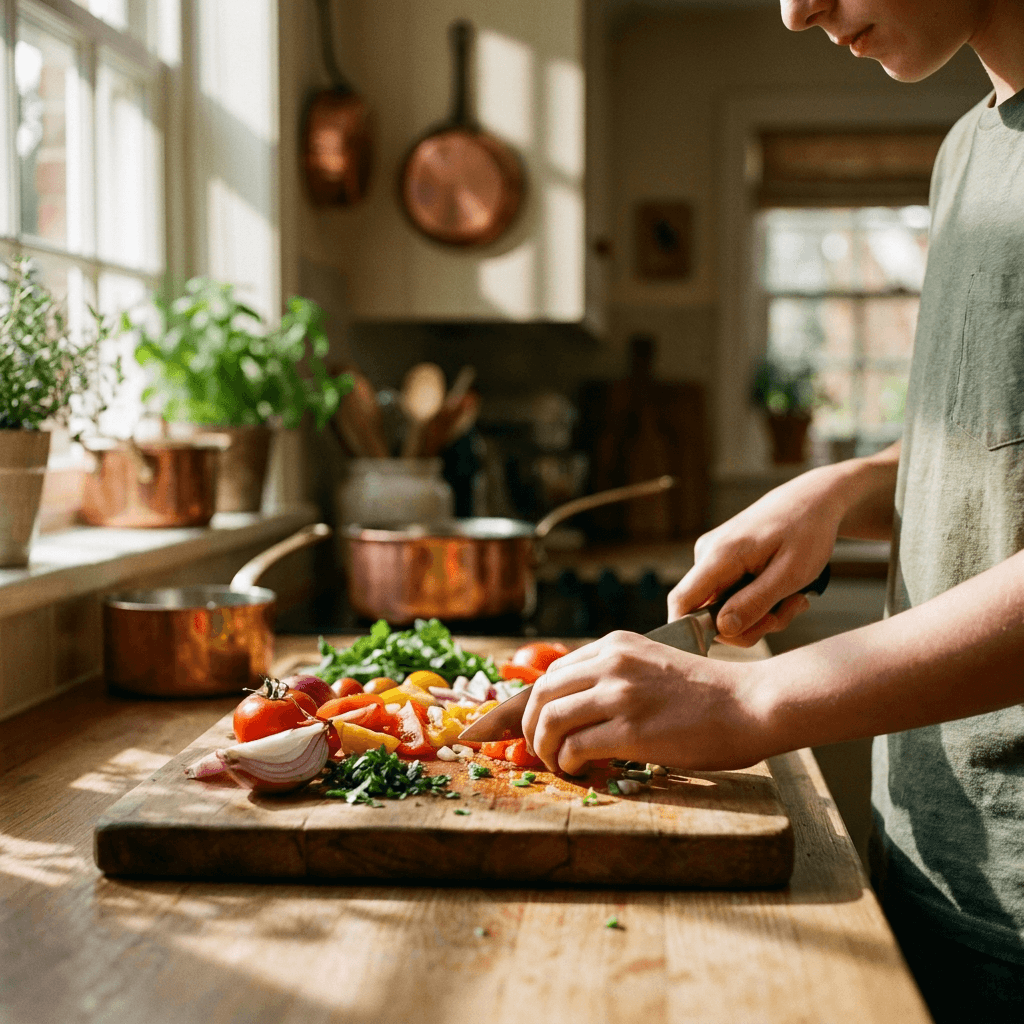
A 14-year-old sets the plate down. Pasta Aglio e Olio, cooked alone, without help. The family watches. Someone tastes. Then nobody says anything, because the food is actually really good.
Something shifts in that moment. Not just for the teenager, but for the whole table dynamic. Suddenly the child isn't an assistant cutting carrots anymore. They're the person who made dinner tonight.
That's what this post is about: not helping out, but truly taking charge.
The essentials at a glance
By ages 13–14, most teenagers have the cognitive and motor skills to cook full dishes independently, if introduced gradually.
Autonomy is the strongest motivator: don't prescribe a recipe, suggest a theme.
Among the top 10 recipes saved by FamFood families with teenagers, 7 take under 20 minutes, with pasta, scrambled eggs, and pancakes leading the list.
Mistakes are part of it. Your reaction as a parent decides whether they cook again.
When can teenagers really cook independently?
By 13 to 14 years old, most teenagers have the motor and cognitive skills to cook a full dish unsupervised, if they've been introduced gradually. This isn't opinion, it's developmental psychology.
Around age 12, the prefrontal cortex begins noticeably developing planning ability and impulse control. That means: a 13-year-old can think through a cooking sequence step by step, handle hot pans with caution, and react to unexpected situations, like a sauce starting to burn. Younger children can do this to some extent, but it's more reliable with teenagers.
The key difference from elementary-school kids is how they handle risk. Teenagers can work responsibly with hot oil and sharp knives as long as the rules are explained clearly, not as prohibitions but as craft.
What do teens want to cook first? In FamFood user families, pasta, scrambled eggs, and pancakes top the list. All three share one crucial advantage: quick results and immediate feedback. Get something edible on the plate in 15 minutes, and they'll keep going.
Which kitchen techniques do teenagers learn first?
The three essential entry-level techniques for teenagers are safe knife skills with a chef's knife, sautéing in a pan, and tasting deliberately to adjust flavor yourself, not by recipe. Master these three, and any simple recipe becomes improvisation.
Technique | What It Teaches | Practice Recipe |
|---|---|---|
Claw grip when cutting | Finger safety, even slices | Onions & carrots |
Sautéing at medium heat | Maillard reaction, roasted flavor | Sautéed mushrooms |
Tasting to season | Taking responsibility instead of measuring | Any soup, any sauce |
Heating fat correctly | Prevents sticking, better texture | Scrambled eggs, chicken strips |
Judging pasta al dente | Developing a feel for cooking times | Spaghetti by package time |
Safety rules matter, but they shouldn't feel patronizing. A cut-resistant glove for the first week isn't a sign of distrust, it's professional equipment. Oven mitts always stay within reach. And oil is never left unattended on high heat.
Among the top 10 recipes in FamFood families with teenagers, 7 take under 20 minutes. What they share: pan techniques beat pot techniques. Sautéing gives instant feedback; a pot of boiling water just waits.
Holding a knife properly: The claw grip
The claw grip isn't complicated. Fingertips curve inward, knuckles guide the blade. Practice: slice one onion and one carrot, deliberately slow. After three rounds, the grip sticks. Once someone understands why the grip is safer, they keep using it without reminding.
Pan before pot: Why sautéing is the better starting point
A pot of boiling water forgives little timing mistakes. A pan gives instant feedback: color changes, oil smells different, meat shrinks. It all happens in real time and develops cooking instinct much faster than waiting at a stovetop. That's why sautéing is the better first step for teenagers.
5 dishes teenagers can proudly serve on their own
The best entry-level dishes for teenagers deliver fast results in under 30 minutes, few ingredients, and real wow-factor at the table. Pasta Aglio e Olio, scrambled eggs on toast, fried rice, pancakes, and simple chicken strips in cream sauce check every box.
Dish | Ingredients | Time | Main Skill |
|---|---|---|---|
Pasta Aglio e Olio | 5 basics | 20 min | Browning garlic, using pasta water |
Scrambled eggs on toast | 3 ingredients | 5 min | Eggs in the pan, timing |
Fried rice | Leftovers + 2 eggs | 15 min | Pan technique, using up scraps |
Pancakes | 4 basics | 25 min | Batter, flipping without tearing |
Chicken strips in cream sauce | 6 ingredients | 30 min | Raw meat, tasting to season |
Pasta Aglio e Olio is the perfect starter: just spaghetti, garlic, olive oil, red pepper flakes, and parsley. Full control lies with the cook, not the recipe. Once someone realizes that pasta cooking water binds the sauce, they've learned a real trick.
Fried rice is smart use of leftovers. Yesterday's rice, a couple of eggs, soy sauce, whatever's in the fridge. Master that, and you earn applause while cutting food waste.
Pancakes are first baking without a mold, and flipping without tearing is a genuine success moment. With chicken strips in cream sauce comes first-time handling of raw meat: hygiene, cooking through, feeling the temperature. That's a skill that stays.
How do you get a teenager to cook in the first place?
Teenagers cook when autonomy comes before instruction. Not helping, but responsibility: a fixed cooking night per week, recipe choice without comment, family eats what lands on the table. Self-Determination Theory by Deci and Ryan backs it clearly: independence is the strongest motivator in this age group, not duty, not reward. A teenager helping on instruction feels like an apprentice. One planning and executing dinner on their own feels like the cook. The latter builds lasting pride. The former doesn't fuel motivation.
The difference matters. Here's how it works in practice: once a week, say Tuesday, the kitchen is teenager territory. No comment on recipe choice, no "but we usually do it differently." The family eats what's served.
What we see again and again in FamFood families: many teenagers cook at first because they want to film it. A quick video for friends, a reel for their story. That's not a problem, that's leverage. When you cook for an audience, you cook more carefully. And soon enough, only taste matters.
A digital recipe collection like FamFood lets teenagers search recipes themselves, save them, and help plan meals. Ownership starts the moment they choose.
What happens when it goes wrong, and why that's good
Burnt onions, oversalty sauce, overcooked pasta: nearly every teen cooking attempt ends in at least one failure. That's the most important learning moment, as long as your reaction is right. Eye-rolling, sighing, or immediately taking over the spoon kills motivation more thoroughly than any ruined plate.
The first time too much chili hits the pan is unforgettable, in the best way. It burns, everyone laughs, and that teenager knows for life how much chili is too much. No textbook teaches that.
The better response: stay calm, ask a problem-solving question. "What might help now?" If the sauce is too salty, a splash of cream or a raw potato in the pot can save it. The goal isn't a perfect plate but learning to repair. Someone who knows how to rescue a failed sauce cooks with more confidence.
More on what can actually be salvaged in the kitchen is in the post Rescue a Sauce: What to Do When It Goes Wrong.
How do you plan the weekly cooking schedule with teenagers?
A fixed role in the week's plan, say teenager cooks Tuesday and Friday, builds routine without pressure. The key: pick recipes together beforehand so they feel ownership, not obligation.
The structure is simple. Sunday evening, ten minutes: who cooks when? What do we need? The teenager picks their dish, you write the shopping list together. Shopping itself is already a lesson: how much does a portion cost? What's still in the fridge? What expires soon?
When you involve teenagers early in family meal planning, you're not adding burden, you're creating real inclusion. The difference between "you're cooking today" and "what do you want to cook this week?" is psychologically huge.
Which kitchen skills actually prepare teenagers for real life?
Someone who by 16 can cook a simple weekday dinner, realistically assess the fridge, and stay within a budget launches into their first place much better than someone who only helped with dishes.
The German Federal Ministry of Food and Agriculture (BMEL) emphasizes in its 2023 nutrition education strategy that cooking competence in teenage years correlates directly with healthier eating patterns in adulthood. It's proven: teenagers who learn to cook eat fewer ready-meals as adults and spend less on eating out.
Three concrete life skills from the kitchen:
Budget cooking: What does a portion really cost? Pasta Aglio e Olio for four people runs under €2. That's not theory, that's math at the stove.
Fridge checks: What's still good, what's past it? Master that, and you waste less and save more. According to the German Federal Statistical Office, roughly 78 kg of food per person ends up in the trash each year in Germany.
Using scraps: Fried rice from yesterday isn't improvising out of desperation. It's cooking with intention.
Frequently asked questions
At what age can teenagers cook alone at the stove?
By around 12 to 13, teenagers can safely and independently cook at the stove if introduced gradually. Motor control and planning ability are developed enough to handle a knife, hot oil, and cooking times responsibly. Clear safety rules from the start are key.
How do I teach my teenager to use a knife?
Show the claw grip once and have them do it right away: fingertips inward, knuckles guiding the blade. Then have them slice onions and carrots, deliberately slow. After three practice rounds, it sticks. A cut-resistant glove for the first few weeks isn't a sign of doubt, it's standard in pro kitchens.
What are simple recipes teenagers can cook alone?
Pasta Aglio e Olio (5 ingredients, 20 minutes), scrambled eggs on toast (3 ingredients, 5 minutes), fried rice from leftovers, pancakes, and chicken strips in cream sauce. All five need few ingredients, finish in under 30 minutes, and deliver instant success at the table.
How do I motivate my teenager to cook?
Don't ask for help, give responsibility. "You're cooking tonight, pick something" works better than any instruction. Start a fixed cooking night once a week, no comment on their choice. When they pick and cook the meal, they'll eat it too.
What safety rules apply in the kitchen for teenagers?
The four most important: always use the claw grip with a knife. Never leave hot oil unattended on high heat. Oven mitts stay within reach. Never cut raw meat and vegetables on the same board. Explain these rules briefly, don't just post them, and they'll actually follow them.
Takeaway
Teenagers in the kitchen don't need instruction in helping. They need space to take over. Cook dinner at 14, and by 18 they'll know how to feed themselves without thinking twice.
The first step is the smallest: hand over Tuesday's kitchen, no safety net. What happens next is often better than expected.
About FamFood: We're a team of parents, home cooks, and tech enthusiasts who preserve family recipes before they're forgotten and make the daily cooking routine a little easier. What we see every day: the best meals don't come from perfection, they come from the courage to try.
A 14-year-old sets the plate down. Pasta Aglio e Olio, cooked alone, without help. The family watches. Someone tastes. Then nobody says anything, because the food is actually really good.
Something shifts in that moment. Not just for the teenager, but for the whole table dynamic. Suddenly the child isn't an assistant cutting carrots anymore. They're the person who made dinner tonight.
That's what this post is about: not helping out, but truly taking charge.
The essentials at a glance
By ages 13–14, most teenagers have the cognitive and motor skills to cook full dishes independently, if introduced gradually.
Autonomy is the strongest motivator: don't prescribe a recipe, suggest a theme.
Among the top 10 recipes saved by FamFood families with teenagers, 7 take under 20 minutes, with pasta, scrambled eggs, and pancakes leading the list.
Mistakes are part of it. Your reaction as a parent decides whether they cook again.
When can teenagers really cook independently?
By 13 to 14 years old, most teenagers have the motor and cognitive skills to cook a full dish unsupervised, if they've been introduced gradually. This isn't opinion, it's developmental psychology.
Around age 12, the prefrontal cortex begins noticeably developing planning ability and impulse control. That means: a 13-year-old can think through a cooking sequence step by step, handle hot pans with caution, and react to unexpected situations, like a sauce starting to burn. Younger children can do this to some extent, but it's more reliable with teenagers.
The key difference from elementary-school kids is how they handle risk. Teenagers can work responsibly with hot oil and sharp knives as long as the rules are explained clearly, not as prohibitions but as craft.
What do teens want to cook first? In FamFood user families, pasta, scrambled eggs, and pancakes top the list. All three share one crucial advantage: quick results and immediate feedback. Get something edible on the plate in 15 minutes, and they'll keep going.
Which kitchen techniques do teenagers learn first?
The three essential entry-level techniques for teenagers are safe knife skills with a chef's knife, sautéing in a pan, and tasting deliberately to adjust flavor yourself, not by recipe. Master these three, and any simple recipe becomes improvisation.
Technique | What It Teaches | Practice Recipe |
|---|---|---|
Claw grip when cutting | Finger safety, even slices | Onions & carrots |
Sautéing at medium heat | Maillard reaction, roasted flavor | Sautéed mushrooms |
Tasting to season | Taking responsibility instead of measuring | Any soup, any sauce |
Heating fat correctly | Prevents sticking, better texture | Scrambled eggs, chicken strips |
Judging pasta al dente | Developing a feel for cooking times | Spaghetti by package time |
Safety rules matter, but they shouldn't feel patronizing. A cut-resistant glove for the first week isn't a sign of distrust, it's professional equipment. Oven mitts always stay within reach. And oil is never left unattended on high heat.
Among the top 10 recipes in FamFood families with teenagers, 7 take under 20 minutes. What they share: pan techniques beat pot techniques. Sautéing gives instant feedback; a pot of boiling water just waits.
Holding a knife properly: The claw grip
The claw grip isn't complicated. Fingertips curve inward, knuckles guide the blade. Practice: slice one onion and one carrot, deliberately slow. After three rounds, the grip sticks. Once someone understands why the grip is safer, they keep using it without reminding.
Pan before pot: Why sautéing is the better starting point
A pot of boiling water forgives little timing mistakes. A pan gives instant feedback: color changes, oil smells different, meat shrinks. It all happens in real time and develops cooking instinct much faster than waiting at a stovetop. That's why sautéing is the better first step for teenagers.
5 dishes teenagers can proudly serve on their own
The best entry-level dishes for teenagers deliver fast results in under 30 minutes, few ingredients, and real wow-factor at the table. Pasta Aglio e Olio, scrambled eggs on toast, fried rice, pancakes, and simple chicken strips in cream sauce check every box.
Dish | Ingredients | Time | Main Skill |
|---|---|---|---|
Pasta Aglio e Olio | 5 basics | 20 min | Browning garlic, using pasta water |
Scrambled eggs on toast | 3 ingredients | 5 min | Eggs in the pan, timing |
Fried rice | Leftovers + 2 eggs | 15 min | Pan technique, using up scraps |
Pancakes | 4 basics | 25 min | Batter, flipping without tearing |
Chicken strips in cream sauce | 6 ingredients | 30 min | Raw meat, tasting to season |
Pasta Aglio e Olio is the perfect starter: just spaghetti, garlic, olive oil, red pepper flakes, and parsley. Full control lies with the cook, not the recipe. Once someone realizes that pasta cooking water binds the sauce, they've learned a real trick.
Fried rice is smart use of leftovers. Yesterday's rice, a couple of eggs, soy sauce, whatever's in the fridge. Master that, and you earn applause while cutting food waste.
Pancakes are first baking without a mold, and flipping without tearing is a genuine success moment. With chicken strips in cream sauce comes first-time handling of raw meat: hygiene, cooking through, feeling the temperature. That's a skill that stays.
How do you get a teenager to cook in the first place?
Teenagers cook when autonomy comes before instruction. Not helping, but responsibility: a fixed cooking night per week, recipe choice without comment, family eats what lands on the table. Self-Determination Theory by Deci and Ryan backs it clearly: independence is the strongest motivator in this age group, not duty, not reward. A teenager helping on instruction feels like an apprentice. One planning and executing dinner on their own feels like the cook. The latter builds lasting pride. The former doesn't fuel motivation.
The difference matters. Here's how it works in practice: once a week, say Tuesday, the kitchen is teenager territory. No comment on recipe choice, no "but we usually do it differently." The family eats what's served.
What we see again and again in FamFood families: many teenagers cook at first because they want to film it. A quick video for friends, a reel for their story. That's not a problem, that's leverage. When you cook for an audience, you cook more carefully. And soon enough, only taste matters.
A digital recipe collection like FamFood lets teenagers search recipes themselves, save them, and help plan meals. Ownership starts the moment they choose.
What happens when it goes wrong, and why that's good
Burnt onions, oversalty sauce, overcooked pasta: nearly every teen cooking attempt ends in at least one failure. That's the most important learning moment, as long as your reaction is right. Eye-rolling, sighing, or immediately taking over the spoon kills motivation more thoroughly than any ruined plate.
The first time too much chili hits the pan is unforgettable, in the best way. It burns, everyone laughs, and that teenager knows for life how much chili is too much. No textbook teaches that.
The better response: stay calm, ask a problem-solving question. "What might help now?" If the sauce is too salty, a splash of cream or a raw potato in the pot can save it. The goal isn't a perfect plate but learning to repair. Someone who knows how to rescue a failed sauce cooks with more confidence.
More on what can actually be salvaged in the kitchen is in the post Rescue a Sauce: What to Do When It Goes Wrong.
How do you plan the weekly cooking schedule with teenagers?
A fixed role in the week's plan, say teenager cooks Tuesday and Friday, builds routine without pressure. The key: pick recipes together beforehand so they feel ownership, not obligation.
The structure is simple. Sunday evening, ten minutes: who cooks when? What do we need? The teenager picks their dish, you write the shopping list together. Shopping itself is already a lesson: how much does a portion cost? What's still in the fridge? What expires soon?
When you involve teenagers early in family meal planning, you're not adding burden, you're creating real inclusion. The difference between "you're cooking today" and "what do you want to cook this week?" is psychologically huge.
Which kitchen skills actually prepare teenagers for real life?
Someone who by 16 can cook a simple weekday dinner, realistically assess the fridge, and stay within a budget launches into their first place much better than someone who only helped with dishes.
The German Federal Ministry of Food and Agriculture (BMEL) emphasizes in its 2023 nutrition education strategy that cooking competence in teenage years correlates directly with healthier eating patterns in adulthood. It's proven: teenagers who learn to cook eat fewer ready-meals as adults and spend less on eating out.
Three concrete life skills from the kitchen:
Budget cooking: What does a portion really cost? Pasta Aglio e Olio for four people runs under €2. That's not theory, that's math at the stove.
Fridge checks: What's still good, what's past it? Master that, and you waste less and save more. According to the German Federal Statistical Office, roughly 78 kg of food per person ends up in the trash each year in Germany.
Using scraps: Fried rice from yesterday isn't improvising out of desperation. It's cooking with intention.
Frequently asked questions
At what age can teenagers cook alone at the stove?
By around 12 to 13, teenagers can safely and independently cook at the stove if introduced gradually. Motor control and planning ability are developed enough to handle a knife, hot oil, and cooking times responsibly. Clear safety rules from the start are key.
How do I teach my teenager to use a knife?
Show the claw grip once and have them do it right away: fingertips inward, knuckles guiding the blade. Then have them slice onions and carrots, deliberately slow. After three practice rounds, it sticks. A cut-resistant glove for the first few weeks isn't a sign of doubt, it's standard in pro kitchens.
What are simple recipes teenagers can cook alone?
Pasta Aglio e Olio (5 ingredients, 20 minutes), scrambled eggs on toast (3 ingredients, 5 minutes), fried rice from leftovers, pancakes, and chicken strips in cream sauce. All five need few ingredients, finish in under 30 minutes, and deliver instant success at the table.
How do I motivate my teenager to cook?
Don't ask for help, give responsibility. "You're cooking tonight, pick something" works better than any instruction. Start a fixed cooking night once a week, no comment on their choice. When they pick and cook the meal, they'll eat it too.
What safety rules apply in the kitchen for teenagers?
The four most important: always use the claw grip with a knife. Never leave hot oil unattended on high heat. Oven mitts stay within reach. Never cut raw meat and vegetables on the same board. Explain these rules briefly, don't just post them, and they'll actually follow them.
Takeaway
Teenagers in the kitchen don't need instruction in helping. They need space to take over. Cook dinner at 14, and by 18 they'll know how to feed themselves without thinking twice.
The first step is the smallest: hand over Tuesday's kitchen, no safety net. What happens next is often better than expected.
About FamFood: We're a team of parents, home cooks, and tech enthusiasts who preserve family recipes before they're forgotten and make the daily cooking routine a little easier. What we see every day: the best meals don't come from perfection, they come from the courage to try.