Tips & Tricks
Simple Cooking
Recipes
Tips & Tricks
Simple Cooking
Recipes
Save Your Sauce: Quick Fixes When Things Go Wrong
Save Your Sauce: Quick Fixes When Things Go Wrong
FamFood
|
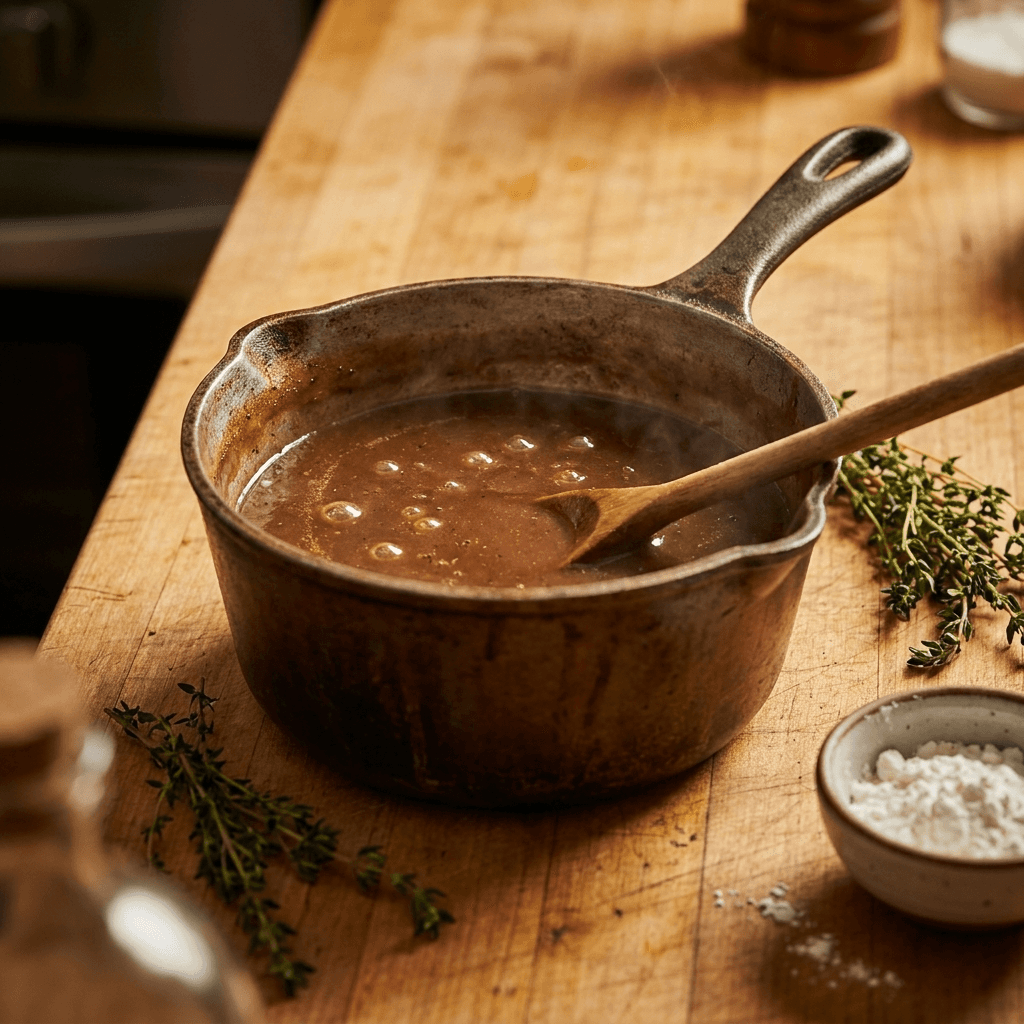
Your roast dinner is almost perfect. Table set, everyone hungry, the aroma filling the room. Then you glance in the pot: the sauce is watery, lumpy, or so salty it's barely edible.
This moment happens in every kitchen. But it doesn't have to ruin the evening. With the right moves, a seemingly botched sauce can be rescued in under three minutes, whether it's gravy, béchamel, or tomato sauce.
Key Takeaways
Thin sauce rescue: 1 tsp cornstarch per 200 ml liquid, mix cold, stir in, bring to quick boil.
Too salty sauce: Dilute with unsalted broth works, the potato trick barely does anything.
Lumps and broken sauce: Immersion blender or sieve solves the problem in seconds.
Three core techniques handle 90% of all sauce emergencies.
Why does a sauce go wrong in the first place?
The three most common causes are excessive heat, wrong ratios of liquid to thickener, and seasoning too early. According to the German Nutrition Centre (BZfE), sauce problems rank among the most frustrating moments in kitchens with children, precisely because time pressure peaks right then.
Four core problems keep repeating:
Too thin — the thickener is missing or was added too early.
Too thick or lumpy — too much flour or starch added at once, often in a stressful moment.
Too salty — seasoning before the sauce reduces and concentrates.
Broken or greasy — the emulsion breaks, usually from excessive heat.
Which sauce type is most prone to error? Gravies tend to break, béchamel tends to lump, tomato sauces get too salty when simmered long. What connects all three: the critical phase always comes in the last five minutes before serving. That's exactly when you lack the calm for careful corrections.
Sauce too thin: How do you thicken it quickly without lumps?
A thin sauce is most safely rescued with cornstarch mixed in cold water: 1 tsp starch per 200 ml liquid, stir thoroughly, then add to the hot sauce and bring briefly to a boil. No lump risk, no change to the sauce's own flavor. Alternatively, beurre manié (flour butter) works for richer gravies that need more binding.
Method | Best Use | Amount (per 200 ml) | Lump Risk | Flavor |
|---|---|---|---|---|
Cornstarch (mix cold) | Light sauces, gravy | 1 tsp | Low | Neutral |
Beurre manié (flour butter) | Dark gravies, stews | 1 tsp flour + 1 tsp butter | Medium | Slightly buttery |
Reduction (simmering) | When time allows | No addition needed | None | More concentrated |
Egg yolk + cream (liaison) | Creamy, light sauces | 1 yolk + 2 tbsp cream | Low | Richer |
Mixing cornstarch correctly: step by step
Dissolve 1 tsp cornstarch in 2 tbsp cold water, never warm or hot.
Whisk the mixture into the simmering sauce.
Bring briefly to a boil (about 30 seconds) until the sauce thickens.
Spoon test: Dip the back of a metal spoon into the sauce. If an even film clings to it, the consistency is right.
The cold-mixing trick is crucial because starch clumps instantly in hot liquid before it can disperse.
Beurre manié: the professional method
Knead equal parts soft butter and flour with your fingers into a smooth paste. Stir small flakes of it into the hot sauce, not all at once. The butter emulsifies the flour and prevents lumps. Advantage: the sauce gains shine and depth. Ideal for braises and dark pan gravies.
Sauce too thick or lumpy: What actually helps?
Overly thick sauces are saved by gradually stirring in warm stock, broth, or water. Never use ice-cold liquid because the temperature shock damages the sauce's structure further and causes fat to recrystallize. Lumps vanish with a fine sieve or immersion blender in seconds, even in fully seasoned béchamel.
The temperature of added liquid is everything: warm broth blends seamlessly, cold water causes grease spots and separation. The mistake happens most often when kids help cook and spontaneously stir in tap water. A quick zap in the microwave is enough.
For lumps: an immersion blender right in the pot (turn heat off briefly) smooths even stubborn béchamel lumps in ten seconds. For gravies with vegetable scraps, pass through a fine sieve instead, which also adds more depth.
What often goes wrong: dumping too much flour at once into hot fat instead of stirring it in slowly. When making a roux, always use flour and fat in equal weight and stir the flour over medium heat for at least two minutes before any liquid comes in.
Sauce too salty: Is there a real fix?
Yes, but with a clear limitation: diluting with unsalted broth or cream works most reliably. For 400 ml of overly salty sauce, add 100 to 150 ml unsalted vegetable or meat broth, then taste again. A splash of lemon juice or mild vinegar dampens salt perception further, because acid and salt influence each other on the tongue.
About the potato trick: laying a raw, halved potato in the sauce is widespread, but scientifically barely effective. Potato starch actually absorbs only minimal amounts of sodium chloride during cooking time, according to food chemistry research. The salt stays essentially in the sauce. The BZfE has qualified this method multiple times.
The safest first-aid rule: always season only at the end, after the final reduction or liquid addition. What tastes moderate before reduction becomes concentrated afterward and quickly too salty.
Sauce broken or greasy: How do you re-emulsify it?
A broken sauce (for example, hollandaise or gravy with grease spots) can be re-emulsified by vigorous stirring at moderate heat plus one teaspoon of cold water. The key point: never boil. Heat stabilizes the emulsion, boiling destroys it permanently.
Emulsion means fat and water are stably linked by an emulsifier (lecithin in egg yolk, meat proteins in pan gravies). When this bond breaks, the sauce looks greasy and granular.
Rescuing pan gravy
Turn heat to lowest setting. Stir in one teaspoon of cold water while stirring quickly and evenly, preferably in circles. If grease spots float on top, quickly skim them with a spoon and stir back in. Using an immersion blender: pulse briefly, don't blend too long or the sauce becomes too foamy.
Rescuing hollandaise & similar
Remove from heat immediately. In a clean bowl, whisk one teaspoon of cold water or another egg yolk, then stir the broken hollandaise in drop by drop, as with mayonnaise. The structure returns within two or three minutes. When is nothing salvageable? When egg yolk is completely curdled or the sauce smells off. Then no trick helps.
Sauce saves the day: Which tricks are worth remembering?
Three moves handle 90% of all sauce emergencies: mix cornstarch cold, add liquid warm, and use acid for balance. Anyone who masters these three techniques securely needs no long checklist anymore.
Problem | First Step | Amount / Ratio |
|---|---|---|
Too thin | Mix cornstarch cold | 1 tsp per 200 ml |
Too thick | Stir in warm broth | 50–100 ml gradually |
Too salty | Dilute with unsalted broth | 100–150 ml per 400 ml sauce |
Lumpy | Immersion blender or sieve | Pulse briefly / pass through |
Broken | Cold water + stir | 1 tsp, never boil |
Too sour | Pinch of sugar or cream | Taste as you go |
In FamFood, we observe that gravy and béchamel are the most-saved sauce recipes. Both benefit directly from these three tricks. Kids around eight years old can actually try the starch method themselves: mix cold, stir it in, wait a moment. A real learning moment with visible results.
If you don't want to forget your personal favorite tricks, you can save them as notes in the FamFood app right beside a recipe's ingredient list. That way, the proportions are at your fingertips in seconds next time.
Avoiding sauce problems from the start: What makes the difference?
Most sauce problems happen in the last five minutes before serving. If you set out stock, starch, and a sieve before the sauce even hits the stove, you'll have everything within reach in an emergency and can react calmly instead of frantically patching things up.
Mise en place for sauces means concretely: starch already measured in a small bowl, a glass of lukewarm broth beside it, immersion blender within reach. Sounds granular, but it saves three minutes exactly when you need them most.
Many underestimate the heat trap: a sauce bubbling unattended on high flame reduces quickly by a third and becomes both thicker and saltier than planned. Medium heat, occasional stirring, that's enough.
Anyone who stores sauce recipes with measurements digitally has zero guesswork at the next roast. How much starch for 500 ml? It's there. How much stock for a cup of pan drippings? It's there. That's not comfort, that's stress reduction in one of the tightest moments of family cooking life. Learn more about organizing recipes digitally in our post Kitchen Tricks: 10 Tips That Save the Day.
Common questions about saving sauce
Can you rescue a burnt sauce?
Only if it's just burnt. Transfer immediately to a clean pot without scraping the bottom, because burnt bits sit there and will add bitterness. Add new stock or broth and taste. If it smells strongly burnt, the sauce can't be saved.
How do I fix a sauce that's become too sour?
A pinch of sugar or a teaspoon of honey dampens excess acidity. Alternatively, a splash of cream or crème fraîche rounds the flavor and removes the sharp edge. Never add much at once, always taste in small amounts.
Which thickener changes the sauce's flavor the least?
Cornstarch (corn or potato starch) is flavor-neutral and changes neither the color nor aroma of the sauce. Flour imparts a slightly floury aftertaste if not fully cooked through. For light, delicate sauces, cornstarch is therefore the first choice, confirmed also by the German Society for Nutrition (DGE) in their kitchen guidelines.
How do I prevent flour from lumping in sauce?
Never dump flour directly into hot liquid. Either make a roux by roasting it with fat first, or prepare it as beurre manié by kneading it with butter beforehand. Alternatively, mix flour with a little cold water into a smooth paste, then stir that in. Temperature is the deciding factor.
How long does a rescued sauce keep in the fridge?
A rescued sauce keeps in the refrigerator, well covered, for two to three days. When reheating, warm slowly over medium heat while stirring so it doesn't break or stick. Sauces with egg yolk (hollandaise) are best consumed right away; they don't keep reliably.
About FamFood: We're a team of parents, home cooks, and tech enthusiasts united by one simple belief: family cooking should bring joy, not stress. FamFood helps you collect recipes, keep ingredient measurements always at hand, and pass knowledge through the family, so your next roast dinner turns out just right.
Your roast dinner is almost perfect. Table set, everyone hungry, the aroma filling the room. Then you glance in the pot: the sauce is watery, lumpy, or so salty it's barely edible.
This moment happens in every kitchen. But it doesn't have to ruin the evening. With the right moves, a seemingly botched sauce can be rescued in under three minutes, whether it's gravy, béchamel, or tomato sauce.
Key Takeaways
Thin sauce rescue: 1 tsp cornstarch per 200 ml liquid, mix cold, stir in, bring to quick boil.
Too salty sauce: Dilute with unsalted broth works, the potato trick barely does anything.
Lumps and broken sauce: Immersion blender or sieve solves the problem in seconds.
Three core techniques handle 90% of all sauce emergencies.
Why does a sauce go wrong in the first place?
The three most common causes are excessive heat, wrong ratios of liquid to thickener, and seasoning too early. According to the German Nutrition Centre (BZfE), sauce problems rank among the most frustrating moments in kitchens with children, precisely because time pressure peaks right then.
Four core problems keep repeating:
Too thin — the thickener is missing or was added too early.
Too thick or lumpy — too much flour or starch added at once, often in a stressful moment.
Too salty — seasoning before the sauce reduces and concentrates.
Broken or greasy — the emulsion breaks, usually from excessive heat.
Which sauce type is most prone to error? Gravies tend to break, béchamel tends to lump, tomato sauces get too salty when simmered long. What connects all three: the critical phase always comes in the last five minutes before serving. That's exactly when you lack the calm for careful corrections.
Sauce too thin: How do you thicken it quickly without lumps?
A thin sauce is most safely rescued with cornstarch mixed in cold water: 1 tsp starch per 200 ml liquid, stir thoroughly, then add to the hot sauce and bring briefly to a boil. No lump risk, no change to the sauce's own flavor. Alternatively, beurre manié (flour butter) works for richer gravies that need more binding.
Method | Best Use | Amount (per 200 ml) | Lump Risk | Flavor |
|---|---|---|---|---|
Cornstarch (mix cold) | Light sauces, gravy | 1 tsp | Low | Neutral |
Beurre manié (flour butter) | Dark gravies, stews | 1 tsp flour + 1 tsp butter | Medium | Slightly buttery |
Reduction (simmering) | When time allows | No addition needed | None | More concentrated |
Egg yolk + cream (liaison) | Creamy, light sauces | 1 yolk + 2 tbsp cream | Low | Richer |
Mixing cornstarch correctly: step by step
Dissolve 1 tsp cornstarch in 2 tbsp cold water, never warm or hot.
Whisk the mixture into the simmering sauce.
Bring briefly to a boil (about 30 seconds) until the sauce thickens.
Spoon test: Dip the back of a metal spoon into the sauce. If an even film clings to it, the consistency is right.
The cold-mixing trick is crucial because starch clumps instantly in hot liquid before it can disperse.
Beurre manié: the professional method
Knead equal parts soft butter and flour with your fingers into a smooth paste. Stir small flakes of it into the hot sauce, not all at once. The butter emulsifies the flour and prevents lumps. Advantage: the sauce gains shine and depth. Ideal for braises and dark pan gravies.
Sauce too thick or lumpy: What actually helps?
Overly thick sauces are saved by gradually stirring in warm stock, broth, or water. Never use ice-cold liquid because the temperature shock damages the sauce's structure further and causes fat to recrystallize. Lumps vanish with a fine sieve or immersion blender in seconds, even in fully seasoned béchamel.
The temperature of added liquid is everything: warm broth blends seamlessly, cold water causes grease spots and separation. The mistake happens most often when kids help cook and spontaneously stir in tap water. A quick zap in the microwave is enough.
For lumps: an immersion blender right in the pot (turn heat off briefly) smooths even stubborn béchamel lumps in ten seconds. For gravies with vegetable scraps, pass through a fine sieve instead, which also adds more depth.
What often goes wrong: dumping too much flour at once into hot fat instead of stirring it in slowly. When making a roux, always use flour and fat in equal weight and stir the flour over medium heat for at least two minutes before any liquid comes in.
Sauce too salty: Is there a real fix?
Yes, but with a clear limitation: diluting with unsalted broth or cream works most reliably. For 400 ml of overly salty sauce, add 100 to 150 ml unsalted vegetable or meat broth, then taste again. A splash of lemon juice or mild vinegar dampens salt perception further, because acid and salt influence each other on the tongue.
About the potato trick: laying a raw, halved potato in the sauce is widespread, but scientifically barely effective. Potato starch actually absorbs only minimal amounts of sodium chloride during cooking time, according to food chemistry research. The salt stays essentially in the sauce. The BZfE has qualified this method multiple times.
The safest first-aid rule: always season only at the end, after the final reduction or liquid addition. What tastes moderate before reduction becomes concentrated afterward and quickly too salty.
Sauce broken or greasy: How do you re-emulsify it?
A broken sauce (for example, hollandaise or gravy with grease spots) can be re-emulsified by vigorous stirring at moderate heat plus one teaspoon of cold water. The key point: never boil. Heat stabilizes the emulsion, boiling destroys it permanently.
Emulsion means fat and water are stably linked by an emulsifier (lecithin in egg yolk, meat proteins in pan gravies). When this bond breaks, the sauce looks greasy and granular.
Rescuing pan gravy
Turn heat to lowest setting. Stir in one teaspoon of cold water while stirring quickly and evenly, preferably in circles. If grease spots float on top, quickly skim them with a spoon and stir back in. Using an immersion blender: pulse briefly, don't blend too long or the sauce becomes too foamy.
Rescuing hollandaise & similar
Remove from heat immediately. In a clean bowl, whisk one teaspoon of cold water or another egg yolk, then stir the broken hollandaise in drop by drop, as with mayonnaise. The structure returns within two or three minutes. When is nothing salvageable? When egg yolk is completely curdled or the sauce smells off. Then no trick helps.
Sauce saves the day: Which tricks are worth remembering?
Three moves handle 90% of all sauce emergencies: mix cornstarch cold, add liquid warm, and use acid for balance. Anyone who masters these three techniques securely needs no long checklist anymore.
Problem | First Step | Amount / Ratio |
|---|---|---|
Too thin | Mix cornstarch cold | 1 tsp per 200 ml |
Too thick | Stir in warm broth | 50–100 ml gradually |
Too salty | Dilute with unsalted broth | 100–150 ml per 400 ml sauce |
Lumpy | Immersion blender or sieve | Pulse briefly / pass through |
Broken | Cold water + stir | 1 tsp, never boil |
Too sour | Pinch of sugar or cream | Taste as you go |
In FamFood, we observe that gravy and béchamel are the most-saved sauce recipes. Both benefit directly from these three tricks. Kids around eight years old can actually try the starch method themselves: mix cold, stir it in, wait a moment. A real learning moment with visible results.
If you don't want to forget your personal favorite tricks, you can save them as notes in the FamFood app right beside a recipe's ingredient list. That way, the proportions are at your fingertips in seconds next time.
Avoiding sauce problems from the start: What makes the difference?
Most sauce problems happen in the last five minutes before serving. If you set out stock, starch, and a sieve before the sauce even hits the stove, you'll have everything within reach in an emergency and can react calmly instead of frantically patching things up.
Mise en place for sauces means concretely: starch already measured in a small bowl, a glass of lukewarm broth beside it, immersion blender within reach. Sounds granular, but it saves three minutes exactly when you need them most.
Many underestimate the heat trap: a sauce bubbling unattended on high flame reduces quickly by a third and becomes both thicker and saltier than planned. Medium heat, occasional stirring, that's enough.
Anyone who stores sauce recipes with measurements digitally has zero guesswork at the next roast. How much starch for 500 ml? It's there. How much stock for a cup of pan drippings? It's there. That's not comfort, that's stress reduction in one of the tightest moments of family cooking life. Learn more about organizing recipes digitally in our post Kitchen Tricks: 10 Tips That Save the Day.
Common questions about saving sauce
Can you rescue a burnt sauce?
Only if it's just burnt. Transfer immediately to a clean pot without scraping the bottom, because burnt bits sit there and will add bitterness. Add new stock or broth and taste. If it smells strongly burnt, the sauce can't be saved.
How do I fix a sauce that's become too sour?
A pinch of sugar or a teaspoon of honey dampens excess acidity. Alternatively, a splash of cream or crème fraîche rounds the flavor and removes the sharp edge. Never add much at once, always taste in small amounts.
Which thickener changes the sauce's flavor the least?
Cornstarch (corn or potato starch) is flavor-neutral and changes neither the color nor aroma of the sauce. Flour imparts a slightly floury aftertaste if not fully cooked through. For light, delicate sauces, cornstarch is therefore the first choice, confirmed also by the German Society for Nutrition (DGE) in their kitchen guidelines.
How do I prevent flour from lumping in sauce?
Never dump flour directly into hot liquid. Either make a roux by roasting it with fat first, or prepare it as beurre manié by kneading it with butter beforehand. Alternatively, mix flour with a little cold water into a smooth paste, then stir that in. Temperature is the deciding factor.
How long does a rescued sauce keep in the fridge?
A rescued sauce keeps in the refrigerator, well covered, for two to three days. When reheating, warm slowly over medium heat while stirring so it doesn't break or stick. Sauces with egg yolk (hollandaise) are best consumed right away; they don't keep reliably.
About FamFood: We're a team of parents, home cooks, and tech enthusiasts united by one simple belief: family cooking should bring joy, not stress. FamFood helps you collect recipes, keep ingredient measurements always at hand, and pass knowledge through the family, so your next roast dinner turns out just right.