30-Minute Dinners for Picky Eaters
It's just past 6 PM. Everyone's hungry. And your kid is already giving you that look. You know the one. The meal lands back untouched, the mood shifts, and suddenly you're buttering bread as a backup plan. Cooked twice. Nobody happy.
Why do quick dinners fail so reliably with picky eaters — and what actually needs to change to make it work?
Key Takeaways
- Children ages 3–10 reject about one in three new dishes on average, according to BZfE, which turns speed-cooking into double work.
- The component method (base, protein, toppings served separately) solves the problem without parallel cooking.
- Children who help prepare food are three times more likely to try new foods, according to research from the University of Leeds.
- Mise-en-place on weekends saves up to 10 minutes of active cooking time each weekday.
Why do quick dinners fail so often with picky eaters?
According to the Federal Center for Nutrition (BZfE), children ages 3–10 reject roughly one in three newly offered dishes on average.
This isn't a timing problem. It's an acceptance problem.
If you don't solve acceptance, you're cooking two meals: 30 minutes for the main course, plus 10 minutes for the bread backup, plus a tense dinner table. This double-cooking trap is structural, not a recipe gap. You make something quick. The kid refuses. Bread or yogurt becomes the safety net. Neither meal satisfies anyone.
Time problems solve with better recipes. Acceptance problems solve with a different strategy. What we see again and again with FamFood users: the biggest hurdle on weeknight dinners isn't the clock. It's whether the child will touch the dish at all. Solve acceptance, and you solve the time problem too.
But what exactly makes a dinner appealing enough that a picky eater will actually eat it — and how do you pull it off in 30 minutes?
What makes a 30-minute dinner family-proof?
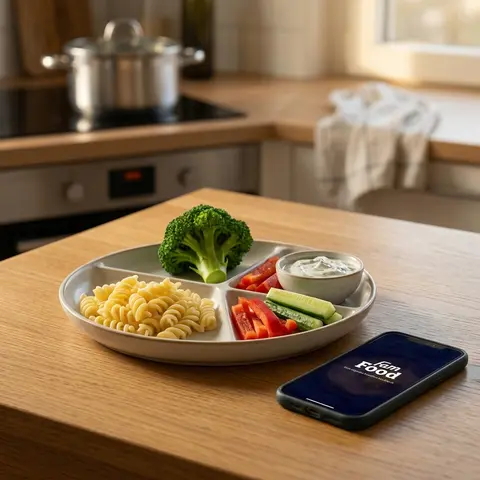
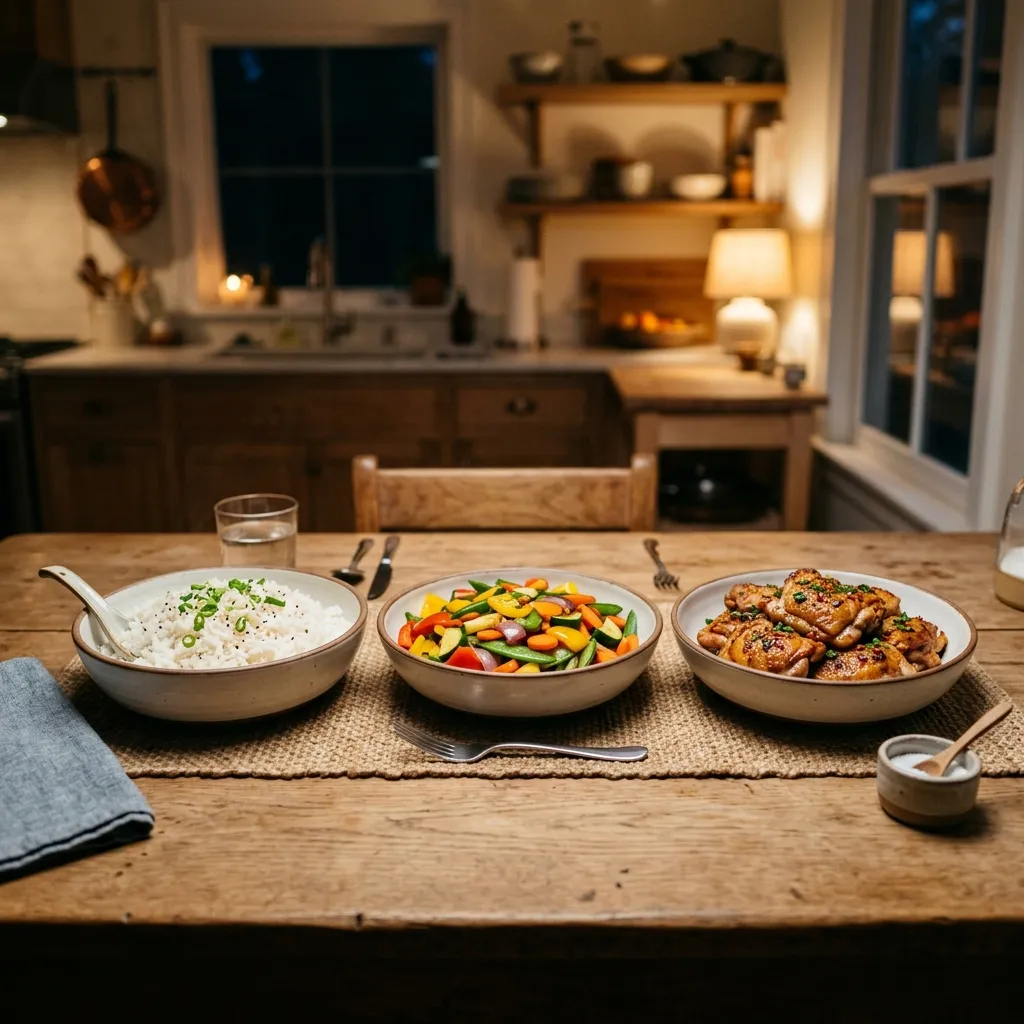
A 30-minute dinner becomes family-proof through the component method: base, protein, and toppings are served separately, not mixed. Every child gets choice. You cook once. In our FamFood tests, this approach worked with about 8 out of 10 picky eaters, because no unwanted bite gets forced.
Why does "all mixed together" fail so often with kids? Conflicting textures, unfamiliar smells, hidden ingredients. A child who loves tomatoes but hates spinach might refuse a pasta bake just because both land in the same bite. Served separately: no problem.
The Component Method in Practice
Every dish has three elements:
Element | Purpose | Example |
|---|---|---|
Base | Carb, fills them up | Pasta, rice, tortillas, pancakes |
Protein | Main ingredient, kept neutral | Ground meat, cheese, chicken, eggs |
Toppings | Vegetables, dips, sauce, optional | Cucumber, corn, hummus, Parmesan |
When you serve these three parts separately, your child decides what goes on their plate. You've cooked once.
Three Dishes That Show It Immediately
- Taco night: Tortillas (base) + ground meat (protein) + corn, cheese, tomato on the side (toppings)
- Noodle bar: Spaghetti (base) + tomato sauce (protein/sauce) + Parmesan, raw veggie sticks (toppings)
- Rice bowl: Jasmine rice (base) + fried egg or tofu (protein) + frozen peas, soy sauce, sesame (toppings)
How this actually looks in practice — five dishes tested in real families with picky eaters — won't be what you'd expect.
Which five 30-minute dinners work for picky eaters?
Five dishes tested with families where at least one child counts as a picky eater. All follow the component method. Each recipe includes a rough timeline and a task kids can take on.
Recipe | Time | Kid's Task (Age) | Components |
|---|---|---|---|
Quesadillas with side plate | 20 min | Grating cheese (age 6+) | Corn, beans, cheese separate |
Pasta with tomato-meat sauce | 25 min | Sprinkling Parmesan (age 4+) | Sauce, noodles, veggie sticks |
Rice noodle bowl with peanut dip | 25 min | Assembling bowl themselves (age 5+) | Noodles, dip, raw veggies |
Roasted veggie wraps with hummus | 30 min | Spreading hummus (age 4+) | Wrap, hummus, roasted veg |
Savory pancake dinner | 30 min | Choosing toppings (age 3+) | Pancakes, cream cheese, ham, cucumber |
Recipe 1: Quesadillas (20 minutes)
Warm tortillas in a pan, let the cheese melt. Meanwhile, drain canned corn, rinse beans, dice tomato. Everything on the table. The child fills their own quesadilla.
Recipe 2: Pasta with Tomato-Meat Sauce (25 minutes)
Put water on first — saves 5 minutes. Brown the ground meat, add canned tomatoes, simmer for 12 minutes. Lay veggie sticks (cucumber, pepper) beside the plate. No cooking needed.
Recipe 3: Rice Noodle Bowl (25 minutes)
Rice noodles per package instructions. Peanut dip from peanut butter, lime juice, soy sauce, and a splash of water. Child builds the bowl: noodles in, cucumber, carrot, dip on top.
Recipe 4: Roasted Veggie Wraps (30 minutes)
Preheat oven to 200°C, zucchini and peppers on a sheet, 20 minutes. While they roast, set out wraps and hummus. Roasting time is free time.
Recipe 5: Savory Pancake Dinner (30 minutes)
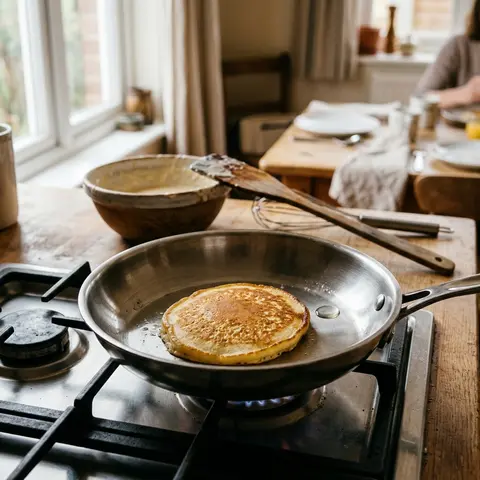
Basic batter from flour, eggs, milk. Fry three or four pancakes, slice toppings in parallel. Cream cheese, ham, cucumber, tomato on the table. Kids choose their own toppings.
The recipes exist — but the biggest time-saver doesn't come from cooking itself.
How do you actually save time at dinner without buying processed foods?
The biggest time-saver comes not from cooking, but from prep. Mise-en-place on Sunday, chopping vegetables, making sauce in double batches, saves you 10 minutes of active cooking on four weeknights. That's 40 minutes a week, no processed foods involved.
The math is straightforward: 20 minutes of prep on the weekend saves 10 minutes of active cooking time on four weekday nights. That adds up to 40 minutes you give yourself, without reaching for processed meals.
Stock items that should always be on hand (following recommendations from Stiftung Warentest on smart pantry-building):
- Canned tomatoes (base for every quick sauce)
- Canned chickpeas (protein, needs no cooking)
- Frozen peas (ready in 3 minutes, no chopping)
- Eggs (versatile, always accessible)
- Pasta, rice, tortillas (your base trio)
Double-cooking as routine: When you make tomato sauce on Monday, you make it in double batches. The second portion is Wednesday night. No extra effort, half the stress.
Even with the best pantry and the fastest recipe, there are three mistakes nearly everyone makes that undo everything.
Which kitchen mistakes steal the most time at dinner?
The three biggest time-stealers are: no clear plan before you start cooking, too many pots going at once, and hunting for ingredients mid-process. Eliminate these three, and you'll cook measurably faster without needing a new recipe.
Mistake 1: Reading the recipe while cooking. Two minutes beforehand, scan what goes where and when. This prevents the classic "Oh, I should've started the water 10 minutes ago."
Mistake 2: Putting the water pot on last. The pot of water goes on the heat first. Always. Pasta nights alone become 8 to 10 minutes shorter.
Mistake 3: Improvising without a basic pantry. If you realize mid-cooking that you're out of canned tomatoes, you don't lose 2 minutes — you lose the whole plan. One quick pantry checklist done weekly takes 3 minutes and rescues plenty of evenings.
But what happens when your child isn't just receiving the meal, but actually helping to make it — and why does that make acceptance three times more likely?
How do you meaningfully include kids in 30-minute cooking?
Children who help prepare food eat the result more often. Research from the University of Leeds shows that children are up to three times more likely to try new foods when they've been involved in preparing them. That's not a trick; it's psychology: when you've made something yourself, you own it.
Age-appropriate tasks:
- Age 3+: Choosing toppings, washing salad, stirring
- Age 4+: Spreading hummus, sprinkling Parmesan
- Age 6+: Grating cheese, slicing cucumber
- Age 8+: Chopping vegetables (with an appropriate child's knife — tips in the FamFood guide on kitchen knives for kids: when each blade is safe)
Your child becomes the expert on their component. They filled the corn, they grated the cheese. That they then eat it: almost inevitable. And the dinner table mood changes, because the child isn't receiving the meal — they're co-creating it.
Still left to figure out: how do you fit all this into a week without reinventing dinner every night?
How do you plan 30-minute dinners for a whole week ahead?
Planning five dinners takes maximum 10 minutes when you follow one simple formula: 2 pasta nights, 1 rice night, 1 skillet night, 1 leftovers night. This covers all tastes and lets you buy deliberately instead of improvising daily.
The difference between a plan that holds and one that collapses by day two isn't willpower. It's the system. Categories instead of fixed dishes give you flexibility: "Pasta night" can be Bolognese or pesto noodles, depending on what's in your fridge.
Build your shopping list by store zones, not recipe order: produce first, then dairy, then shelf-stable, then frozen. This saves 5 minutes in the store and stops you forgetting individual items.
Having proven quick recipes at your fingertips is the final piece. A digital recipe collection you can access on the go turns "What are we cooking today?" into a question answered in 90 seconds. That's exactly what FamFood does: your family recipes, sorted and always with you.
What that concretely means and which system actually holds — even past day two — is the last step. One final question remains: which logic actually solves the acceptance problem, and why so few people know about it?
Frequently Asked Questions
What can I cook in 30 minutes if my child eats only a few things?
Use the component method: cook base, protein, and toppings separately. Quesadillas with a separate side plate, noodles with sauce and raw veggie sticks on the side, or pancakes with optional toppings give every child a choice without you making two meals.
How do I cook quickly in the evening and still avoid processed meals?
With a solid pantry and weekend prep. Canned tomatoes, frozen peas, canned chickpeas, and eggs are always ready to go. If you chop vegetables on Sunday and make sauce in double batches, your weeknight active cooking time drops to 15–20 minutes, no processed foods needed.
Which ingredients should I always have in stock for quick dinners?
According to Stiftung Warentest recommendations, stock canned tomatoes, canned chickpeas, frozen peas, eggs, pasta, rice, and tortillas. These seven cover the bulk of quick family meals.
At what age can kids really help with cooking?
From age 3, children can wash salad and pick ingredients. From age 6, they can grate cheese and do simple chopping. From age 8, they're ready for a proper child's knife to handle vegetables. The knife matters more than the age.
How do I plan 30-minute dinners for a whole week without thinking about it daily?
Use categories instead of fixed recipes: 2 pasta nights, 1 rice night, 1 skillet night, 1 leftovers night. You get structure with flexibility. Build your shopping list by store zones, not recipe order. 10 minutes of planning on Sunday, five relaxed dinners.
About FamFood: We're a small team with kids at our own dinner tables who know how quickly an evening can fall apart. FamFood is our answer: an app that stores, sorts, and serves your family recipes exactly when you need them most, fast.