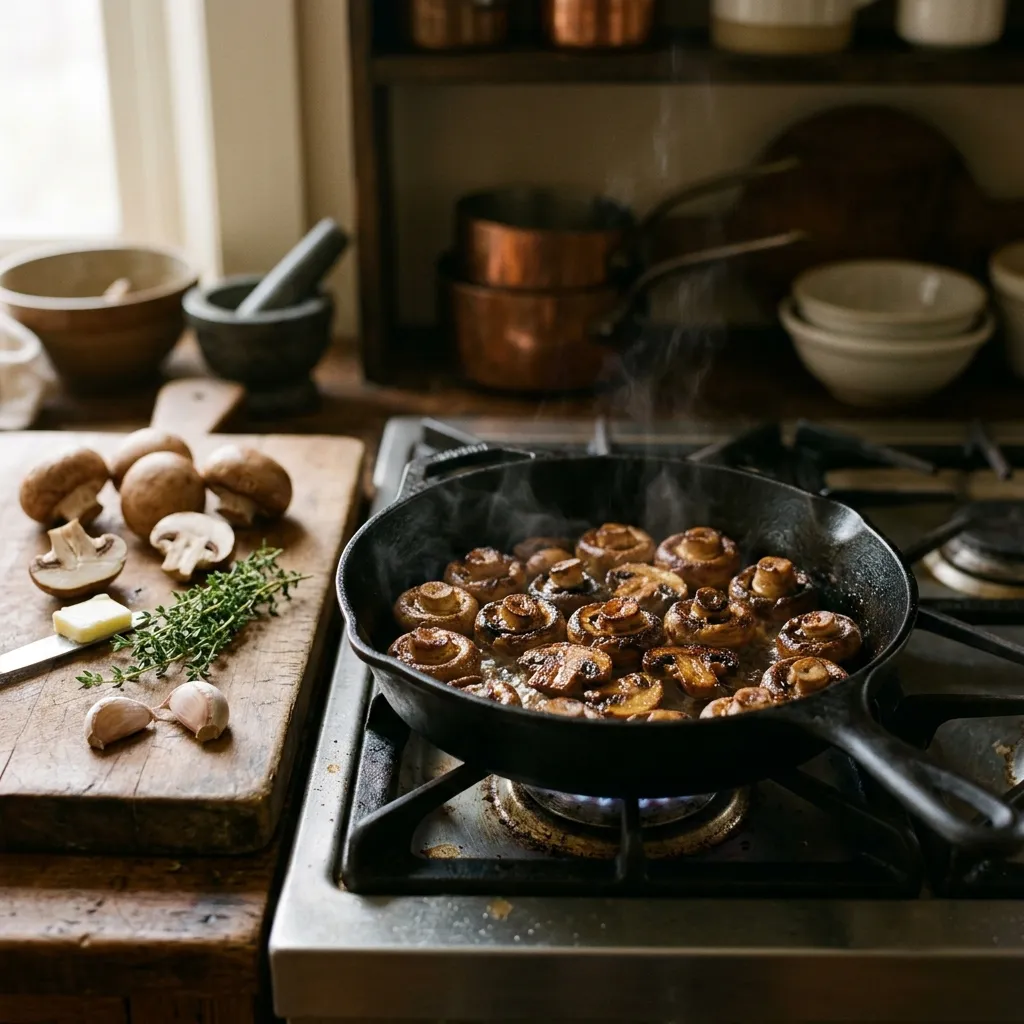
Tuesday evening, just after six. A kilo of mushrooms from the market sits washed in a colander, dinner needs to be on the table by half past six, and two kids already think mushrooms are weird. Ten minutes later, there's a gray, mushy mess swimming in the pan. Most people think the same thing when they see gray, watery mushrooms: I should never have washed them, right?
Except there's more at stake than just a failed dinner. A pan of mushy mushrooms confirms every prejudice at the table. After that, kids often won't try mushrooms for months, and half a kilo ends up in the trash.
But washing doesn't fit with an experience almost every family knows. If washing isn't the problem, why do the same mushrooms turn golden-brown when you cook for two, but fail when you're cooking for four?
Key Takeaways
- According to BZfE (Federal Center for Nutrition), mushrooms are about 90% water. They turn mushy when too many crowd the pan at once.
- In our own test, rinsed and dried mushrooms added only 2g of water to 500g of button mushrooms.
- A 28-cm pan fits 250–300g per batch. Salt goes in last.
- Cook in uncoated pans made of stainless steel, cast iron, or carbon steel.
Why Do Mushrooms Turn Mushy in the Pan?
Mushrooms are about 90% water, according to the Federal Center for Nutrition (BZfE). When too many crowd the pan, that water releases faster than it can evaporate. The temperature drops below the point where browning happens, and they end up cooking in their own juice. So it's almost never the washing that's the problem—it's almost always how many you fit in the pan at once. It works for two people, but not for a kilo feeding four.
The clues were there all along. Even mushrooms you only brushed dry will turn mushy in an overcrowded pan. The same recipe works when you're cooking just for you and your partner. And the pan stops sizzling the moment you dump the whole kilo in.
A quick rinse adds only a few grams of water. The mushrooms bring the rest with them. For a kilo, that's about 900 grams. The problem is volume, not the tap.
Browning needs heat well above the boiling point. As long as liquid sits in the pan, the mushroom surface barely climbs above 100°C. Only when the water is gone does it turn brown and nutty. In an overstuffed pan, that happens so late the mushrooms are already soft and gray.
Washing isn't completely off the hook, though. We weighed it ourselves, and the number surprised us.
Rinse or Just Brush Your Mushrooms?
A quick rinse is fine for cultivated mushrooms like button mushrooms. In our own test, 500g of button mushrooms picked up about 7g of water during rinsing. After patting dry, only 2g remained. Their natural water content sits at around 450g. Rinse them just before cooking, never soak them, and pat dry immediately. Heavily soiled wild mushrooms are better wiped dry with a brush, since dirt gets stuck in the gills and pores.
Here's how we measured: three batches of 500g brown button mushrooms each, 20 seconds under running water in a colander, one minute to drain. The kitchen scale showed 506g, 507g, and 508g afterward. After patting with a dish towel, they were 501 to 503g. Two grams per half-kilo—less than half a teaspoon. Most people skip the patting step when they're in a hurry.
Mushroom Type | How to Clean | Why |
|---|---|---|
Button mushrooms, white and brown | Quick rinse, pat dry immediately | Smooth cap, little dirt, absorbs minimal water |
King oyster mushrooms, oyster mushrooms | Wipe with paper towel, rinse briefly if needed | Usually clean from cultivation |
Chanterelles | Dry brush, loosen sand with a fine brush | Delicate ridges trap sand and water |
Porcini and other wild mushrooms | Clean dry, cut away damaged spots | Dirt adheres firmly, porous caps soak up water |
Now they're dry. Things get tricky once the whole kilo is waiting next to the pan.
How Do You Sauté Button Mushrooms Properly When Cooking for Four?
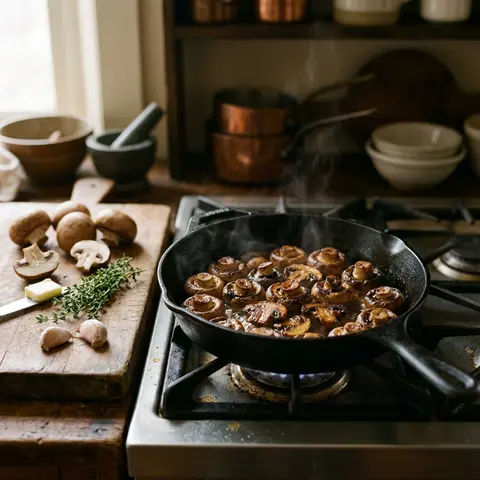
Cook the family amount in batches. A 28-cm pan fits roughly 250 to 300 grams of mushrooms in a single layer. Heat the pan well, add fat, put the mushrooms in, and don't stir for two to three minutes until the bottom is golden. Salt comes at the very end, because it draws water out early. Keep finished batches warm in the oven at 80°C.
During our timed tests on an induction burner, 300g in the 28-cm stainless steel pan sizzled steadily, and the bottom was golden in just over three minutes. 600g in the same pan: after about a minute, liquid pooled at the bottom. The sizzle faded to a low bubble. Nothing turned brown until around nine minutes in, and by then the mushrooms were already shrunken and soft. You hear it before you see it when you've overloaded the pan.
The table below shows our own real-world measurements from these tests, measured with stainless steel and cast iron on high heat. Yours may vary slightly depending on your stove.
Pan or Sheet | Mushrooms per Batch | Batches for 1 kg |
|---|---|---|
24-cm pan | about 200g | 5 |
28-cm pan | 250–300g | 3 to 4 |
32-cm pan | about 400g | 2 to 3 |
Sheet pan, oven very hot | about 500g, spread with space between | 2 pans |
Short on time? Use two pans side by side, or spread the mushrooms with a little oil across two sheet pans and roast at high heat. Butter and garlic go in only during the last one to two minutes, otherwise they burn. Sauté onions separately, because they bring water too.
This only works in a pan that can handle the heat. And that's exactly where the wrong one sits in many kitchens.
Which Pan Works Best for Mushrooms?
For mushrooms, use uncoated pans made of stainless steel, cast iron, or carbon steel. They hold the high heat mushrooms need to brown and maintain it when the next batch goes in. We don't recommend nonstick pans with PTFE, because PTFE belongs to the PFAS family and can't tolerate high heat. If you still have one: never preheat it empty, use only wooden or silicone utensils, and discard it if scratched.
The Consumer Association explains that particles can flake off damaged coatings. How these particles work inside your body isn't yet understood. The Federal Institute for Risk Assessment (BfR) warns that around 360°C, toxic fumes develop—an empty pan reaches that in just minutes. "PFOA-free" isn't reassuring; often other fluorine compounds replace it.
Cast iron has an advantage for the batch method: it barely cools down as you add more. Mushrooms sticking slightly at first is normal. Once they've browned, they release on their own. Force it too early with a spatula and you rip off the crust.
The right pan gets your mushrooms golden. Whether they actually get eaten depends on what comes before, at the cutting board.
How Do You Cut Mushrooms So Kids Will Eat Them?
Kids are often bothered more by texture than taste. Well-browned mushrooms in thick slices or quarters are firmer and nuttier than thin slices, which turn soft quickly. For skeptical kids, finely minced mushrooms that are seared hard work great mixed into sauces, Bolognese, or meatballs. Whole small button mushrooms hold their shape best and work well as finger food. Always cook mushrooms all the way through; never serve them raw to kids.
- Thick slices (about 5mm): brown nicely, stay firm to the bite.
- Quarters: crispy outside, juicy inside, great for picking up.
- Whole, small: keep their shape, perfect as finger food.
- Finely minced: disappear into sauce and ground meat.
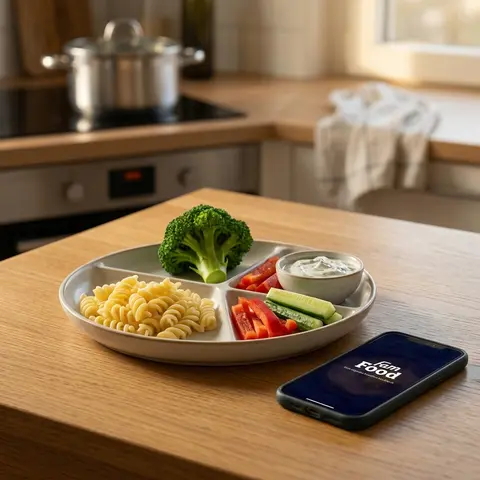
What we often see at home: kids who immediately push mushroom slices to the edge of their plate will eat finely minced mushrooms in Bolognese without noticing. It's not a trick against your kid—it's a starting point. Which cut works for your family, you can jot down right at the recipe, for example in your digital family cookbook at FamFood.
Then autumn comes, and someone shows up at the door with a full basket from the forest.
How Many Wild Mushrooms Are Safe for Kids?
Cultivated mushrooms like button mushrooms are fine to cook for your family regularly—they're barely contaminated with radioactive cesium. Self-foraged wild mushrooms are different. According to the Federal Office for Radiation Protection (BfS), some species, particularly in southern Bavaria, still exceed the commercial limit of 600 becquerels of cesium-137 per kilogram. That's why kids get smaller portions, and wild mushrooms shouldn't be on the menu every week.
The limit applies only to mushrooms sold commercially. What you forage yourself isn't tested by anyone. Plus, some wild mushrooms accumulate heavy metals like cadmium. A commonly cited rule of thumb goes: adults eat no more than 200–250g of wild mushrooms per week, kids much less. How contaminated they actually are depends on the species and location—there's no one safe number for every family.
Only put on the plate what you can identify with certainty. If you're unsure, ask a certified mushroom expert. You can find local advisors through the search at the German Mycological Society (DGfM). Button mushrooms are available year-round; chanterelles and porcini only a few weeks.
But for tonight, a kilo of button mushrooms will do. And a test that takes two minutes.
Frequently Asked Questions
Can you wash mushrooms or do they soak up water?
Yes, you can rinse button mushrooms briefly. In our test, 500g picked up 7g during rinsing, and only 2g stayed after patting dry. With about 90% natural water content, that's negligible. Rinse them just before cooking and never soak them. Wild mushrooms with gills or pores—clean them dry.
When do you salt mushrooms while sautéing?
Salt mushrooms at the very end, once they're already golden. Salt pulls water out, and early salting means they steam in their own juice instead of browning. Add salt, pepper, butter, and garlic in the last one to two minutes.
At what age can kids eat mushrooms?
Well-cooked cultivated mushrooms like button mushrooms are fine for small children in tiny amounts, best finely minced in sauces. Never serve them raw to kids. Self-foraged wild mushrooms are rare for kids and in small portions, because some species accumulate cesium and heavy metals. If there are allergies, ask your pediatrician.
Can you prepare and reheat sautéed mushrooms for the family ahead?
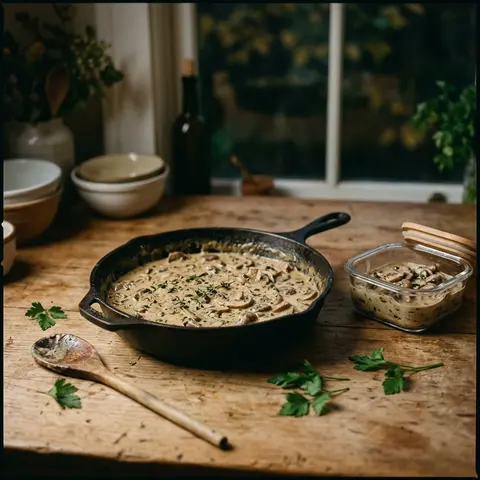
Yes, you can. Let cooked mushrooms cool quickly, cover, refrigerate, and eat the next day. Warm them through once, preferably briefly in a hot pan—they might even pick up a little roasted flavor. Avoid reheating multiple times.
Why do button mushrooms turn gray instead of brown when sautéing?
Button mushrooms turn gray when too many crowd the pan at once. Their water, about 90% of their weight, can't evaporate fast enough, and the temperature stays too low for browning. Cook in batches of 250–300g per 28-cm pan and don't stir at first.
And What Do the Kids Say?
Back to Tuesday evening. The mushrooms in the colander were never the problem—washing wasn't either. Two grams of water don't make a pan wet. The same mushrooms work for two because a half-full pan lets its own water evaporate, while a full kilo traps it. The family portion turns golden-brown when you split it up.
So try it tonight: get the pan really hot, add half the amount, don't stir for two minutes, listen to the sizzle. The first batch goes into the oven, the second follows. What the kids say about it, you'll find out at half past six.
About FamFood
FamFood is the digital family cookbook for anyone standing at the stove in the evening with little time and many opinions. We cook our own recipes at home, we measure, and we write down what actually ends up on the plate. Save your mushroom pan there, along with a note about how many batches your pan needs.