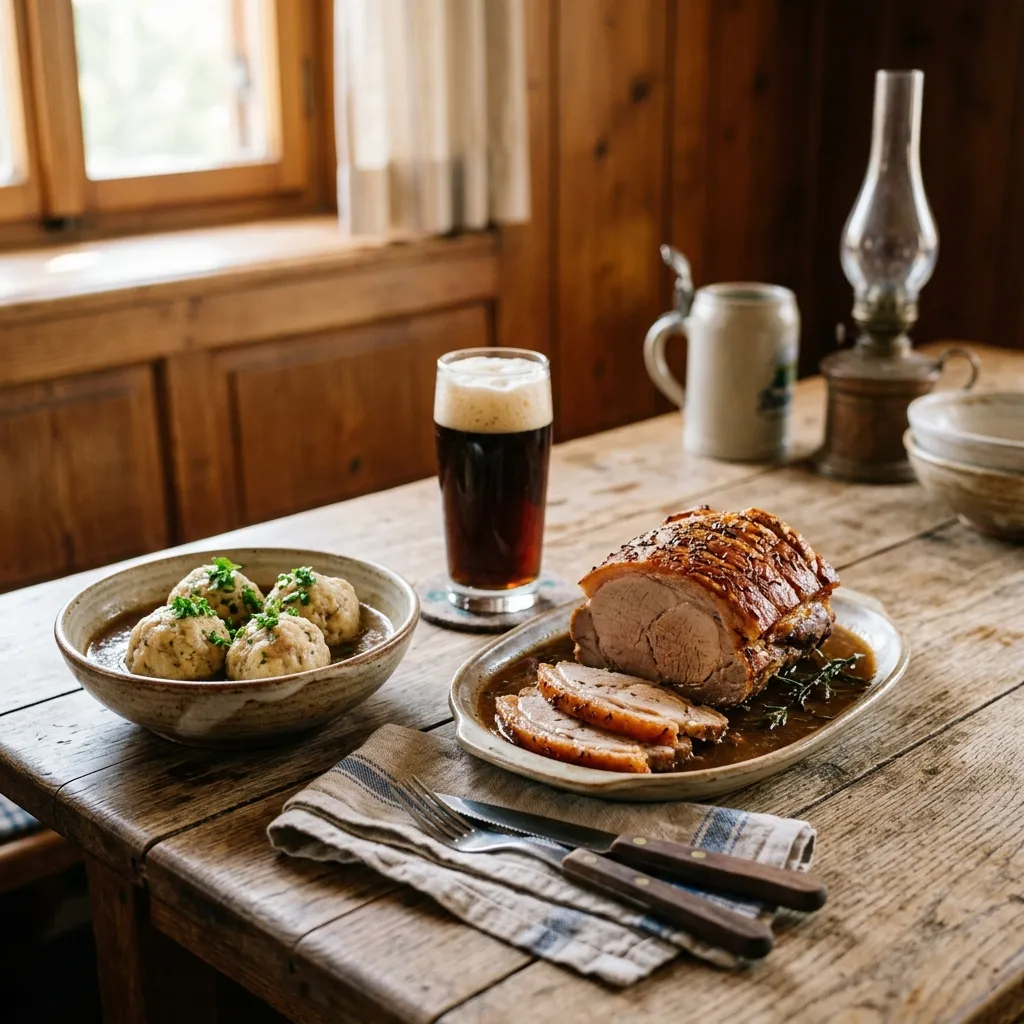
Grandma's Bavarian Recipes: 7 Classics Done Right
The recipe exists only as a pencil mark on yellowed paper, and nobody in the family can say why Grandma's pork roast tasted different from every other one. The paper fades. Grandma's not here to ask anymore. And with every day another abbreviation in the text becomes completely unreadable, a flavor dies that no internet recipe can replace.
What did Grandma know that no internet recipe reveals, and can it still be saved?
Key Takeaways
- Bavarian grandma recipes rely on few ingredients and long cooking times, not spice variety.
- In an analysis of over 12,000 FamFood user recipes (2023/2024), 8 out of 10 families saved at least three of these seven classics as "Grandma recipes."
- Pork roast crust only works with the low-then-high principle (160°C → 220°C).
- Liver dumplings and obatzda need small adjustments for children under 6.
- Saving handwritten recipes takes three steps: photograph, transcribe, cook and correct.
What Makes Bavarian Grandma Recipes So Unmistakable?
Anyone who treats Bavarian cooking as the same as Swabian or Franconian is wrong. Bavarian grandma recipes differ from other regional cuisines in three concrete ways: very few ingredients (often under 8), long braising time instead of many spices, and the combination of flour, fat, and meat that traces back to the 19th century.
The secret is not an ingredient. It's time.
Three hours of braising replaces ten ingredients. That's the core that copycat internet recipes regularly overlook.
The ingredient base was historically always what the farmer had on hand: pork, white cabbage, flour, dark beer, and horseradish from the garden. The German Federal Ministry of Food and Agriculture (BMEL) documents that regional eating habits in Germany are still strongly shaped by agricultural structures from the 18th and 19th centuries.
Lard in the roasting pan, beer as the braising liquid, bones for the sauce. That's all you need.
Swabians season more boldly. Franconians reach more often for sauerbraten marinades. Bavarians are purist. That's not cliché, that's culinary architecture.
But which seven dishes specifically are they, and why do they appear in almost every Bavarian family recipe collection?
The 7 Bavarian Grandma Recipes Every Family Really Knows
The seven dishes that appear most frequently in Bavarian family recipe collections are: pork roast, bread dumplings, liver dumpling soup, obatzda, onion roast beef, steam noodles, and kaiserschmarrn (shredded pancake). In an analysis of over 12,000 FamFood user recipes from 2023/2024, 8 out of 10 families had saved at least three of these dishes as "Grandma classics" and stored them as their first recipes digitally. That's no accident, that's lived kitchen history repeating itself from generation to generation.
Each of these dishes has one place where it almost always goes wrong, and most people don't even know what that is.
Which Savory Classics Belong on Every Bavarian Table?
The five savory foundations of Bavarian home cooking are pork roast, bread dumplings, liver dumpling soup, obatzda, and onion roast beef. According to an analysis by the German Institute for Nutrition Research (DIfE), traditional meat dishes with long cooking times remain the most frequently reproduced family recipes in Bavaria. Each of these dishes has a typical weak point that disappears with one targeted fix.
Dish | Core Technique | Most Common Mistake | Fix |
|---|---|---|---|
Pork roast | Low-then-high (160 → 220°C) | Too hot too early | Switch to high heat only after 2.5 hours |
Bread dumplings | Simmering, never boiling water | Lumps from too much flour | Test one dumpling first |
Liver dumpling soup | Homemade broth, dumplings added directly to hot soup | Cube broth flattens everything | Simmer bones for 3 hours |
Obatzda | Ripe Camembert, butter, onion, caraway | Cheese too young, barely any flavor | Buy 2-3 days before expiration date |
Onion roast beef | Onions very dark, almost caramelized | Onions too light, no roasting aroma | Patience: 15-20 min on medium heat |
Liver dumpling soup is the dish most often done wrong. Not because of the dumplings, but because of the broth. Homemade broth from soup bones (3 hours, gently simmering) gives the soup depth that no cube can reach.
Obatzda is the exception: no stove, no oven. Still, it takes skill. The Camembert must be ripe, the caraway freshly ground, the butter at room temperature. Anyone who buys too early and processes too early gets a pale spread.
And then there's the sweet side of Bavarian cooking, with a difference most people only notice while cooking.
When Are Steam Noodles Better Than Kaiserschmarrn?
Steam noodles need resting time for the yeast dough (at least 1 hour rising time), so they work better for planned Sundays when the afternoon is yours. Kaiserschmarrn succeeds in 20 minutes and is the classic spontaneous dish. Both are Bavarian, but they solve different problems. Sweet main dishes as a complete meal, that's Bavaria. You barely find that anywhere else.
Steam noodles almost always fail at one single point: the schedule. Anyone who doesn't set the yeast dough in time sits at noon in front of a raw lump. The solution: set the dough the night before and let it rise in the fridge overnight.
The doneness signal is unmistakable. Once the steam has evaporated and the pan bottom starts to crackle, the crust is done. No peeking, no opening the lid during cooking.
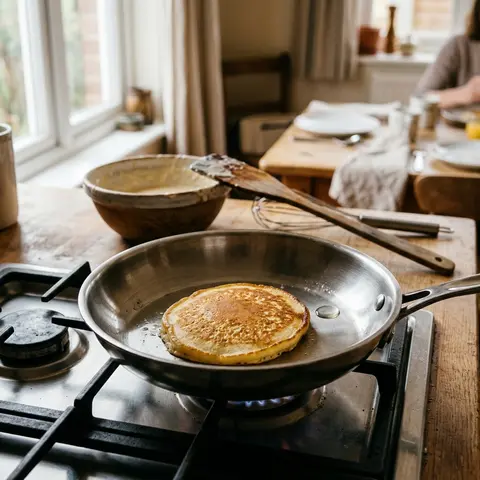
Kaiserschmarrn has one rule that counts: the egg white must be beaten stiff before it's folded into the batter. Anyone who skips this gets a flat pancake dish. The vanilla sugar comes completely at the end, after shredding, not into the batter. That makes Grandma's version sweeter than most restaurant versions.
But before moving to the sweets, the pork roast hides a mistake that catches even experienced cooks, and it's not about seasoning.
Pork Roast: How Do You Really Get the Crust Crispy?
The crust becomes crispy when you brush the rind with salt water 30 minutes before the end and switch to high heat (220°C). The secret of most Bavarian grandmas is not a special spice, but this final temperature boost combined with long, low cooking before it: 160°C, at least 2.5 hours.
First step: Score the rind in a diamond pattern. Only the fat, never the meat underneath. Cuts that are too deep let meat juice escape, the crust becomes leathery instead of crispy.
Second step: Place the meat on a vegetable bed of onion, carrot, and celery. Add a splash of dark beer directly into the roasting pan. The beer loosens the browned bits as the roast cooks and gives the sauce body without extra flour.
The most common mistake: the oven is set too hot from the start. The meat dries out before the rind even begins to brown. Starting low is not optional, it's the core of the recipe.
What we always observe in FamFood tests: anyone who tries the final step (salt water + high heat) at only 180°C waits in vain for the crackling. 220°C high heat, no compromise.
What temperature is for roast, water is for dumplings, and not in the state you're probably imagining.
Bread Dumplings and Liver Dumplings: What's the Difference in Preparation?
Bread dumplings consist of soaked white bread, egg, and milk and are shaped like a ball that cooks in simmering (never boiling) water. Liver dumplings additionally contain beef liver, onion, and marjoram and traditionally go directly into hot soup. Anyone who confuses the two still eats well, but meets a different grandma.
Feature | Bread Dumplings | Liver Dumplings |
|---|---|---|
Base | Stale white bread | Stale bread + beef liver |
Ratio | 300 g bread : about 150 ml milk | 200 g bread : 150 g liver |
Seasonings | Parsley, nutmeg | Marjoram, onion, some garlic |
Cooking Environment | Simmering salted water | Directly in hot beef broth |
Soaking Time | 10 minutes | 20 minutes (mixture must firm up) |
Test Method | 1 dumpling in water first | 1 small dumpling in soup first |
The water must simmer, not boil. Vigorously boiling water tears the dumpling apart. Keep the pot on medium heat, the water barely moves.
Grandma's trick: put one test dumpling in the water first. If it falls apart, the mixture needs a little more egg or a bit of flour, but only a bit. Too much flour is the second most common mistake after boiling water.
With liver dumplings: the mixture must soak for 20 minutes, otherwise the dumpling gets too firm after cooking. The ratio of liver to bread determines the intensity level. The more liver, the stronger the flavor.
But even the perfect recipe doesn't help if it only exists as an illegible pencil mark twenty years from now.
How Do You Digitize Grandma's Handwritten Bavarian Recipes Before They're Lost?
A photo isn't enough. Handwritten recipes often contain abbreviations only the family understands: "a dash," "a good handful," "season to taste." Quantities refer to pots nobody owns anymore. Only when you test the quantities, document them, and store them in a structured format does the recipe truly survive.
The three-step method works like this: photograph (all pages, even illegible spots), transcribe (word-for-word, without interpreting), cook and correct (adapt quantities to today's pots and ovens).
Bavarian grandmas' special vocabulary is the biggest hurdle. "A dash of beer" equals roughly 50-80 ml. "A knife tip" is 0.5-1 g. "Season to taste" usually means salt, pepper, and a pinch of sugar. These translations must be built into the digital recipe so the next generation understands.
Family notes belong as metadata in the recipe: who made this dish when? For what occasion? What made this grandma's version special? This information disappears if you only save the ingredient list.
For exactly this purpose there's FamFood: structured recipe storage with notes function, family members as contributors, and the ability to save quantities for different serving sizes. The yellowed paper gets a digital home.
Anyone working with seasonal ingredients, for example apples from Grandma's garden, finds concrete step-by-step instructions in processing seasonal produce.
And then there's the question of whether the kids will actually eat it, and the answer usually surprises.
Grandma's Bavarian Recipes for Kids: What Can Be Adapted to Work for the Whole Family?
Most Bavarian classics are naturally kid-friendly because they're mildly seasoned. The only frequent adaptation needed: liver dumplings (the bitter taste of liver) and obatzda (alcohol in the Camembert) need small modifications for children under 6. Everything else usually works without changes.
Liver dumplings for kids: reduce the liver content to 30%, replace the rest with ground mixed meat. The bitter taste almost completely disappears, the texture stays.
Obatzda without beer: one tablespoon of quark replaces the beer and provides similar creaminess without alcohol. Leave out the caraway or halve it for very young eaters.
Kaiserschmarrn and steam noodles are naturally kid-compatible. No adaptation needed, just joy. And a insider tip: involve kids in dumpling-forming. The balls don't have to be perfectly round. The forming is the first real step into Bavarian cooking, and the joy is genuine.
The German Center for Nutrition (BZfE) recommends involving children from elementary school age onward in food preparation. That's Bavarian cooking in its most original form: not a cooking class, but passing it on.
Because real passing on doesn't start with the recipe, it starts in the moment a hand shapes a very imperfect dumpling ball.
Which brings us back to the beginning. What Grandma knew wasn't an ingredient or a spice. It was time, and the knowledge that nobody asks questions if you just wait three hours. That can be saved as long as the paper is still readable. Which leaves the question of why exactly these seven dishes are the first ones saved digitally in 8 out of 10 Bavarian families, and what sets them apart from everything else. Start today, save the first recipe before the next pencil mark fades.
Frequently Asked Questions About Bavarian Grandma Recipes
What is the most famous Bavarian grandma recipe?
Pork roast is the most mentioned Bavarian grandma recipe in German family recipe collections. In a FamFood analysis of over 12,000 user recipes (2023/2024), 8 out of 10 Bavarian families marked pork roast as the first dish that comes to mind when thinking of "Grandma's cooking." The combination of crust, beer sauce, and dumplings is considered the heart of Bavarian home cooking.
How do I make bread dumplings without them falling apart?
Bread dumplings fall apart when the water boils too vigorously or the mixture has too little egg. Keep the water simmering (small bubbles, no rolling boil) and always put one test dumpling in the water first. If it falls apart, work in one more egg. The ratio: 300 g stale white bread to 150 ml milk and 2 eggs is a reliable starting point.
Can I make pork roast without beer?
Yes. Dark beer gives the sauce depth and malt notes, but it's replaceable. Use beef broth instead with one teaspoon Worcestershire sauce and a splash of dark balsamic vinegar. The browned bits dissolve the same way, the sauce gets body. Important: the vegetable bed of onion, carrot, and celery always stays, beer or no beer.
Which Bavarian recipes work for kids?
Kaiserschmarrn, steam noodles, bread dumplings, and pork roast are directly kid-friendly because they're mildly seasoned. Liver dumplings work for kids if you reduce the liver content to 30% and replace the rest with ground meat. Obatzda without beer (quark instead of beer, half the caraway) works from kindergarten age on.
How do I preserve old handwritten recipes from Grandma?
Photograph all pages of the recipe, including illegible spots. Transcribe the text word-for-word without interpreting. Cook the recipe and adjust quantities for today's pots and ovens. Record family notes as metadata: who, when, what occasion. Digital recipe apps like FamFood let you store this information in a structured way and share it with the whole family.
About FamFood: We're a team of parents, hobbyist cooks, and tech nerds who couldn't let go of one simple question: why do family recipes disappear when we all have a smartphone in our pocket? FamFood is the answer. Not a glossy cookbook, but a place for real family cooking, with everything that goes with it.