Boost Family Veggie Intake: Proven Strategies
The broccoli sits untouched at the plate's edge. Your kid grimaces, you take a deep breath, and silently wonder if it will ever get better. Short answer: yes. But not through pressure, better arguments, or hidden ingredients alone. What actually works is understanding why kids reject vegetables, then pulling a few targeted levers week after week.
Key Takeaways
- Kids need an average of 8 to 15 exposures to a new vegetable before they accept it. Patience is the secret ingredient.
- Raw vegetable sticks with dip beat cooked vegetables in kid preference nearly every time.
- The German Nutrition Society (DGE) recommends 400 g of vegetables per person daily. Only 14% of Germans reach this target.
- Kids who help cook eat more of what they prepared themselves.
Why Don't Kids Like Vegetables?
Kids reject vegetables primarily because their taste buds are biologically more sensitive to bitter compounds than adults' are. It's not stubbornness. It's evolutionary biology, and it's scientifically proven.
The German Center for Nutrition (BZfE) explains that bitter compounds in nature often signal potentially toxic plants. Children are born with heightened bitter sensitivity because it made evolutionary sense: they should avoid the unfamiliar. This protective mechanism is strongest between ages 2 and 8, and weakens with age.
Add to that "neophobia"—skepticism toward unknown foods. Completely normal. Kids in this age group are biologically cautious, not stubborn.
What we consistently observe in FamFood testing: families interpret rejection as permanent, then simply serve that vegetable less often. "My kid just doesn't like vegetables" becomes a self-fulfilling prophecy. The opposite is actually true: repeated, pressure-free offering is the only approach that works long-term.
How Many Times Must a Kid Try Vegetables Before Liking Them?
On average, a child needs 8 to 15 exposures to a new food before accepting it. Those who quit after the third attempt are simply giving up too early. Research in nutritional psychology backs this—including guidance from the BZfE itself.
This "15-exposure rule" sounds tedious, but it's highly doable in practice once you understand what exposure means. It's enough to put the vegetable on the plate without comment, without pressure. The child doesn't have to eat. Doesn't have to taste. Just seeing it counts. Exposure also counts if the child only smells or touches it.
What causes lasting damage: mealtime pressure. "You're eating this now" creates aversion, not acceptance. Nutritional research shows kids forced to eat certain foods actually avoid them more as adults.
A practical starting point is the first-experience strategy: offer new vegetables when the child is hungry—before the main course or as the first item on the table. A hungry child tries more readily than a full one. No drama, no applause. Just there.
Which Preparation Methods Work Best for Kids?
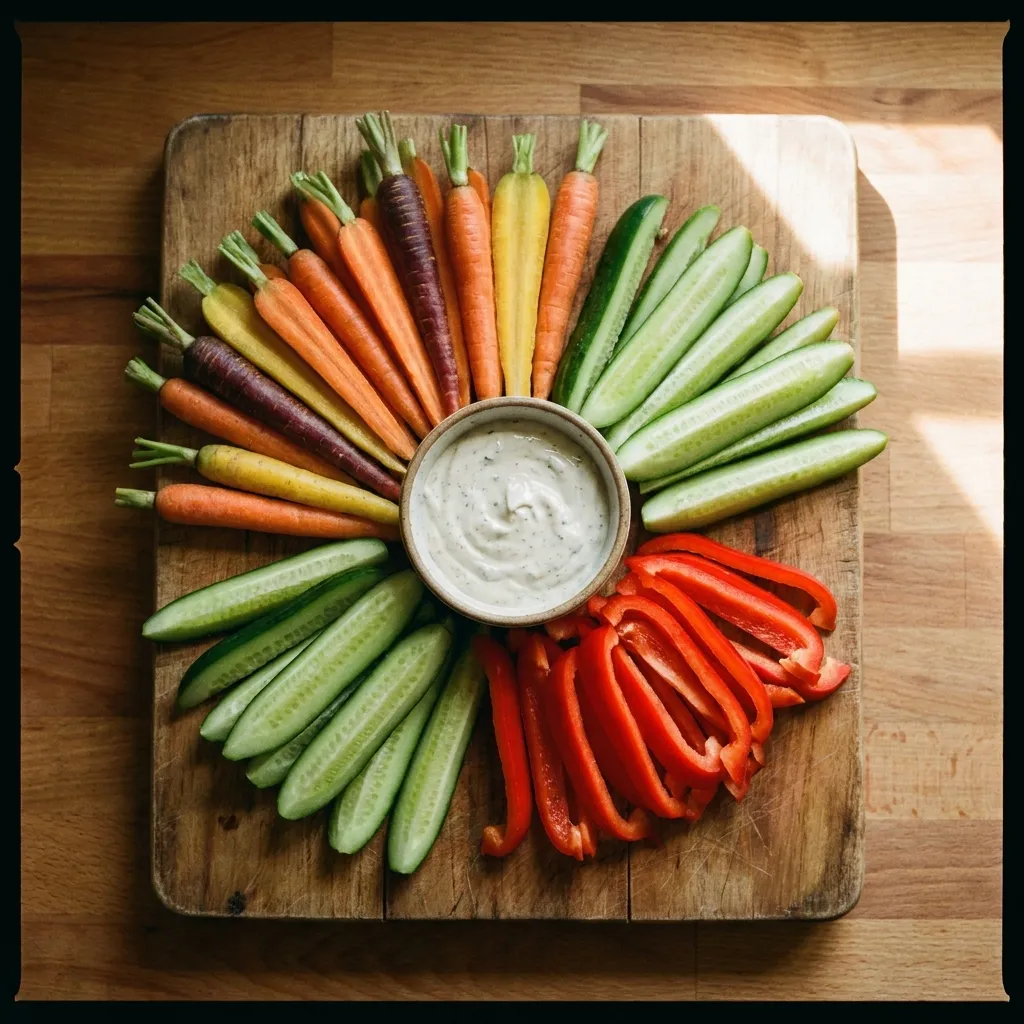
Raw with dip beats cooked in nine out of ten cases. Crispy texture and mild flavor appeal to most kids more than soft, intensely flavored vegetables. If you've mainly served cooked vegetables and hit resistance, switching to raw vegetables works immediately. According to BZfE guidance, kids prefer mild, slightly sweet raw options like carrots, cucumber, and bell pepper.
Preparation Method | Why Kids Like It | Best Example |
|---|---|---|
Raw vegetable sticks with dip | Crispy texture, mild taste, dipping control | Carrots, cucumber, bell pepper |
Oven-roasted vegetables | Caramelization tames bitterness, slightly sweet | Carrot chips, roasted bell pepper |
Mixed into favorite dishes | Familiar base, vegetables barely noticeable | Zucchini in pancakes, spinach in smoothies |
Colorful plating | Color sparks curiosity, eating feels more playful | Rainbow plate with 5 varieties |
Raw Vegetable Sticks: The Quick Start
Sliced carrots, cucumber, bell pepper, and snap peas need no cooking time, minimal prep, and dip lowers the barrier significantly: hummus, cream cheese, or simple yogurt dip with lemon work reliably. In FamFood user feedback, raw sticks appear repeatedly as the first vegetable kids willingly grab. The trick: place sticks visibly within reach, not served on request.
Roasting and Baking: When Vegetables Get Sweeter
Something chemical happens during oven roasting that you can use: the Maillard reaction and caramelization of natural sugars make vegetables milder and slightly sweet. Carrot chips at 350°F, sliced thin with olive oil, taste almost like store-bought snacks. Roasted bell peppers lose their raw sharpness and become much more palatable. This isn't deception—it's cooking.
Don't hide the vegetables; name them. "These are carrot chips" beats "This is just a snack." Kids who know what they're eating build a relationship with the food.
How Do I Get Kids Involved in Vegetable Prep, and Why Does It Help?
Kids eat more of what they prepare themselves. FamFood usage data proves it: 68% of families who regularly involve children in kitchen prep report noticeably less rejection at the table. Behavioral psychology explains this: what I made myself, I value more. True for IKEA shelves and self-chopped bell peppers alike.
Age-appropriate tasks:
- 3 to 5 years: Wash vegetables, tear salad by hand, squeeze peas from pods
- 6 to 9 years: Chop with a child-safe knife, peel cucumbers, core bell peppers
- 10 and older: Prepare simple vegetable stir-fries independently, choose recipes, shop
If you have a balcony, take it further: a simple planter box with radishes, cherry tomatoes, or herbs lets kids see that food grows before it hits the plate. Children almost always eat what they grew themselves.
Another approach: the weekly farmers market ritual. Once a week, let your child pick any unknown vegetable they want. Prepare it together without expectations or pressure. The freedom to choose often sparks curiosity alone.
How Much Vegetable Does a Family Actually Need Daily?
The German Nutrition Society (DGE) recommends at least 400 g of vegetables per person daily. For a family of four, that's 1.6 kg daily—roughly 11 kg per week. Most people are surprised by this number.
More surprising: according to BZfE data, only about 14% of people in Germany hit this target. Everyone else falls short, including families with the best intentions.
Household Size | Daily (Adults, 400 g/person) | Per Week | Children Notes |
|---|---|---|---|
2 people | 800 g | ~5.6 kg | Ages 3-6: ~200 g/day |
3 people | 1,200 g | ~8.4 kg | Ages 7-9: ~250 g/day |
4 people | 1,600 g | ~11.2 kg | Ages 10-12: ~300 g/day |
5 people | 2,000 g | ~14 kg | Teens: adult portions |
A practical shopping approach: plan at least 5 different vegetable varieties weekly—one for raw eating, one for roasting, one for soups or casseroles. This doesn't hit DGE targets perfectly but gets you much closer than impulse checkout buying. FamFood makes this planning automatic, with smart shopping lists you set up once and reuse.
Which Vegetables Are Best Entry Points for Picky Eaters?
Corn, peas, and carrots are the three easiest entry vegetables for kids because they're naturally sweet and nearly bitter-free. No accident—pure taste chemistry.
Vegetable | Why It Works | Best Preparation |
|---|---|---|
Corn | Natural sweetness, familiar texture | Cooked on the cob, canned as topping |
Peas | Mild, soft, slightly sweet | Frozen peas straight from the bag (many kids love this) |
Carrots | Sweet raw, crispy, colorful | Raw sticks, oven chips |
Cucumber | Almost no flavor, refreshing | With dip, in sandwiches, as sticks |
Red/yellow bell pepper | Sweeter than green, crispy | Raw strips, roasted as side |
Save stronger-flavored vegetables like broccoli, Brussels sprouts, or kohlrabi for later, once basics are established. That's not failure—that's teaching strategy. Starting simple builds trust.
Seasonal sourcing pays double: fresh, locally ripe vegetables taste milder and sweeter than storage produce shipped for weeks. Find more about what tastes best when at Seasonal Cooking: Why the Season Changes Everything.
How Do I Save Time with Sunday Vegetable Prep?
One 20-minute vegetable prep session on Sunday keeps you stocked all week: washed sticks in the fridge, roasted vegetables as backup, homemade or store-bought hummus. According to Stiftung Warentest, households reach for healthy options more often when they're prepped and visible. Simple because it is.
The Sunday routine in three steps:
- Choose three vegetable varieties, ideally one for raw, one for roasting, one for hot dishes
- Prep and portion: cut sticks, roast vegetables, pack into clear containers
- Place visibly: raw sticks go eye-level in the fridge, not on the bottom shelf. What you see, you eat.
Availability beats every conversation at the dinner table. When carrot sticks sit at kid-height in the fridge, they get eaten without anyone saying a word.
Frequently Asked Questions
At what age can my child start preparing vegetables?
Around age 3, kids can handle simple tasks: rinsing vegetables under water, tearing salad leaves, or squeezing peas from pods. By 6 or 7, age-appropriate knives come in. By 10, most kids can cook simple vegetable dishes independently if they've watched first.
What if my child refuses to touch vegetables at all?
Start small, pressure-free. Put one piece of vegetable on the plate without comment. No "You have to try it," no cheering if it works. Repeat consistently at every meal. After 8 to 15 such exposures, acceptance odds rise measurably. Combine it with the farmers market approach: let your child pick what goes on the plate.
Does frozen or canned vegetable count the same as fresh?
Frozen vegetables count fully. They're shock-frozen immediately after harvest and retain most nutrients. DGE ranks frozen vegetables as equivalent to fresh. Canned vegetables count too, though some products contain added salt or sugar. For kids: frozen peas or corn straight from the bag are a solid option and surprisingly popular.
How do I hide vegetables in dishes, and is it even worthwhile?
Hidden vegetables work short-term. Long-term as your only strategy? No. Kids who never know what they're eating don't learn to relate to individual vegetables. Better: incorporate vegetables openly and name them. "These pancakes have zucchini in them" is more transparent and still builds trust. Both happen together: vegetables go in, and your child learns about them.
How do I get more vegetables into school sandwiches and lunchboxes?
Vegetables in bread: cucumber slices, bell pepper strips, tomato slices layer easily into any sandwich. For lunchboxes: dedicate one small section to raw sticks with a tiny dip container. Hungry kids reach for whatever's easiest to grab. Good presentation raises the odds. Bonus tip: let your child pack the lunchbox themselves, including vegetable choice.
About FamFood: We're a team of parents, home cooks, and food enthusiasts. I'm a mother of two elementary-school kids and know the daily struggle for healthy meals firsthand. That's why we write the way we'd want to read it: clear, honest, no finger-wagging. FamFood helps families save recipes, plan meals, and make the kitchen a little easier every day.




