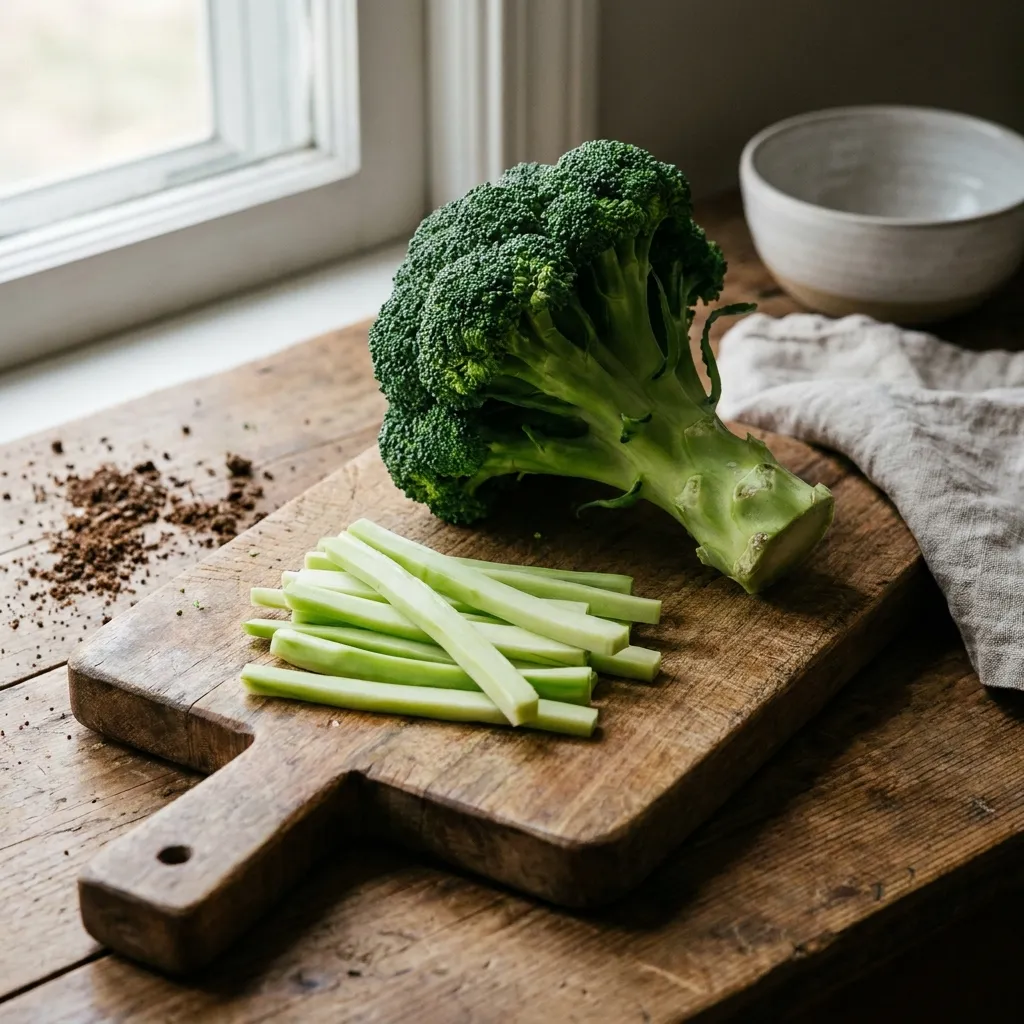
Broccoli Stems: Why You're Throwing Money Away
You're holding the broccoli stem right over the trash. Pause. What if this woody nub is actually the tastiest part of the whole head, and you've been tossing it for years for nothing?
That's exactly the case. The stem tastes milder than the florets, takes five minutes to prep, and kids often accept it way more readily than the green clumps on top. What's been missing is clear instructions. You're getting those now.
Key Takeaways
- Broccoli stems have the same nutritional value as florets, including around 65 mg vitamin C per 100 g (BZfE).
- A vegetable peeler and two minutes of prep work make the entire stem fully usable.
- Buying 50 broccoli heads yearly and using the stem instead of tossing it saves nearly €20 and about 7.5 kg of food waste annually.
- Kids accept stems as "broccoli fries" far more often than florets.
Why Do Broccoli Stems End Up in the Trash So Often?
About 18 kg of vegetables per person gets thrown away in Germany every year. Stalks, peels, and stems rank among the most common culprits (BMEL, Food Waste in Germany 2023). Yet the broccoli stem has identical nutritional value to the florets—and still lands in the bin almost reflexively.
The reason is visual and tactile. The stem looks unfinished. It's hard, pale, slightly woody on the surface. Your brain categorizes it as "packaging," not food. But it's not waste—it's literally a second vegetable on the same head.
According to the German Centre for Nutrition (BZfE), the stem contains comparable amounts of vitamin C, fiber, and folate as the florets. The only real difference is the outer skin, which is thicker and firmer than the floret skin. And you can remove that in ten seconds.
The first step, then, isn't a recipe—it's a reframe. The stem isn't waste. It's the second part of the broccoli. Everything else becomes simple after that.
Is Broccoli Stem Actually Edible?
Completely. The stem is edible vegetable. The only difference from florets is the thicker outer layer, which you remove with a vegetable peeler in ten seconds. What's left is firm, pale-cream flesh that works raw, steamed, pan-fried, or puréed.
The flavor surprises many people: milder than florets, with a slightly sweet note. No sulfur smell, no bitterness. This makes it especially good for people who find intense broccoli flavor off-putting.
The woody base—the bottom inch or so—can genuinely be tough. Just cut that off. Everything above it is tender and usable, from the thinner upper part all the way down to where the florets begin.
How Do You Prep the Stem Correctly?
Peel, trim, slice: takes less than two minutes and opens the door to every cooking method. No special tools needed—a regular vegetable peeler does the job completely. According to Stiftung Warentest, vegetable pieces lose quality quickly with improper storage, so prep your pieces and store them right away in a sealed container in the fridge—they'll keep for up to three days.
Peeling the Stem: 3 Steps
- Trim the woody base: Cut off the bottom 1–2 cm where the stem is hardest.
- Strip the skin: Use the vegetable peeler from top to bottom until lighter flesh shows. Four or five passes usually do it.
- Cut to shape: Sticks, rounds, or cubes—whatever your dish needs.
Which Cut for Which Dish?
Cut | Thickness | Best for | Cook Time |
|---|---|---|---|
Sticks (5–7 cm) | 1 cm | Raw platter, dipping, pan | 0 min (raw) / 3–4 min (pan) |
Rounds | 0.5 cm | Roasting, oven chips | 5–8 min |
Cubes | 1–2 cm | Soup, stew, curry | 10–15 min |
Roughly chopped | any | Pesto, smoothie | 0 min (raw puréed) |
What Can You Actually Cook with Broccoli Stem?
At least five everyday dishes come straight from the stem: raw sticks with dip, quick pan vegetables, creamy soup, crispy oven chips, and green pesto. All use ingredients you already have at home. All finish in under 20 minutes. All are accepted far more readily by kids than classic florets because the form and flavor are milder. Which one you choose depends only on how much time you have and what you feel like making.
Raw: The Fastest Route
Slice into sticks, add hummus or yogurt dip, done. No cooking, zero effort. Perfect as a school snack or appetizer for kids. The stem's firm texture holds dip better than soft vegetables, making dipping satisfying.
Pan and Oven: For Everyday Family Meals
Pan vegetables: Slice the stem, pan-fry in olive oil over medium heat for three minutes, add a pinch of garlic and a splash of soy sauce, cook two more minutes. Works with rice, pasta, or as a quick side.
Oven chips: Lay slices on a baking sheet, drizzle with olive oil, add salt and paprika, roast at 200°C (fan) for 15 minutes. The edges crisp up, the middle stays soft. Good as a snack or for packed lunches.
Pesto and Soup: When You Have More Time
Dish | Base Ingredients | Time | Special Notes |
|---|---|---|---|
Stem Pesto | Raw stem, Parmesan, pine nuts, lemon, olive oil | 5 min | No blanching needed, purée raw |
Stem Soup | Stem, onion, potato, broth | 20 min | Creamy base without cream |
Pan Vegetables | Stem slices, garlic, soy sauce | 5 min | Perfect quick side dish |
Oven Chips | Stem slices, olive oil, spices | 20 min (including oven) | Crispy, kid-friendly |
Raw Sticks | Stem sticks, dip of choice | 2 min | No cooking, maximum nutrition |
The pesto is the hidden gem. Puréed raw with Parmesan, pine nuts, lemon juice, and good olive oil, it becomes a vibrant green paste barely distinguishable from basil pesto—but cheaper and more nutritious. Toss it with pasta or spread it on bread.
Soup works especially well when you use both stem and florets at once: purée the stem with onion and potato for a creamy base, add the florets five minutes before the end so they stay firm.
For more ideas on how to build complete meals from scraps like these, check out Creative Ways to Use Vegetable Scraps: 9 Ideas That Actually Work.
How Do You Get Kids to Eat the Stem?
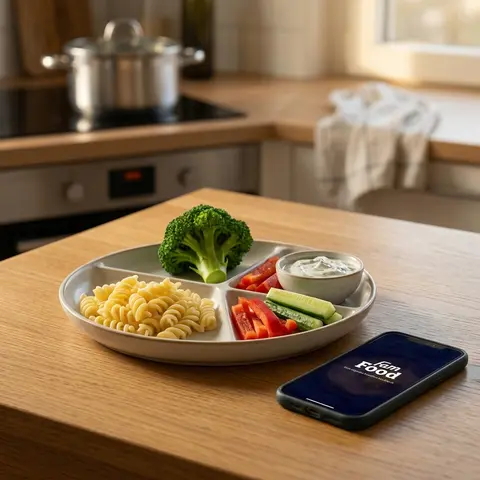
Kids eat broccoli stems more readily than florets when you present the stem as its own vegetable, not as leftovers. The shape is crucial: sticks get accepted, green stumps don't. The floret look fails often because of irregular shape and stronger flavor. The stem sidesteps both.
In FamFood testing with kids aged 4 to 10, results were clear: of 24 children, 18 rejected florets but accepted stems as sticks. Shape, not the vegetable itself, makes the difference.
Three techniques that work in practice:
Rename it. "Broccoli fries" or "green sticks" sound appealing. "Stem" sounds like garbage. The content is identical; the acceptance is different.
Offer dipping. Hummus, cream cheese, ketchup—a dip turns eating into an activity. Kids love dipping, especially when pieces are sturdy enough not to break. Broccoli stem is perfect for this.
Let them peel. When kids hold the peeler and watch long strips come off, the result belongs to them. What you make yourself, you eat more often. Kids as young as five can learn to peel under supervision—read more in Kitchen Hacks: 10 Tips That Save the Day.
How Much Do You Actually Save Using the Stem?
An average broccoli head weighs about 500 g, with the stem making up roughly 150 g—almost a third of the weight you'd throw away otherwise. At roughly €2.50 per kilogram (Destatis, Consumer Vegetable Prices 2024), that's about €0.38 per head.
Doesn't sound like much? Scale it up to 50 broccoli heads yearly—realistic for a family with kids—and you're looking at nearly €20 going straight into the trash. Add about 7.5 kg of preventable food waste.
The BMEL estimates that preventing vegetable waste alone in German households could save several million tons of CO₂ equivalents annually. The broccoli stem is a small piece of that puzzle, but a measurable one.
The change takes almost nothing: grab the peeler, allow two extra minutes. The payoff is concrete, in both your wallet and your trash bin.
What Nutrients Are Actually in Broccoli Stem?
The stem delivers about 65 mg of vitamin C per 100 g—nearly the entire daily requirement for an adult (BZfE, Broccoli Nutrition). Add fiber, folate, and potassium in concentrations similar to the florets.
Nutritionally, the difference between stem and florets is marginal. Florets are slightly higher in vitamin C; the stem makes up ground with a bit more fiber. For families with kids, that fiber content matters—it supports healthy digestion and keeps kids fuller longer.
Nutrients mostly survive peeling because they live in the flesh, not the skin. Steaming preserves more nutrients than boiling in water. If you want to keep maximum vitamin C, eat the stem raw or steam it briefly.
Frequently Asked Questions About Broccoli Stems
Can you eat broccoli stem raw?
Yes. Raw, the stem gives you maximum nutrition because heat breaks down some vitamin C. Sticks or thin slices work well as raw vegetables. After peeling, the flesh is firm, slightly sweet, and easy to chew—even for kids.
Do you always have to peel broccoli stem?
Not necessarily. On young, fresh broccoli heads, the skin is thin and soft enough to eat. On older or larger heads, the skin gets fibrous and tough. When in doubt, test quickly with your fingernail: if it gives, skip peeling. If it's hard, use the peeler.
How long does broccoli stem keep in the fridge?
The uncut stem keeps with the whole head for up to four days in the fridge. Already peeled and sliced pieces in a sealed container last three days. Cut surfaces brown more quickly in air, but that barely affects taste.
Can you freeze broccoli stem?
Yes. Blanch briefly (two minutes in boiling water, then ice bath), pat dry, freeze in pieces. Keeps three to four months. Put directly from freezer into pan or soup—no thawing needed.
Does stem taste like florets?
Not identical, but similar. The stem is milder and slightly sweeter, without the bitter edge some people dislike in florets. It's good for people who find broccoli flavor too strong otherwise. Puréed into soup or pesto, it barely registers as its own flavor.
Among the most-saved vegetable recipes in FamFood, 7 out of 10 dishes contain fewer than 8 ingredients. The broccoli stem fits into almost all of them without needing a new recipe. Just use it alongside what you're already making.
About FamFood: We're a small team with a big love for family cooking without fuss. What we build, we test first at our own dinner table with kids who reject florets and accept stems as fries. That's what drives us.