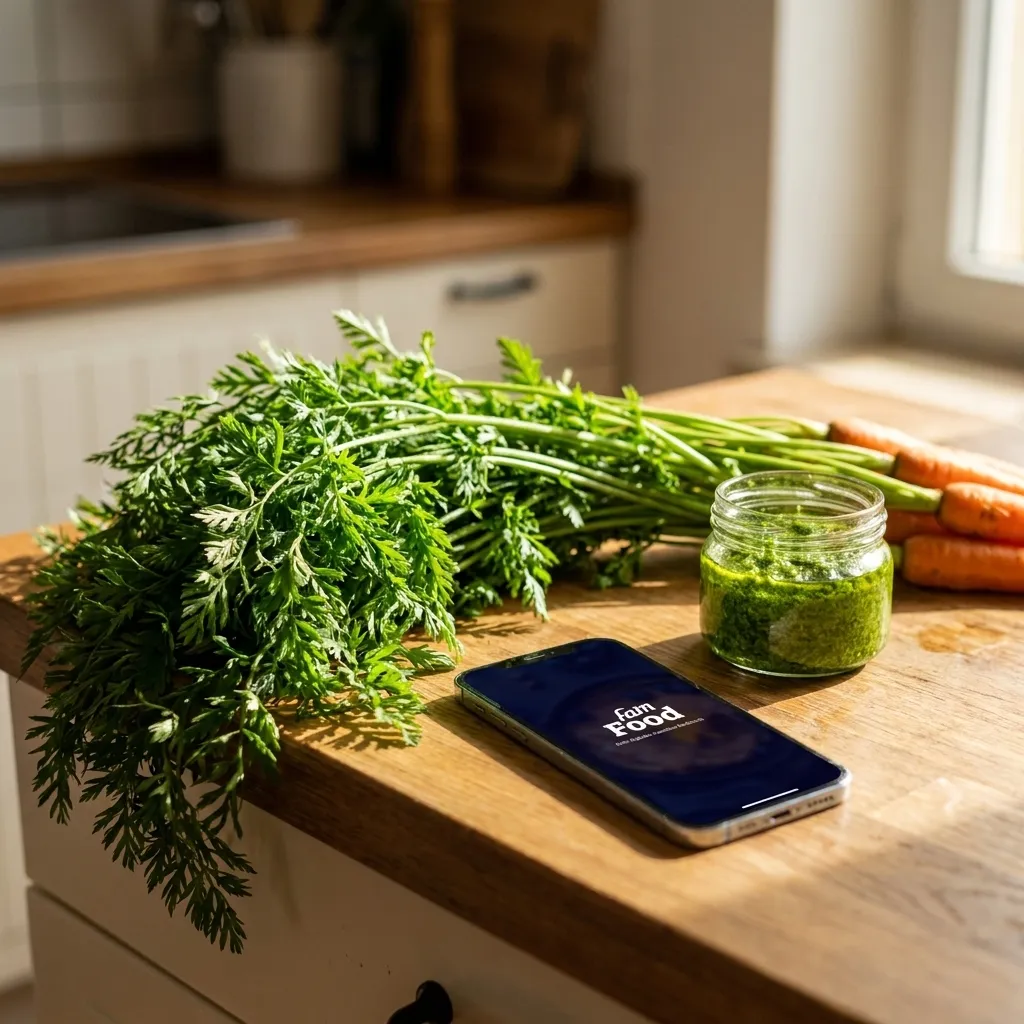
6 Ways to Use Carrot Greens With Your Family
Carrot greens land in the compost without a second thought. Almost every family does it, and almost no one asks themselves whether they're throwing away something edible.
The answer is yes. The greens are edible, aromatic, and surprisingly versatile. And the moment you truly understand this for the first time changes how you buy carrots, prepare them, and talk about them with your kids.
Key Takeaways
- Carrot greens are edible and non-toxic; the myth persists, but it's wrong.
- One bunch of carrots yields 30–50 g of usable greens, enough for a pesto or soup serving.
- Frozen carrot greens keep for up to 3 months and can be used directly in soups without thawing.
- Kids who make the pesto themselves are significantly more likely to try it: an observation from FamFood kitchen tests.
Can You Actually Eat Carrot Greens?
Yes, carrot greens are edible and safe for healthy adults and children. The widespread belief that they're toxic is a myth. Carrot greens belong to the carrot family (Apiaceae), related to parsley and dill, and contain, according to the German Nutrition Center (BZfE), vitamin C, calcium, potassium, and chlorophyll. The bitter taste comes from natural alkaloids that are completely harmless in this concentration.
Carrot greens are not toxic. What can become unpleasant is eating too much at once, because the bitter compounds then dominate. Used sparingly, in pesto, butter, or soup, you barely notice them.
The flavor profile is honestly an acquired taste: slightly bitter, herby, somewhere between parsley and arugula. For some, an aha moment. For kids, initially a turnoff, but more on that later.
In short: carrot greens are neither a superfood nor a poison. They're an underrated kitchen herb that you're currently throwing away.
Why Do Carrot Greens End Up in the Trash So Often?
Because no one taught us. Supermarkets mostly sell carrots without the greens, and when the greens are included, there's no hint about how to use them. This isn't a knowledge problem; it's a habit problem.
In tests with families using FamFood, we observed: the greens almost always end up in the trash first, before anyone even asks whether you can eat them. The gesture is automatic. Buy carrots, cut off the greens, throw them away. Done.
Yet carrot greens are among the most frequently discarded vegetable parts in German households. The German Federal Ministry for Food and Agriculture (BMEL) estimates that private households in Germany throw away roughly 78 kilograms of food per person annually, a significant portion of which consists of vegetable parts that could still be used.
Once you know how to do it, you'll never throw away carrot greens thoughtlessly again. That sounds like big talk, but it's really just a single new habit.
How Do I Prepare Carrot Greens Correctly?
Rinse carrot greens thoroughly under cold water, remove the thick stems, and use only the tender leaves and thin stems. That's all the prep you need—no blanching required, no complicated handling.
Step by step:
- Cut the greens from the bunch and rinse thoroughly under cold water; sand likes to hide in the leaf joints.
- Sort out and compost the coarse main stems; they're tough and bitter.
- Keep the tender leaves and thin stems.
- Use right away or store in the fridge for up to 2 days, wrapped loosely in a slightly damp kitchen towel.
Portion planning: One bunch of carrots yields roughly 30–50 g of usable greens. That's enough for a small pesto (about 150 ml) or as an herb addition to soup for four.
Fresh vs. Stored Greens: What Still Works
Fresh greens smell intense, are vibrant green, and have no wilted spots. Use these right away. Greens that have been in the fridge for a day still work well in soups or broth, where you cook out the bitter compounds and strain the greens afterward. For pesto or herb butter, use only fresh greens; the flavor needs to carry the dish.
Kids can help by plucking leaves. This is a task even four- or five-year-olds can handle easily, and it's the first step toward them actually trying the result later.
6 Concrete Recipe Ideas: What You Can Cook With Carrot Greens
Pesto, soup, chimichurri, herb butter, smoothie, and oven chips—these are the six most reliable ways to use carrot greens completely. None of these recipes takes longer than 15 minutes of prep.
Recipe | Main Ingredients | Effort | Kid-Friendly? | Special Feature |
|---|---|---|---|---|
Pesto | Greens, nuts, oil, Parmesan | 10 min. | Yes (butter pesto variant) | Nut-free option available |
Chimichurri | Greens, vinegar, garlic, oil | 5 min. | Somewhat | Ideal for grilling |
Soup / Broth | Greens as seasoning herb | 0 min. extra | Yes | Strain out; no bitterness risk |
Herb Butter | Greens, butter, salt, lemon | 5 min. | Yes | For bread and vegetables |
Oven Chips | Greens, oil, salt | 12 min. | Yes | 160 °C, serve crispy |
Green Smoothie | Greens, apple, ginger, water | 3 min. | Yes | A small amount is enough |
Carrot Green Pesto: The Quickest Zero-Waste Recipe
For one jar of pesto (about 200 ml), you need: 40 g carrot greens (leaves and thin stems), 30 g pine nuts or walnuts, 60 ml olive oil, 30 g Parmesan, 1 small garlic clove, salt, and lemon juice to taste. Put it all in the blender, pulse briefly, and adjust seasoning.
For those with allergies: leave out nuts entirely and compensate with a bit more oil and Parmesan. If you like, swap Parmesan for nutritional yeast for a vegan version.
The pesto keeps in the fridge for 4–5 days. Frozen in a small container, it lasts up to 3 months.
Carrot Greens in Soup and Broth
This is the lowest-risk method because you control the bitter flavor completely. Simply cook the carrot greens as a seasoning herb, 10–15 minutes is enough, then strain. It gives the broth a herby depth without the typical bitterness. For vegetable broth made from scraps, it's a useful addition that hardly anyone knows about.
Chips, Butter, Chimichurri: The Quick Ideas
Oven chips: Spread leaves on a baking sheet, brush thinly with oil, salt, and roast at 160 °C with circulating air for 10–12 minutes until crispy. Serve immediately; they soften quickly.
Herb butter: Mix 100 g softened butter with 2 tablespoons of chopped carrot greens, a little lemon zest, and a pinch of salt. The mild butter flavor smooths out the bitter note almost completely, which is why this is the most beginner-friendly approach for kids.
Chimichurri: Chop carrot greens finely and mix with olive oil, a splash of red wine vinegar, garlic, and red pepper flakes. The vinegar lifts the bitter flavor. Perfect for family grilling.
For more ideas on how to use vegetable scraps meaningfully, check out the article Repurpose Leftovers Creatively: 9 Ideas That Actually Work.
Do Carrot Greens Appeal to Kids?
Not so much on their own, but processed into pesto or herb butter, most kids accept the slightly bitter taste just fine. Oil, cheese, or butter buffers the bitter compounds, so you barely notice them.
Children instinctively reject bitterness for evolutionary reasons. The brain interprets bitter as potentially dangerous, a protective mechanism from ancient times. So when a child turns up their nose, it's not a matter of bad taste or stubbornness.
The best introduction strategy: try carrot green pesto first because the fats in oil and Parmesan counteract the bitter notes. Gradually increase the amount, at first just a teaspoon mixed into pasta, and observe whether complaints arise.
What we observed in FamFood kitchen tests: kids who were part of making the pesto, who plucked the leaves and ran the blender, actually try the result far more often and with less resistance. The hands-on effect is stronger than any persuasion tactic.
If bitterness remains a problem, broth and chips are low-risk gateway recipes; the greens taste least intense there.
For the right introduction to kitchen activities with kids, see also the article Repurpose Leftovers With Kids: The 4-Ingredient Rule.
How Do I Store and Freeze Carrot Greens?
Fresh carrot greens keep in the fridge for two days. Frozen—ideally blanched and portioned—they're good for up to three months and can be stirred directly into soups or pesto recipes without thawing first.
Refrigerator method: Wrap greens loosely in a slightly damp kitchen towel, place in a produce bag, and put in the crisper drawer. Maximum 2 days. Longer and they wilt and lose flavor.
Freezing: Blanch leaves for 30 seconds in boiling water, plunge immediately into ice water, squeeze dry, and freeze in portions. Advantage: you can toss the individual portions directly into hot soup without thawing first.
Ice cube tray tip: Chop carrot greens finely, mix with olive oil, and freeze in ice cube trays. These herb-oil cubes go straight from the freezer into the pan or pot. One portion equals roughly one tablespoon of herb oil, perfect for sautéing.
For those serious about zero waste, plan carrot greens as part of a larger scraps day—say, a Monday routine after the weekly shopping. To see what this looks like in a family's daily life, check out the article Make the Most of Broccoli Stems: Too Good to Waste.
What Nutrients Are in Carrot Greens?
Carrot greens contain vitamin C, calcium, potassium, and chlorophyll in meaningful amounts. The nutrient profile varies by variety and harvest freshness, but is generally comparable to many kitchen herbs like parsley or dill.
According to the German Nutrition Center (BZfE), carrot leaves provide calcium and secondary plant compounds that often remain unused in vegetable waste. The bitter compounds they contain are not a drawback: they stimulate bile production and thus support fat digestion.
No hype, no miracle claims. But a sensible addition you might as well grab the next time you buy a bunch of carrots instead of tossing it.
Frequently Asked Questions About Carrot Greens
Are Carrot Greens Toxic for Kids?
No. Carrot greens are not toxic to kids. The bitter compounds and alkaloids they contain are harmless in typical cooking amounts. Children under one year should generally have raw leafy herbs only sparingly, but for toddlers and older children, carrot greens are safe.
How Much Carrot Greens Can I Eat Daily?
A handful of leaves per day is a good guideline. That's roughly 10–15 g of fresh greens. Larger amounts at once can cause stomach upset in sensitive people due to the bitter compounds, but that's not an issue in typical cooking portions.
Can You Freeze Carrot Greens?
Yes. Best to blanch briefly (30 seconds in boiling water), plunge into cold water, pat dry, and freeze in portions. Shelf life: up to 3 months. Or freeze as herb-oil cubes in an ice cube tray.
What Works Best With Carrot Greens?
Pesto is most versatile because the fats in oil buffer the bitter taste. Second best is soup, where you cook the greens in and strain them out at the end—zero bitterness risk. For beginners, herb butter is the easiest option.
Does Carrot Green Taste Like Parsley?
Similar, but more intense and bitter. If you like parsley, carrot greens are a more robust version. Eaten raw on their own, the difference is clear. Processed into pesto or butter, the flavor profiles converge because the bitter compounds bind with fat.
About FamFood
We're a team of parents, home cooks, and recipe enthusiasts sharing a single conviction: family cooking should be simple without being worse. FamFood helps you save recipes, plan leftovers meaningfully, and create real moments with your kids in the kitchen instead of answering the same question every day: "What are we cooking today?"