Citrus in Winter: Harvest, Storage, Family Recipes
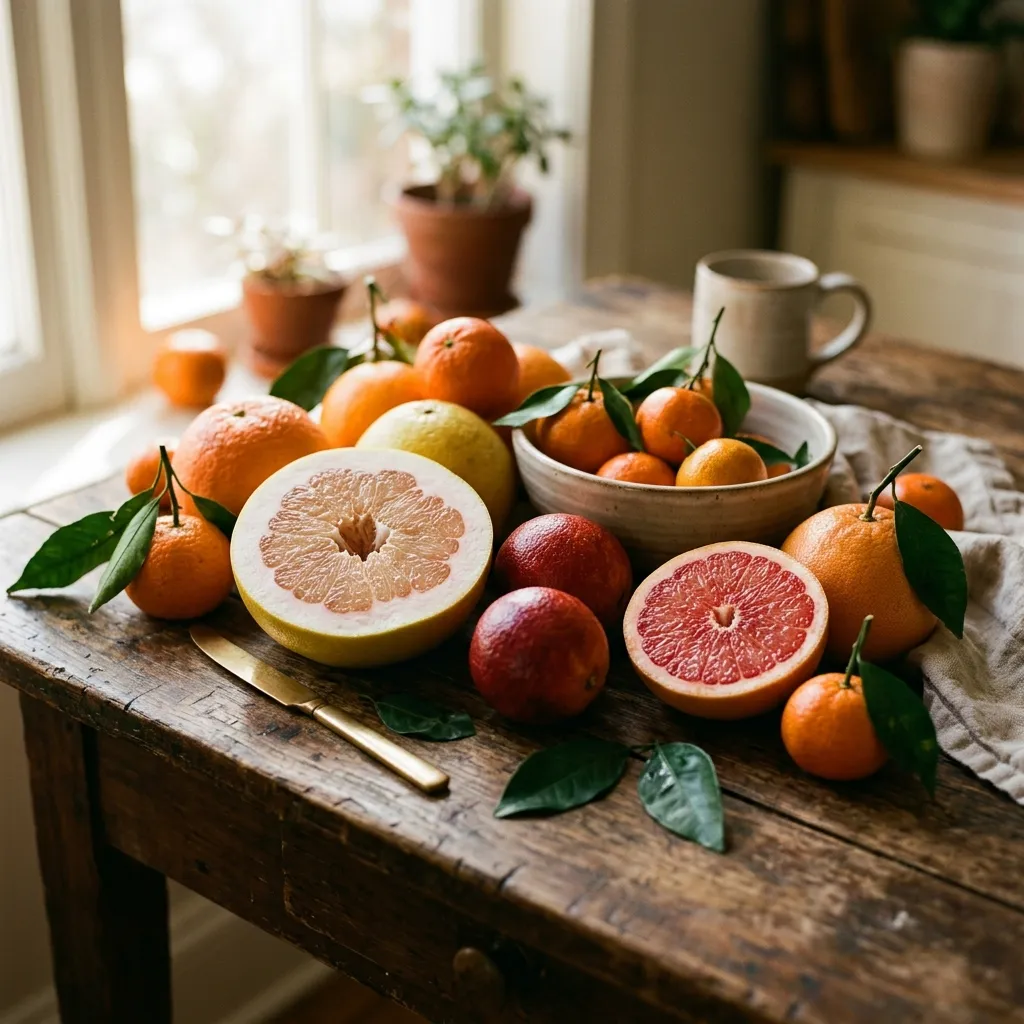
The fridge in January looks dreary. But the fruit bowl? It glows orange, yellow, pink. No other time of year offers so much citrus variety in such high quality. Why that's no coincidence, how your family actually uses up clementines, blood oranges, and pomelos, and what kids can help with from age four on—you'll find all that here.
At a Glance
- Clementines, oranges, and grapefruits peak from November to March and reach stores fresher than summer domestic fruit stored in cold rooms.
- One medium orange covers a child's daily vitamin C requirement completely (DGE, reference value 40 mg/day for children).
- Peels, cut fruit, and pressed halves can be turned into orange sugar, citrus salt, or syrup instead of thrown away.
- In our FamFood community, kids who peel clementines themselves eat noticeably more of them than when the fruit is served pre-separated.
When Is Citrus Really in Season in Germany?
Oranges, clementines, and grapefruits peak from November to March while domestic fruit takes a break. That makes them the ideal winter fruit for families. Transport routes from Spain, Italy, and Morocco are shorter than many think, and fruit is picked riper than summer produce that sits in German cold storage for weeks. When you reach for citrus in winter, you're choosing seasonal logic, not a last resort.
Organic certification is especially worth it now: if you want to use the peel for zest, reach for organic fruit without synthetic surface treatments. In FamFood, users save clementine and blood orange recipes most often in January, not apple or pear recipes. That says something about what actually gets cooked in winter.
Seasonal Calendar: Which Citrus to Buy When
Fruit | Peak Season | Origin | What Makes It Special |
|---|---|---|---|
Clementine | October – February | Spain, Morocco | Seedless, ideal for kids |
Navel Orange | November – March | Spain, Egypt | Juicy, seedless, versatile |
Blood Orange | January – March | Sicily, Spain | Anthocyanins, short season |
Grapefruit | Year-round, peak Feb/March | USA, Turkey | Bitterness in the pith |
Pomelo | December – February | Israel, Thailand | Mild, ideal for segmenting |
Lemon | Year-round, best Nov–Apr | Spain, Italy | For zest: organic preferred |
Which Citrus Fruits Work Best for Kids?
Clementines and mandarins are the safest entry point for kids: no seeds, easy to peel, and mild-sweet without being too sour. Oranges are the next step, blood oranges follow after that. Pomelos and grapefruits work well from school age on when segmented properly, because segmenting removes the bitter white pith. The key lies less in age than in technique. All varieties deliver vitamin C reliably. According to BZfE, one medium orange contains around 50–60 mg vitamin C, which fully covers a child under six's daily requirement.
What we observe in the FamFood community: kids who peel clementines themselves eat noticeably more of them than when the fruit is served pre-separated. Peeling is part of the experience. Don't take that away.
This ranking from mildest to most intense flavor helps with planning:
Clementine → Navel Orange → Blood Orange → Pomelo → Grapefruit
Grapefruits sound off-putting, but the bitterness sits mainly in the white pith and skin. Segment the fruit and you remove exactly those parts. What's left is mild, aromatic flesh that most kids from age six enjoy.
How to Store Citrus So It Lasts Longer
At room temperature, oranges and clementines keep about a week. In the fridge, ideally in the crisper drawer at 50–50°F (8–10°C), they stay fresh two to three weeks but lose flavor. The golden rule: keep the peel dry, don't stack fruit on top of each other. According to BLE (Federal Office for Agriculture and Food), cool, well-ventilated storage is key to citrus retaining nutrients and not molding prematurely.
The most common mistake: storing citrus in closed plastic bags. Condensation builds up inside and speeds mold growth dramatically. Better: an open bowl or mesh net.
Freezing the peel works brilliantly. Lay orange zest in portions on parchment paper, freeze, then transfer to a small jar. Keeps three months with no loss of aroma and gives porridge, cake, or pasta sauce instant depth. Juice freezes great too in ice cube trays. Perfect for spontaneous weeknight dinners when you need something fresh but don't have time to squeeze by hand.
What Can You Cook with Citrus in Winter?
Citrus is far more than a snack in winter. It refines hearty winter dishes like fennel-orange salad or lemon chicken, makes desserts bright (blood orange panna cotta), and the peel adds flavor to baked goods and porridge. Master three categories and you cook diversely all winter long.
On FamFood you'll find recipes for all three categories, sorted by cook time and family portion size.
Savory Recipe Ideas
Dish | Citrus Use | Time | Good For |
|---|---|---|---|
Orange-Carrot Soup | Orange juice + zest | 20 min | Picky eaters |
Fennel-Orange Salad | Segmented orange | 10 min | Quick side |
Lemon Chicken Thighs | Lemon peel + juice | 45 min | Sunday dinner |
Lentil Soup with Lemon | Juice as finish | 25 min | Batch cooking |
Glazed Carrots | Orange juice + butter | 15 min | Kid-friendly |
Orange-carrot soup is especially practical: carrot and orange mellow each other out. Kids who normally reject orange accept it here because the carrot's sweetness dominates. One tablespoon of orange juice at the end is enough to start with.
Sweet and Baked Ideas
Clementine Quark works as a school breakfast or quick dessert: 250 g low-fat quark, two tablespoons honey, zest of one organic clementine, flesh from two peeled clementines. Ready in three minutes, no cooking. Don't completely remove the white inner peel—it contains flavonoids.
Blood Orange Panna Cotta needs prep time but zero technique. Cream, gelatin, sugar, blood orange juice: set in the evening, done by morning. Impresses guests way out of proportion to the effort.
Use the peel instead of tossing it: orange zest over warm porridge in the morning, lemon zest over pasta with ricotta in the evening. Two minutes extra work, measurable flavor difference. For more context on seasonal cooking techniques, check out Cooking Seasonally: What's It Really Worth?
Is Winter Citrus Really Healthier Than Summer Citrus?
Yes, and it's not just about vitamin C. Fully ripened winter citrus contains more flavonoids and essential oils than unripe summer picks. Storage times are shorter: import citrus in winter often reaches German stores within days of harvest, while summer domestic fruit sometimes sits in cold storage for months before sale.
One medium orange contains around 50–60 mg vitamin C. A child's daily requirement ranges from 40–110 mg according to DGE, depending on age. One fruit covers it completely for younger kids. The flavonoids actually sit in the white inner peel, called the mesocarp. Encouraging kids not to completely remove that white layer is a small tip with real value.
One more surprising point: orange juice isn't an equal substitute for whole fruit. Stiftung Warentest analysis has shown that fruit juices lose fiber and concentrate fruit sugar. Whole fruit remains the better choice, even if juice sounds like more.
How Do You Use Citrus Scraps Before They Go Bad?
Cut oranges or dried clementines too often end up in the trash. With two simple steps they become orange sugar, citrus salt, or quick syrup that lasts weeks. This isn't work. This is kitchen mindfulness.
Orange Sugar: Coarsely zest one organic orange, pulse briefly in a blender with 100 g sugar. Sealed airtight, keeps three months. Works on porridge, yogurt, cake, pancakes.
Citrus Salt: Mix lemon zest with coarse sea salt. Done in two minutes. Works over fish, pasta, or roasted vegetables. Pretty-packaged, it's also a nice gift.
Quick Syrup: Briefly simmer pressed halves (yes, after pressing) in water and sugar—the remaining essential oils dissolve out. This syrup goes with pancakes, yogurt, or honestly, sparkling water too. For more ideas using kitchen scraps you'd normally throw away, browse Repurposing Leftovers: 9 Ideas That Actually Work.
Citrus with Kids: Which Kitchen Tasks Work from Age Four?
Peeling clementines, squeezing oranges, and grating zest with a safety grater are tasks kids from age four can handle independently. It strengthens fine motor skills and makes them more curious about food they helped make.
A rough age guide:
- From age 4: Peel clementines and mandarins, separate segments
- From age 7: Squeeze oranges and lemons, grate zest with safety grater
- From age 9: Segment grapefruits, slice oranges
What we observe: kids who helped cook reliably try the dishes. Not a generic claim, but what parents in the FamFood community report again and again. The setup takes ten extra minutes but builds routine. For deeper kid cooking formats, check out Kids Baking: Learning Format, Not Chaos.
Frequently Asked Questions
Which Citrus Has the Most Vitamin C?
Lemons and grapefruits lead, but the practical winner is the orange: it contains 50–60 mg vitamin C per fruit and kids eat it without fuss. Acerola-citrus hybrids score higher but are barely available. For everyday use: any citrus daily is enough.
Can I Freeze Orange Peels?
Yes, no problem. Portion zest onto parchment paper, freeze, then transfer to a jar. Keeps up to three months with no loss of flavor. Whole washed, dry peels freeze too and can later go into teas or broths.
Why Do Clementines Taste Better in Winter Than Summer?
Winter clementines are picked riper because the season allows it. Summer imports often come from cold storage or are picked unripe to bridge transport. Riper harvest means more sugar, more flavor, less acidity. You taste the difference.
From What Age Can Kids Eat Grapefruit?
Technically from whenever solid fruit is introduced. The bitter taste makes it unappealing to small kids. Segmented grapefruit works well from about age six on, when kids can better process bitter notes. Note: grapefruit interacts with certain medications. When in doubt, ask your pediatrician.
How Do You Tell If an Orange Is Still Fresh?
Heavy is good. An orange that feels light for its size has lost moisture. The peel should be smooth and firm, no soft spots. Mold often starts invisibly under the peel, noticeable by a musty smell. If unsure: cut it open and check.
About FamFood: We're a team of parents, cooks, and tech enthusiasts saving family recipes from being forgotten and making weeknight cooking doable again. On famfood.app you collect recipes, plan your week, and share with your family—all in one place.