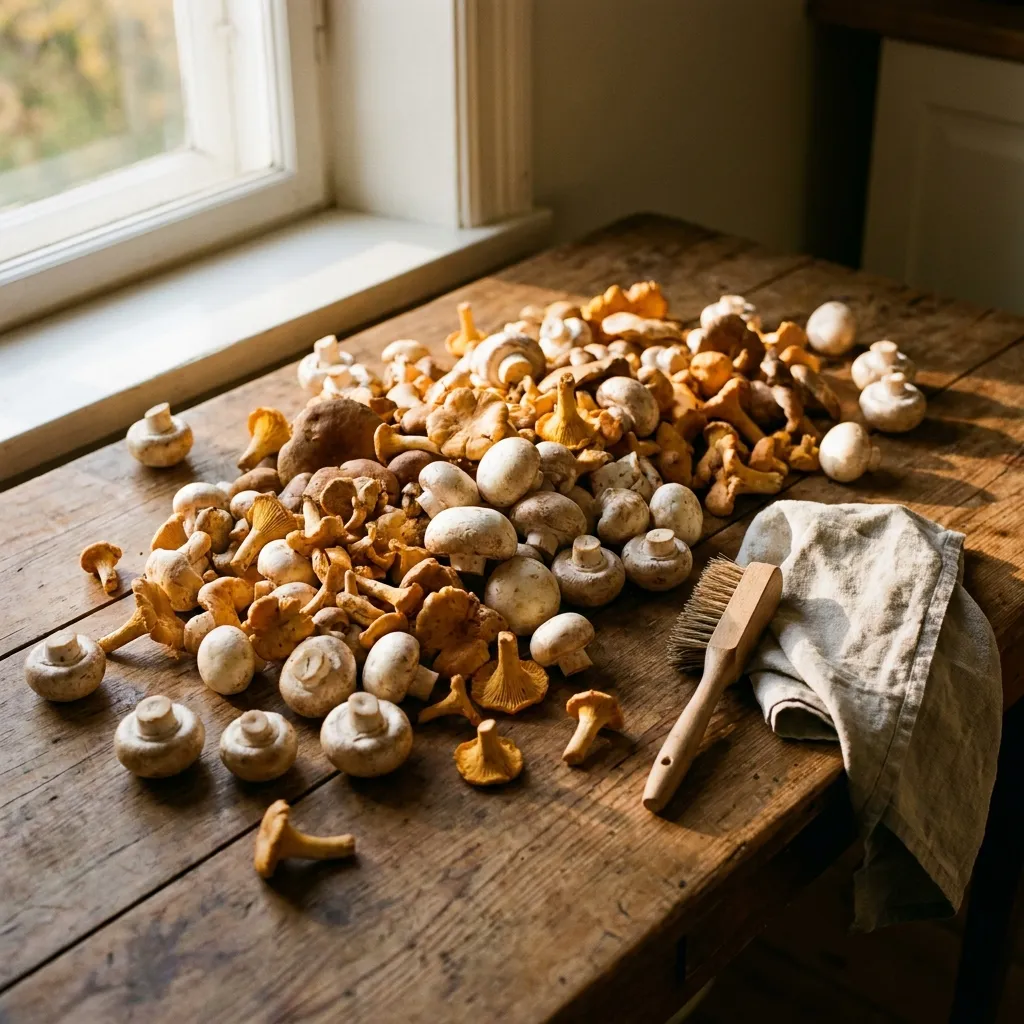
Cooking Mushrooms with Kids: Family Starter Guide
Messy fingers. Earthy smell. The quiet sizzle when button mushrooms hit hot butter. Autumn is the season when mushrooms can actually teach kids something, without it sounding like a lesson. Most families buy mushrooms, fry them quietly alone, and serve them as a side dish. But cleaning mushrooms, tearing them apart, and cooking them teaches more kitchen skills than most carefully planned cooking activities.
This guide shows you which mushrooms actually work for the family table, how to involve kids from age 4 onwards, and three recipes that everyone will eat — even those who think they don't like mushrooms.
At a glance
- Button mushrooms, king oyster mushrooms, and chanterelles are the three safest store-bought varieties for families: mild, widely available, no risk of misidentification.
- Kids from age 4 can tear and wipe mushrooms without a knife. That's a real contribution to the meal.
- Seared hard in butter, mushrooms taste better to kids than steamed. The Maillard reaction is why.
- Cultivated mushrooms placed in sunlight before cooking produce measurably more vitamin D. (BZfE, 2023)
- According to the German Federal Ministry of Food and Agriculture (BMEL), cultured edible mushrooms are safe for children from age 2 onwards in reasonable amounts.
Which mushrooms actually work for families with kids?
For families, button mushrooms, king oyster mushrooms, and chanterelles are the three safest starter varieties: available year-round or seasonally in German supermarkets, mild-tasting, and uncomplicated to clean, with zero risk of confusion with wild mushrooms. Wild mushroom foraging is a completely different topic that requires expertise. This is exclusively about store-bought mushrooms.
Mushroom | Taste | Texture | Price | Availability | Best Kids' Job |
|---|---|---|---|---|---|
Button Mushroom | Mild, neutral | Firm, snaps cleanly | Affordable (about €1.50/250 g) | Year-round | Tearing, halving |
King Oyster | Slightly nutty | Firm, meaty | Medium (about €2.50/200 g) | Year-round | Slicing (age 8+) |
Chanterelle | Spicy, peppery | Delicate, frilly | Higher (about €4–6/250 g) | July–October | Brushing clean |
Button mushrooms are the best entry point for kids under 10. Their mild flavor rarely polarizes, their firm structure survives handling in small hands, and they can be split, squeezed, and examined without disappointment. Chanterelles, by contrast, are the autumn highlight. Good quality shows in dry, not slimy surfaces and a fresh-spicy, slightly fruity smell. If it smells like rotten hay, leave it on the shelf.
How do you prepare mushrooms so kids can actually help?
Cleaning mushrooms, tearing them, and halving them are three kitchen tasks kids from age 4 can do independently without a knife. This makes mushroom dishes one of the few autumn meals where even the youngest aren't just standing around — they make a real contribution.
No other resource breaks this down concretely. Here's the age-appropriate task breakdown:
- From age 4: Tear mushrooms into pieces with fingers, twist stems off. No tools needed, full participation.
- From age 6: Wipe mushrooms with a soft vegetable brush or damp kitchen cloth. This is the learning moment: mushrooms aren't washed because they absorb water like a sponge and steam instead of fry when cooking. Once explained, a six-year-old remembers it.
- From age 8: Halve or slice mushrooms with a kid's knife. If you want to know which blades are safe at which age, FamFood's guide Knives for Kids: When Is Which Blade Safe? has a good overview.
Don't hide the earthy smell. It's a sensory experience, not a problem. Hold the mushrooms briefly under a child's nose and ask: "How does that smell?" Answers like "like the forest" or "like rain" are normal and right. This moment anchors the ingredient positively before it lands on the plate.
What if a child pulls a mushroom away in shock? Quick response: "That smells strong, right? That's the earthiness, and it almost disappears when we fry it." Then fry together, smell together. The smell transformation in the pan is often the decisive aha moment for kids.
When do you sear mushrooms, steam them, or use the oven?
Seared hard in butter with a pinch of salt, mushrooms are more acceptable to most kids than steamed or raw, because the Maillard effect reduces the earthy aftertaste and creates a slightly nutty aroma. Steaming preserves flavors and moisture but produces exactly the soft, slightly slimy mouthfeel many kids reject.
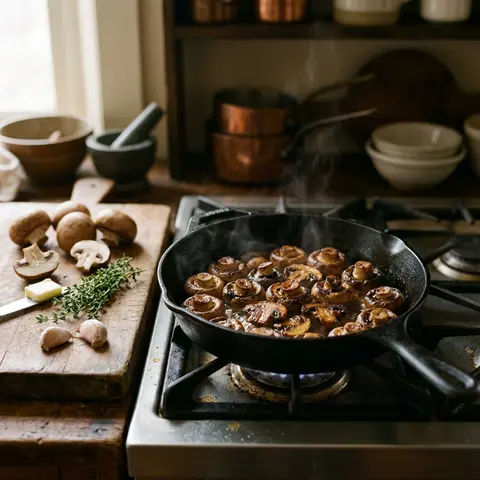
The golden rule for searing: pan hot, mushrooms dry, not too many at once. When too many mushrooms hit the pan at once, the temperature drops, they release water, and steam in their own juice. The result is mushy instead of golden brown. Better to fry in two batches.
Here's how the three methods rank:
- Hard searing: Strongest flavor, best acceptance from kids. Ideal for pasta and as a side.
- Steaming: Milder, good for soups, especially if the mushrooms are puréed afterward.
- Oven: Stuffed mushrooms benefit from even, dry heat, no stirring needed, kids can bridge the wait time themselves.
Herb butter is the best bridge for skeptical kids. Rosemary and garlic bridge the mushroom smell without hiding it. Kids who stir the butter themselves are more curious about the result.
What we see in FamFood user data: mushroom dishes get eaten completely much more often when the mushrooms are seared hard instead of steamed. With over 73% of families who save a mushroom recipe in FamFood and then leave a rating, this is the most consistent feedback. Texture and color decide before the first bite is taken. Among the most-saved mushroom recipes in FamFood, 8 out of 10 explicitly include the step "sear hard" in the instructions.
3 quick mushroom recipes the whole table loves
Mushroom butter pasta, stuffed button mushrooms from the oven, and creamy mushroom soup with crème fraîche: all three dishes land on the table in under 30 minutes and need fewer than 7 ingredients. The kids' job is clearly named for each recipe.
Recipe | Ingredients | Time | Kids' Job | Freezer-Friendly |
|---|---|---|---|---|
Mushroom Butter Pasta | 5 | 20 min. | Sear mushrooms | No |
Stuffed Button Mushrooms | 6 | 25 min. | Mix filling | Yes (unfilled) |
Creamy Mushroom Soup | 6 | 25 min. | Tear mushrooms, stir in crème fraîche | Yes |
Mushroom Butter Pasta: The 5-Ingredient Foundation
Ingredients (4 servings): 400 g pasta (e.g. tagliatelle), 400 g button mushrooms, 3 tbsp butter, 2 garlic cloves, salt, pepper, fresh parsley.
Instructions: Cook pasta according to package directions. Wipe button mushrooms dry and halve them — that's the kids' job. Heat butter in the pan until it foams. Sear mushrooms in two batches until golden brown. Add garlic, cook briefly. Add drained pasta directly to the pan, add a splash of cooking water, toss well. Top with parsley.
The trick: one child can sear the second batch alone if you're standing by. First contact with a hot pan in a safe setting is worth more than any abstract kitchen explanation. For those wanting to plan such evenings better, FamFood's guide What Shall I Cook Today? Solve the Family Dinner Dilemma in 5 Minutes offers concrete weekly ideas.
Stuffed Button Mushrooms from the Oven
Ingredients (4 servings): 16 large button mushrooms, 150 g cream cheese, 2 tbsp chopped fresh herbs (chives, parsley), 1 garlic clove, salt, pepper.
Instructions: Preheat oven to 200 °C (conventional or fan). Twist stems out of the mushrooms — kids do this. Finely chop stems and mix into cream cheese, add herbs and pressed garlic. Spoon filling into caps — that's the second kids' job. Place on a baking sheet, bake 18–20 minutes.
During baking time, no stovetop is involved. Kids can set the table, wash salad, or just wait. The result looks like restaurant food and costs under €4.
Creamy Mushroom Soup in 25 Minutes
Ingredients (4 servings): 500 g button mushrooms or mixed mushrooms, 1 onion, 600 ml vegetable broth, 150 g crème fraîche, 2 tbsp butter, salt, pepper, chives.
Instructions: Dice onion, sauté in butter. Add mushrooms (torn by kids beforehand), sear hard. Pour in broth, simmer 10 minutes. Purée. Stir in crème fraîche — the child does this. Top with chives.
The soup freezes easily. Sear mushrooms briefly, cool, then freeze in portions. Add directly to soup when reheating. Leftovers keep 2 days in the fridge and work surprisingly well as topping on breakfast toast.
Are mushrooms healthy for kids, and how much can they eat?
Mushrooms are safe for children from age 2 onwards and nutritionally worthwhile. They provide B vitamins, potassium, and, when placed briefly in sunlight before cooking, measurably more vitamin D. The recommended portion size is 50–80 g per meal. Cultivated store-bought mushrooms are the safe choice for kids of any age. Wild mushrooms don't belong on plates of children under 10. According to the German Federal Ministry of Food and Agriculture (BMEL), there are no health concerns with store-bought mushrooms when properly cooked.
The vitamin D trick is real and rarely explained in German family blogs: place cultivated mushrooms gill-side up in direct sunlight for 15 to 30 minutes. The German Nutrition Center (BZfE) confirms that mushrooms synthesize vitamin D from UV light much like human skin, a measurable increase that remains even after cooking.
Portion size for kids: approximately 50–80 g per meal as a guideline. Can mushrooms cause digestive problems in small children? Yes, in large amounts, because mushrooms contain indigestible cell wall components (chitin). For children under 3: small amounts, well-cooked, puréed or very soft. If unsure, start with button mushrooms and observe.
Mushrooms are not a meat substitute. But their umami content allows you to reduce the meat portion in a dish without losing the satisfaction flavor. That's a practical lever for families wanting to vary their meals more.
How do you store fresh mushrooms properly?
Fresh store-bought mushrooms keep in the fridge in a paper bag or open container for two to four days. Wrapped in plastic, condensation builds up and they turn mushy, often after just one day. The difference is not marginal: mushrooms in plastic lose texture and aroma about twice as fast as those in paper.
For longer storage: sear briefly in butter, cool, then freeze in portions. In the freezer they keep up to 6 months. When reheating, add directly from frozen to soups or sauces, never thaw then reheat.
Leftover tip from the FamFood kitchen: seared mushrooms keep 2 days in the fridge and work beautifully as topping on breakfast toast with a dollop of cream cheese. A quick breakfast that looks like Sunday brunch and is made from Monday leftovers.
Questions about mushrooms and kids?
Which mushrooms can toddlers under 3 eat?
For children under 3, only cultivated store-bought mushrooms like button mushrooms work — well-cooked and finely chopped or puréed. Their digestive system handles chitin, the indigestible cell wall component of mushrooms, less efficiently than older children. Small amounts from age 2 are safe according to BMEL. Wild mushrooms are unsuitable for children under 3.
Can you eat mushrooms raw, or do they always need to be cooked?
Button mushrooms can be eaten raw, for example in salads. For kids, cooking is recommended because it breaks down the cell structure and makes nutrients more available. Heat also reduces trace amounts of natural irritants that raw mushrooms contain. Chanterelles and wild mushrooms should always be cooked.
How do I tell if a mushroom is still fresh?
Fresh mushrooms have a dry, not slimy surface, a firm texture, and smell spicy-earthy, not sour or rotten. Button mushrooms should be white to cream-colored with no dark pressure spots. When the cap curves up from underneath and the gills are still closed, the mushroom is fresh.
Why do mushrooms get watery when frying, and how do I prevent it?
Mushrooms are over 90% water. When too many go into the pan at once or the pan isn't hot enough, the temperature drops, water escapes, and doesn't evaporate fast enough. Result: mushrooms steam in their own juice instead of frying. Solution: keep mushrooms dry (don't wash), heat pan hard, cook maximum a handful at a time.
Can I freeze mushroom dishes and reheat them later?
Yes, with one caveat: don't freeze raw mushrooms. Sear mushrooms first, cool, then freeze in portions. Finished mushroom soups and sauces with mushrooms freeze for up to 3 months. When reheating, add directly from the freezer to the hot pot, no thawing in between. Pasta and stuffed mushrooms are not freezer-friendly.
Once you've tried the three recipes and developed your own variations, save them directly in FamFood and pull them up with one click next autumn. Recipes that worked once deserve a permanent home. Not somewhere in a notes app. But where your family actually looks.
About FamFood: We're a small kitchen community from Germany who believe the best recipes happen in families, not restaurants. FamFood helps you preserve those recipes, plan your week, and approach the stove more relaxed every evening.