Cooking Rituals for Families: How to Build the Habit
The good intention usually comes in spring. The kids help with pancake batter once, everything goes smoothly, and you think: we'll do this every week now. Three weeks later, everyday life has won.
But the problem rarely lies in willpower. It lies in structure. A one-off kitchen session isn't a ritual. And without ritual, no habit forms.
This post shows you how sporadic "kids-helping-in-the-kitchen" becomes a true family ritual that sustains itself after four to six weeks. Step by step, with concrete decision-making aids.
The essentials at a glance
- Over 70% of parents want to involve children regularly, but fewer than one-third manage it more than twice a week (BZfE, 2023).
- A ritual needs three elements: a fixed time slot, a personal task for the child, and a small symbol.
- Friday or Saturday as your start day increases the chances the ritual survives.
- The mini-version of the ritual (5 minutes, one task) saves hectic weeks.
Why does cooking together so often fizzle out?
According to a survey by the German Nutrition Centre (BZfE), over 70% of parents want to involve their children regularly in the kitchen, but fewer than one-third actually do so more than twice a week. The reason is almost always the same: it's not a lack of willpower, but a lack of fixed structure.
Sporadic cooking feels to children like a favor from the parent, not like responsibility. The child helps because the parent has time today and is in a good mood. On the next stressful Tuesday, the invitation disappears. The child learns: cooking together is something that happens sometimes. Not something that always happens.
Parents give up at the first setback because there's no thought-out plan for it. Without repetition, no ritual forms, and without ritual, no habit. This isn't about character; it's about neurology: habits need repetition at the same trigger.
What we observe with FamFood users: families who set a fixed weekday and a specific task for the child cook together three times as often after eight weeks compared to families without this structure. The difference isn't in motivation, it's in the system.
What makes a cooking ritual different from just helping out?
A ritual has three features that mere helping doesn't: a fixed time slot, a personal task for the child, and a small symbol—for example, an apron, a favorite recipe, or a shared phrase before you start cooking. Only when all three come together does the habit anchor itself in the family's memory.
A fixed weekday beats spontaneous invitations by a wide margin when it comes to sustainability. Spontaneous means: the parent decides. Fixed means: the child expects it. This difference is enormous.
The difference between a task and a role
"Can you peel the potatoes for a sec?" is a task. "You're our spice expert" is a role. Roles create ownership. The child identifies with their position in the kitchen, not just with an action. They come back because they know what they contribute.
Why symbolism isn't just window dressing
An apron of their own, a personal recipe notebook, or a short ritual before you start—like laying out the ingredients together—sounds like small stuff. But symbols mark the transition from everyday life to ritual. The German Institute for Nutrition Research (DIfE) has shown that behavioral routines in children are triggered more by contextual cues than by conscious decisions. The apron isn't an accessory, it's the starting gun.
Which weekday works best, and does the choice really matter?
Friday or Saturday works best as your start day because time pressure is lower and school stress isn't looming. Anyone starting right away with a weekday barely gives the ritual a chance to settle in.
The first weekday must meet two criteria: enough buffer for mistakes and surprises, and no competition from homework or afternoon activities. Once the ritual is solid, you can expand it to a second day. Random frequency without a fixed point doesn't work; two regular days work better than five irregular ones.
Anchor the time in your family calendar before the ritual starts. Not after. If you first ask "Do we have time this week?", you've already undermined the ritual.
Family type | Best start day | Second day (optional) | Why |
|---|---|---|---|
Both parents working, kids in school | Saturday | Wednesday evening | No school stress, enough prep time |
One parent at home | Friday | Tuesday | Calm weekend wrap-up, no Monday pressure |
Single parent, tight time budget | Sunday | none | One stable anchor beats two wobbly ones |
Family with teenager + toddler | Saturday | none | Teen more willing on weekends |
Large multi-generational family | Sunday | none | Natural family gathering point |
Which tasks strengthen the ritual instead of sabotaging it?
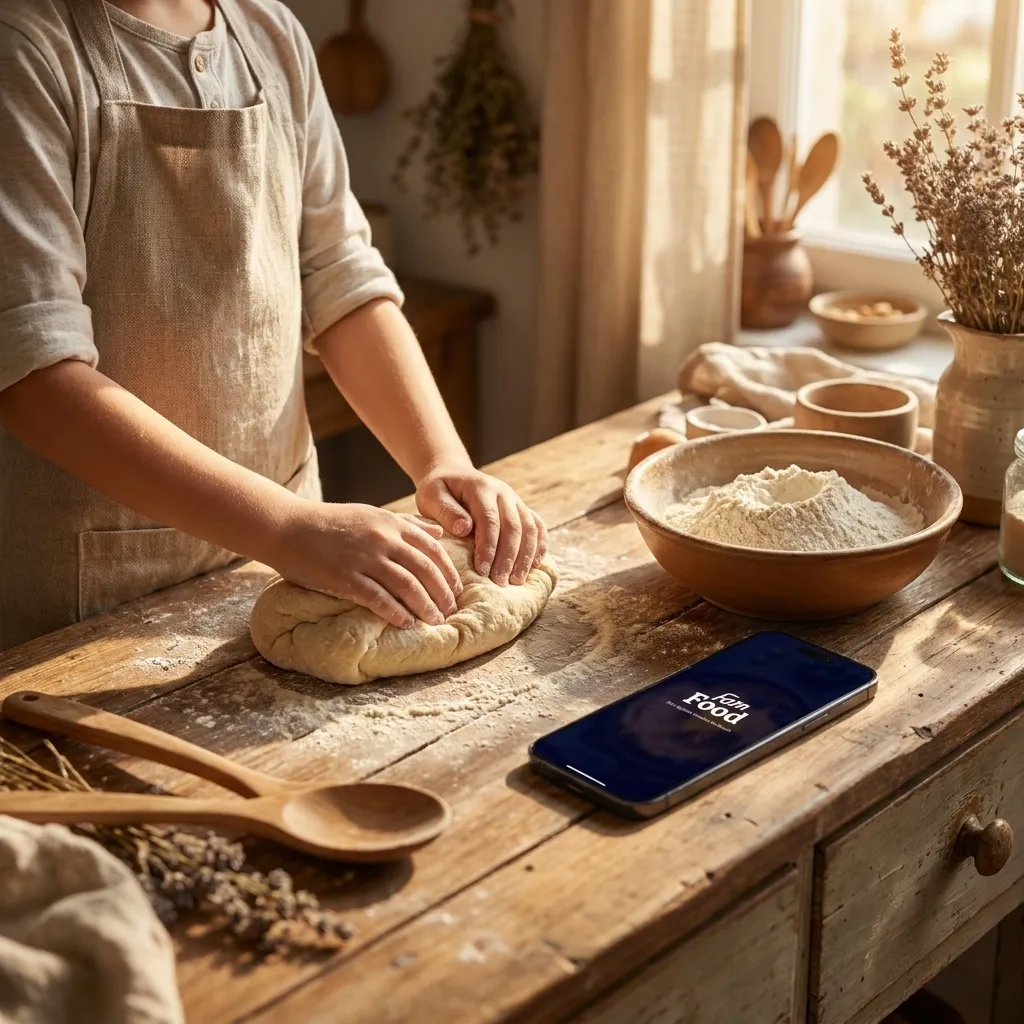
Tasks that work for rituals are ones the child can start and finish alone without waiting for the adult. Washing vegetables, measuring spices, kneading dough: that's not busywork, that's real kitchen responsibility.
The most common mistake is giving tasks that are too complex, need to go too fast, or require constant parental correction. That kills joy faster than any stressful Tuesday.
Repeating the same task is more important than variety. A child who's washed vegetables thirteen times washes them the fourteenth time with pride. Variety is nice, but it comes after routine, not before.
Age group | Ritual-ready tasks | Tasks that endanger the ritual |
|---|---|---|
4-6 years | Gathering ingredients, measuring spices, washing salad, stirring batter | Cutting, working at the stove, complex sequences |
7-10 years | Cutting vegetables (with child-safe knife), tasting sauce, reading recipe aloud | Time-sensitive steps, juggling multiple things |
11+ years | Preparing their own course, using stove with supervision, planning the menu | Tasks without real decision-making power |
A strong motivation anchor: the child picks their own ritual recipe. If they know today is "their" pasta bake, they need no reminder. More on this in the section about recipes as ritual anchors.
If you're unsure which tasks truly fit which age group, the FamFood post Baking with Kids: Learning Format, Not Chaos has a detailed breakdown for baking.
The "I always do this" zone: tasks the child owns
Define exactly one task for each child that belongs solely to them. Not "you can help cut the onions," but "cutting the onions is your job." This distinction sounds small but directly affects their sense of belonging. If a sibling wants to take over this task, the child sorts it out themselves.
How does the ritual survive its first setback?
Every ritual breaks at least once in the first four weeks. What matters isn't whether it breaks, but how quickly the family finds their way back. An emergency plan for stressful weeks—a drastically simplified mini-version of the ritual—is the only thing that reliably helps long-term.
Normalize ritual lapses: missing once isn't a resignation. The biggest risk after a gap is overreacting. Parents who dramatize the missed week teach shame. Children who connect shame to cooking stop enjoying cooking with their parents.
Define the mini-version of the ritual. Five minutes, one task, no complete meal needed. The child sets out the spices while the parent stirs the sauce. That's enough to maintain the repetition and keep the habit loop intact.
How do you restart after a gap? Without drama. "Today is our cooking day again" is enough. No explanation, no apology, no big announcement. The quiet restart is more powerful than any pep talk.
How does the recipe itself become part of the ritual?
When a child knows "their" recipe, they don't just follow along, they cook. Recipes that stick in memory because the child has made them many times become family classics. That's the mechanism through which a cooking ritual becomes family history.
Three to four recipes in rotation beat constantly trying new ones. New is exciting, but familiarity builds skill. A child who's cooked the same lentil stew twenty times will one day cook it alone. That's the goal.
Let the child pick their ritual recipe. Not you. If your child picks "their" pasta bake, even if you find pasta bake boring, own it. Ownership is the strongest motivation driver you have.
Saving and annotating recipes becomes the digital part of the ritual. With FamFood, your child can save their favorite recipe, add a photo, and add notes like "more salt next time" or "Grandma likes it too." Among the most-saved recipes in FamFood, 7 out of 10 have fewer than 8 ingredients, showing that children prefer recipes they can grasp without help.
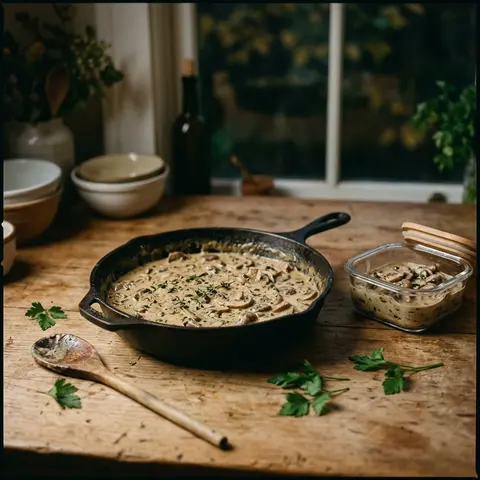
For an easy entry into cooking together with a bit more complexity, check out the FamFood post Cooking Mushrooms with Kids: A Gateway Recipe.
When does a ritual really take hold?
The ritual takes hold when the child asks when you're cooking next, not when parents have to remind them. This role reversal typically happens after four to six weeks of consistent repetition.
The three signs a ritual is anchored:
- The child reminds the parent about cooking day, not the other way around.
- The child reacts to a cancellation with disappointment, not relief.
- The child tells others about "their" recipe or "their" kitchen task.
When all three happen, the habit has moved into long-term memory. After that, you decide: expand the ritual, add a second day, introduce new tasks, or just leave it as is and enjoy what's grown.
Common questions about cooking rituals with kids
At what age can kids meaningfully help with cooking?
Children can start simple tasks around age three, like gathering ingredients or stirring batter. Real responsibility begins around 4-5 years, when the child can complete a task from start to finish on their own. What matters isn't the exact age but whether the task matches the child's physical development.
How do I keep the cooking ritual alive during busy school weeks?
Use the mini-version: five minutes, one task. The child sets out the spices or washes the salad while you handle the rest. The repetition counts, not the completeness. A shortened ritual is a hundred times better than a skipped one because it doesn't break the habit loop.
What if my child doesn't feel like cooking?
First check whether the task fits: too hard, too easy, or not enough real responsibility are the most common motivation killers. Then check whether the child truly cares about the recipe. Let them pick their ritual recipe. If reluctance persists, offer the mini-version, but don't drop the ritual entirely. Pressure creates resistance; an open door creates curiosity. For more ideas on tricky cooking situations, see the FamFood post Kitchen Knives for Kids: Which Blades Are Actually Safe.
How long does it take before cooking together becomes a real habit?
Behavioral research shows simple routines take 21 to 66 days to solidify in children, depending on complexity and consistency (BZfE, Broschüre Ernährungsverhalten, 2023). For a cooking ritual, a realistic timeframe is four to six weeks with at least one fixed weekday. Consistency matters, not frequency.
About FamFood: FamFood is the digital recipe collection for families who want to cook together and pass recipes across generations. We build our app alongside real families because we know everyday kitchen life is messier and more beautiful than any cookbook shows.