Cut Sugar with Your Family: 4-Week Plan
The cookie sits on the plate. Your child looks at you. And most parents think the same thing in that moment: at some point I need to draw a clear line here, right?
But more is at stake than one cookie. Daily hidden sugar that nobody consciously eats adds up to double the WHO recommendation for kids. And a family life run on prohibitions turns into permanent power struggles every evening. So the real question is this: how do you reduce sugar in your family without kids noticing, and without saying no every single day?
The answer isn't what most parents expect.
Key Takeaways
- Children aged 4-13 consume an average of double the WHO-recommended sugar amount, according to BZfE, 2023.
- The biggest sugar sources are drinks, ready-made sauces, and breakfast products, not sweets.
- Strict bans measurably increase children's desire for forbidden foods.
- Tackling one area per week over four weeks gives taste buds time to adapt.
- Natural sweeteners like banana, applesauce, and dates replace sugar in many recipes without losing flavor.
In FamFood households, our data shows drink swaps are accepted roughly three times faster by families than breakfast changes. That's exactly why this plan starts in Week 1 with juice, not cereal.
How much sugar do kids in the UK really consume?
Children aged 4-13 consume an average of double the WHO-recommended daily amount of free sugar, often 60 to 80g instead of the recommended 25g. That's up to 20 teaspoons of sugar per day, according to BZfE, the German Federal Center for Nutrition.
The World Health Organization recommends that free sugar make up less than 10 percent of daily energy intake. For a child with normal calorie needs, that's roughly 25g daily. Less than one fruit yogurt pot.
The difference between natural fruit sugar and added sugar is crucial here. A whole apple delivers fruit sugar along with fiber that slows absorption. A glass of apple juice, by contrast, concentrates the sugar without the fiber. The same goes for fruit yogurt, ketchup, and breakfast cereals, which look harmless at first glance.
The problem isn't the occasional cookie. It's the daily hidden sugar that adds up without anyone really noticing it. And this sugar isn't hiding where most parents look.
Where does sugar hide in everyday family life?
The most overlooked sugar sources aren't sweets, but fruit juices (up to 20g sugar per serving), ready-made sauces (6 to 7g per serving), and breakfast cereals. Together, these three categories can deliver over 60g of sugar per week, often without the family noticing.
A glass of apple juice at lunch, a fruit yogurt at breakfast, and two tablespoons of ketchup at dinner: that's already nearly 45g of sugar without a single sweet treat.
What FamFood users most often underestimate when it comes to sugar: the juice at lunch. Many families swap soda for juice and think they've made the healthier choice. But 200ml of apple juice contains up to 20g of sugar, almost as much as a serving of gummy bears.
Product | Serving | Sugar per serving |
|---|---|---|
Fruit yogurt (strawberry) | 150g | approx. 18g |
Apple juice (100%) | 200ml | approx. 20g |
Ketchup | 30g (2 tbsp) | approx. 6g |
Cereal bar (brand) | 35g | approx. 12g |
Ready-made pesto (red) | 50g | approx. 7g |
Sources: Manufacturer data, nutrition tables Federal Center for Nutrition, 2024.
When reading ingredient lists, a simple rule helps: all endings in -ose (glucose, fructose, sucrose, maltose), plus syrup, concentrate, and cane sugar are sugar, no matter what they're called. If one of these terms appears in the first three ingredients, the sugar content is high.
Just these five products alone can add up to over 60g of sugar together, without a single sweet. What does that tell us? That bans actually sharpen the exact problem they're trying to solve.
Why bans don't work, and what helps instead
Research shows that strict bans increase children's desire for forbidden foods. A gradual approach that doesn't eliminate sweets but puts them in a framework leads measurably to healthier eating habits long-term.
The phenomenon is called reactance.
Once something is marked as unreachable, the desire for it grows. A child whose chocolate is basically forbidden thinks about it more often, eats more of it secretly at grandma's, and never learns to manage sweets.
Nutritionist Ellyn Satter developed the "Division of Responsibility" model for this. The idea behind it is clear: parents decide what comes on the table and when eating happens. Kids decide how much of it they eat. This model takes the pressure off both sides of the power struggle.
A second common mistake: using sweets as a reward. "If you eat your vegetables, you get dessert" automatically makes dessert more valuable than everything else on the plate.
Concretely at the table, it sounds like this: not "you can't have a cookie," but "after lunch today we're having fruit, cookies come tomorrow afternoon." Plan it in by time instead of flatly refusing.
The question remains: what does the changeover actually look like, and do kids even notice the difference?
How do you reduce sugar in four weeks without kids noticing?
Four weeks, one area per week: Week 1 drinks, Week 2 breakfast, Week 3 snacks, Week 4 main meals. Kids barely notice the change because their taste buds have time to adapt, and because you're not switching everything at once.
Week | Area | Main goal | Time required |
|---|---|---|---|
1 | Drinks | Gradually water down juice | 0 minutes extra |
2 | Breakfast | Make your own cereal mix | 10 min. one-time |
3 | Snacks | 3 alternatives to cereal bars | 15 min. prep |
4 | Sauces & main dishes | Replace ready-made sauce with homemade | 20 min. cooking |
Week 1: Start with the glasses
Start with drinks because you get the biggest effect per change here. In the first week, mix the favorite juice 50/50 with water. In Week 2 (within this area), you add three parts water to one part juice. The goal after four weeks is water with a splash of juice or a real spritzer at a 20/80 ratio. Most kids stop noticing the difference after one to two weeks because their sense of taste adapts.
Save the weekly plan straight in the FamFood app so you see what you need at the store and don't leave anything to chance.
Week 2: The breakfast table
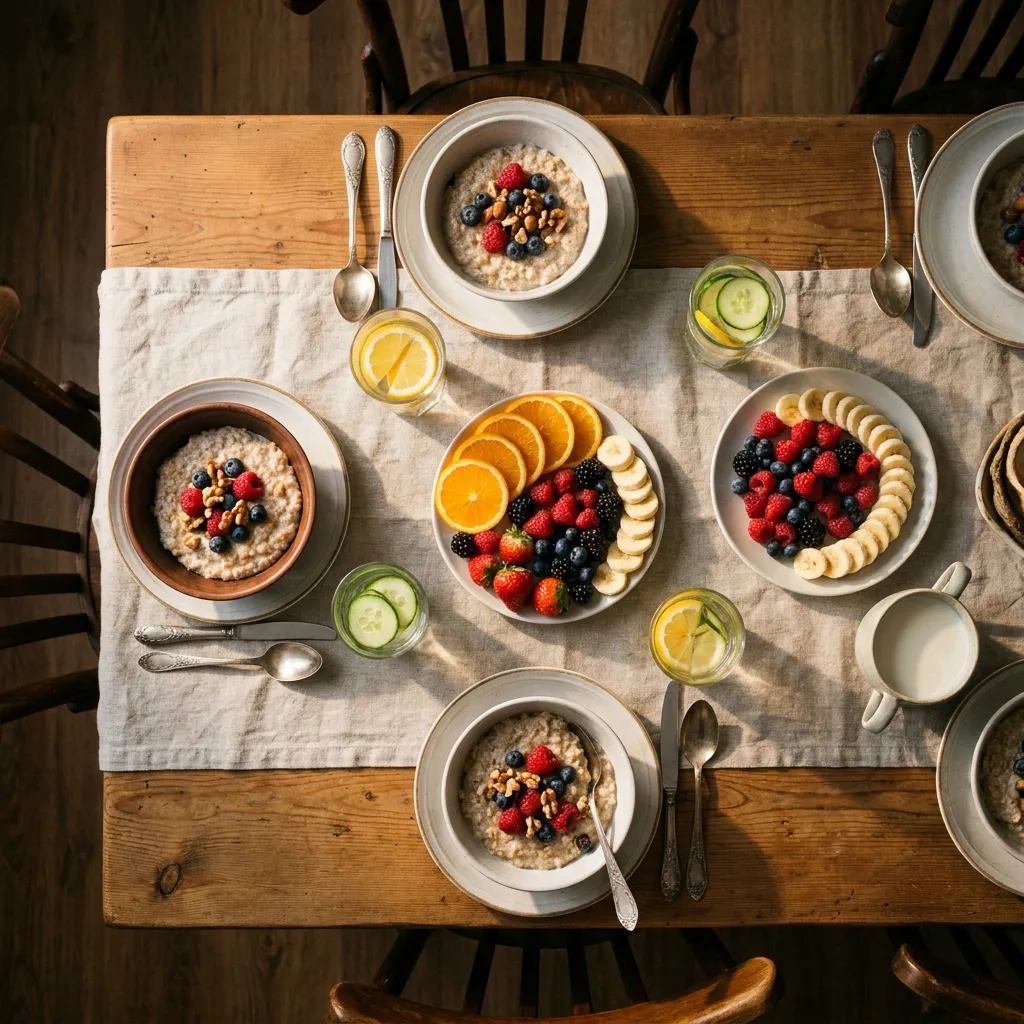
Take a large jar or container and mix your own cereal base: 50% rolled oats (quick or steel-cut), 30% the current favorite muesli, and 20% nuts or seeds. Put the jar on the table and let your child scoop their own. Fresh fruit on top, done. The sugar content is often cut in half, but the satiety effect is higher.
Week 3: Rethink snacks
Three alternatives that kids in FamFood households actually accept: dates with peanut butter (sweet, filling, finger-food-friendly), frozen banana slices with a dusting of cocoa (fresher than any ice cream), and homemade oat bars made from banana, oats, and raisins with no added sugar. The trick isn't the replacement, it's the availability: what's in the bowl gets eaten.
Week 4: Sauces and main dishes
Ready-made ketchup contains about 3g sugar per tablespoon. A quick tomato sauce made from canned tomatoes, garlic, and olive oil has none. The time it takes is 15 minutes, including cleanup. Start with a sauce your family already eats and swap it for a homemade version. Not all at once, just one.
But even the best plan fails if the supply of alternatives isn't right, and that's something almost all families underestimate.
Which alternatives do kids actually like?
Children accept sugar-reduced alternatives most easily when texture and color stay familiar. A ripe banana sweetens batters and smoothies just as much as two tablespoons of sugar, but brings fiber and potassium with it. Applesauce replaces sugar in muffins almost invisibly. Date puree gives bars caramel notes without any sugar added.
In FamFood households, frozen berries as ice cream substitute and homemade hot cocoa with oat milk work especially well because they taste sweet and still deliver much less free sugar than their store-bought versions.
Natural sweeteners compared: honey works from the first year of life and has a more intense flavor, so you need less of it. Maple syrup tastes milder and is popular in pancakes. Both are still sugar, but they deliver more flavor per gram, so you use less.
Among the most-saved low-sugar children's recipes in the FamFood app, banana pancakes (just banana, egg, oats) rank first, followed by berry nice-cream made from frozen bananas and an oat bar with no added sugar. All three have one thing in common: they look like sweets, taste sweet, and no kid asks about the difference.
The decisive trick isn't the replacement, it's displacement through supply. If you offer attractive alternatives, you have to forbid the forbidden far less often. But if kids are supposed to understand the idea, how do you explain it without moralizing?
How do I explain to my kids why we eat less sugar?
Children from around age 5 understand concrete body images better than abstract health arguments. "Too much sugar makes your teeth soft and your belly tired" has much more impact than "that's unhealthy." The difference is tangibility.
Teeth are a strong, visible argument. Cavities are real and concrete for kids, without creating fear. For teens, the energy angle works better: sugar gives quick energy, then comes the crash. Sports and school concentration suffer noticeably.
A particularly effective method is the detective role. At the next store visit, put two similar products in your child's hand and ask: "Which one has more sugar?" The BLE school program "School + Eating = Top Marks" uses exactly this approach because kids who compare things themselves store the information as their own.
What you should avoid: moralizing, creating guilt, demonizing sweets. Kids don't learn through guilt. They learn through curiosity and self-efficacy.
This works well in your own household, but what if grandma, your partner, or siblings bring a completely different normal with them?
What do you do if the rest of the family won't join in?
If grandma, your partner, or siblings won't join the sugar reduction, a simple principle helps: shape your own home as a base camp without imposing rules on other households.
The base camp principle means: in your home, the new normal is what's on the table and in the fridge. Out and about, relaxed exception applies. A birthday party, Easter at the grandparents', vacation: these aren't setbacks, they're exceptions that come with life.
Talk to grandparents not as a lecture, but as a request: "We're trying to buy fewer ready-made things right now. If you want to bake with the kids, just bake from scratch." That gives grandma an active role instead of forbidding her the sweets.
Structure helps more than discipline. If you plan your weekly menu, you have fewer impulsive grabs at the shelf. Start with one week, write down three dinners, and buy exactly for those. That's enough to feel the rhythm. And without the effort you might be imagining right now.
Frequently asked questions
From what age should I consciously limit my child's sugar consumption?
From the first year of life, pediatricians and BZfE recommend avoiding added sugar. Complementary foods should generally be introduced unsweetened. From preschool age, it's worth actively observing sugar sources in everyday life because habits solidify here. The earlier taste buds know less sweetness, the easier it stays long-term.
Is fruit sugar as harmful as table sugar?
Whole fruit is unproblematic because fiber brakes sugar absorption. Isolated fruit sugar (fructose) in juices, syrups, and processed products, on the other hand, is metabolized in the liver similarly to table sugar and should be limited. The source makes the difference: one apple yes, apple juice daily no.
How much sugar per day is safe for kids?
The WHO recommends for children less than 10 percent of daily energy from free sugar, which equals about 25g or 6 teaspoons per day. For children under 2 years: ideally no added sugar. This amount refers to free sugar, meaning added sugar and sugar in juices, not natural sugar in fruit and milk.
What are good alternatives to sweets as rewards for kids?
Rewards work best when they have nothing to do with food: shared time, an outing, a sticker, an extra bedtime story. When food is used as a reward, it gets emotional special status that's hard to correct later. If it has to be something sweet, offer homemade date balls or banana pancakes instead.
Can my child still eat sweets after the switch?
Yes. The goal isn't a sugar ban, but a different daily norm. Sweets can be eaten mindfully and guilt-free when they're exception rather than habit. A sweet on Sunday afternoon is no problem. The daily cereal bar, juice at breakfast, and ketchup on the lunch plate are.
About FamFood
FamFood is the recipe app for families who want to cook without reinventing dinner every night. We collect what works in real kitchens and give you the structure that makes daily life easier. No food coaching, no perfectionism, just good food for everyone at the table. Find everything at famfood.app.




