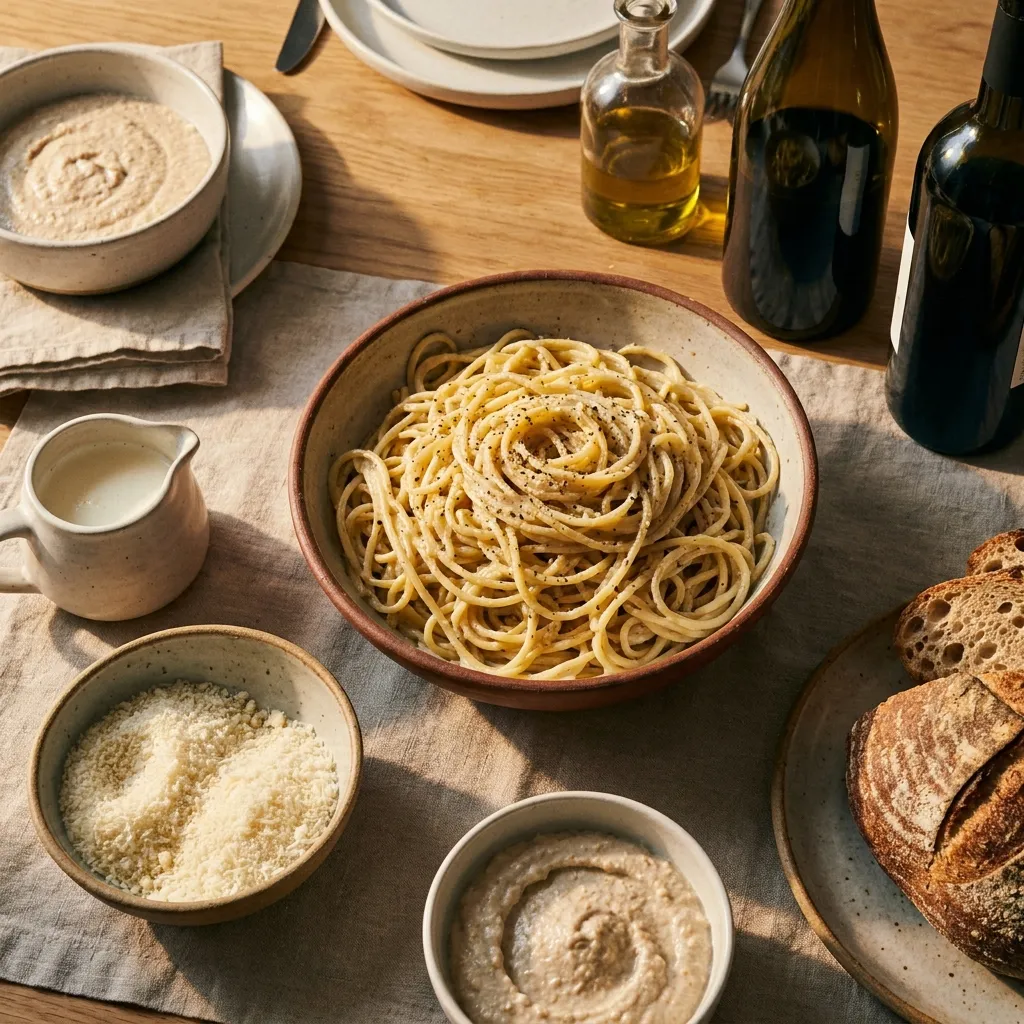
Dairy-Free Cooking for the Whole Family
One family member can't tolerate lactose, the rest can. Two pots steam simultaneously, the evening ends frustrated instead of together, and someone feels like the odd one out. It doesn't have to be this way.
This situation is more common than you think. And there's a cooking strategy that reduces the double effort to a minimum without anyone sacrificing taste.
Key Takeaways
- Around 15–20% of Germans struggle to digest lactose, according to the German Nutrition Society (DGE). That means most families have at least one affected person.
- Modular cooking (base for everyone, toppings separate) eliminates the double workload in dairy-free family kitchens.
- Hard cheese and butter are fine for most people with lactose intolerance. Many processed foods, however, are problematic.
- Children need 700–1000 mg of calcium daily, according to the DGE. This is achievable without cow's milk.
Who is actually affected, and why does that change everything?
About 15–20% of Germans struggle to digest lactose, as documented by the German Nutrition Society (DGE). In many families, statistically speaking, at least one person is affected—often a school-age child or a woman over 30. This constellation is no exception in German kitchens; it's everyday reality.
First, an important distinction: lactose intolerance is not an allergy diagnosis but an enzyme deficiency. The body doesn't produce enough lactase to digest milk sugar. The result: bloating, stomach pain, diarrhea. A true cow's milk allergy attacks milk protein and requires complete avoidance of all dairy products. If you're unsure which applies to you, get medical clarity before overhauling your meal plan.
What we observe in the FamFood community: the affected person adapts quietly for a long time, eats small portions, suffers in silence, or skips certain meals without bringing it up. That's not a good deal for anyone. When you name the issue openly, you can organize your kitchen much more relaxed—without anyone feeling like everything's been turned upside down.
Which ingredients really hide lactose, and which don't?
The biggest surprises are processed cold cuts, margarine, some baking powder mixes, and bottled sauces. Pure butter, by contrast, contains so little lactose that many people with lactose intolerance tolerate it fine. The key is reading the ingredient list instead of just trusting a lactose-free logo.
Lactose hides under different names: "milk powder," "whey," "milk sugar," "cream," "butter" in processed foods, or simply "lactose" as a filler in medications and spice blends. Anyone focusing only on the green seal will miss many of these sources.
On the flip side, many affected people avoid foods that are actually safe. Hard cheese like Parmesan, Bergkäse, or aged Gouda contains almost no lactose because of the aging process. Ghee is practically lactose-free. Yogurt is often better tolerated than milk because bacterial cultures do some of the lactase work.
Green List: These dairy products are usually no problem
Product | Lactose Content (approx.) | Notes |
|---|---|---|
Butter | < 0.1 g / 100 g | Tolerated by most people with lactose intolerance |
Ghee (clarified butter) | Traces | Practically lactose-free |
Hard cheese (Parmesan, Bergkäse) | < 0.1 g / 100 g | Long aging breaks down lactose |
Plain yogurt (3.5%) | approx. 3–4 g / 100 g | Often better tolerated than milk |
Lactose-free milk | < 0.1 g / 100 g | Practical, cheaper than plant-based drinks |
Red List: Lactose lurks here unexpectedly
Product | Why problematic? |
|---|---|
Processed deli meats / brühwurst | Milk powder as binder |
Margarine (not all types) | Whey protein as additive |
Instant mashed potato powder | Dry milk in the recipe |
Ready-made sauces and packet soups | Cream, milk powder, whey |
Spice blends | Lactose as anti-caking agent |
Whole milk chocolate | High milk content |
How do you cook one dish that everyone can eat?
Modular cooking is the key: prepare the base dish completely without dairy products, then set out cheese and cream separately for toppings. This strategy works for 90% of everyday dishes, requires no extra prep time, and eliminates the double workload. Whether pasta bake, soup, or stir-fry, the critical moment is always the "add cream" step. Plan for that, and you cook one relaxed meal for everyone.
Pasta bake: Cook pasta and tomato sauce without cream or cheese. Before baking, remove the portion for the affected person, add lactose-free cream or cashew cream, put it in the pan separately. The rest of the family gets regular cheese on top.
Vegetable soup: Cook soup completely without cream. At the table: small pitcher of regular cream for everyone, small pitcher of oat cream or coconut milk for the affected person. Both are served at the same time; no one notices the difference in the process.
Stir-fry: Prepare vegetables and protein in the pan using only oil, no butter or cream. For seasoning: Parmesan for everyone (no problem for lactose intolerance), yogurt dip in a small bowl—regular and lactose-free side by side.
The critical branching point in almost every recipe is the "add cream" or "top with cheese" step. Keep that in mind, and you know exactly when to set one portion aside.
In FamFood, we see this: among recipes users save as "dairy-free adapted," 6 out of 10 replace whipped cream with oat cream or coconut milk. Butter is almost never swapped out in saved recipes—probably because most affected people tolerate it well.
Which replacement products actually work, and which are a waste of money?
Lactose-free milk and plant-based drinks differ significantly in taste, heat stability, and price. Lactose-free cow's milk is the most straightforward entry point for most dishes: it tastes nearly identical to regular milk, is heat-stable, and cheaper than most plant-based drinks. Plant-based alternatives make sense mainly if you need to avoid milk protein completely or want a specific flavor.
Product | Cooking | Baking | Own flavor | Price (approx.) |
|---|---|---|---|---|
Lactose-free cow's milk | Excellent | Excellent | Neutral | ca. €1.20–1.60/L |
Oat milk | Good | Good | Slightly sweet | ca. €1.40–2.00/L |
Coconut milk (full-fat) | Good for sauces | Limited | Pronounced | ca. €0.90–1.50/400ml |
Almond milk | Limited | Limited | Nutty | ca. €1.50–2.20/L |
Soy milk | Good | Good | Slightly legume-like | ca. €1.20–1.80/L |
Cashew cream (homemade) | Excellent for sauces | No | Mild, creamy | ca. €0.50/serving |
For cheese alternatives: hard cheese like Parmesan is the natural, cost-free option for most affected people. Nutritional yeast gives sauces and bakes a savory, cheese-like taste; a 250g bag costs about €3–4 and lasts a long time. Cashew cream (soaked cashews blended) works great for pasta sauces.
Stiftung Warentest has shown in tests that brand-name oat and soy milk often perform better than off-brand versions, which can get flaky when heated. For hot sauces and bakes, it's worth reaching for a tested brand.
How do you plan the week so no one feels they're cooking "special"?
If you plan 3–4 evening meals weekly without dairy from the start, those nights need no adjustment. That's the fastest way to cut the double workload without the family feeling they're consciously giving up anything.
The trick is in menu choice: Asian dishes (stir-fries, curries, wok) traditionally use coconut milk or no dairy at all. Mediterranean cooking relies on olive oil instead of butter, tomatoes instead of cream. Middle Eastern dishes like hummus, lentil soups, or eggplant stir-fries are dairy-free anyway. On those nights, the family cooks one meal for everyone.
For the remaining 1–2 nights with dairy-based dishes, you use the modular strategy: split once, and you're done.
Two-tier shopping list:
- Shared base: all ingredients everyone eats (vegetables, legumes, meat, pasta, oils, spices, hard cheese)
- Small add-ons: lactose-free milk, oat cream, lactose-free yogurt for the affected person
With FamFood's shopping list feature, you can manage both parts in one shared list, color-coded so nothing gets mixed up at the store.
Children and lactose intolerance: What do you watch during growth?
Calcium stays the critical nutrient when dairy is reduced. The German Nutrition Society (DGE) recommends 700–1000 mg of calcium daily for children ages 4–12, achievable without cow's milk if you know the right sources.
The best non-dairy calcium sources kids actually eat:
- Broccoli: approx. 47 mg / 100g, more easily absorbed with vitamin C
- Almonds: approx. 250 mg / 100g, practical as almond butter in breakfast porridge
- Fortified oat milk: approx. 120 mg / 100ml, similar to cow's milk depending on brand
- Sesame / tahini: approx. 670 mg / 100g, unobtrusively in sauces and dips
- Kidney beans: approx. 94 mg / 100g, popular in kids' curries or tacos
- Kale: approx. 150 mg / 100g, in smoothies or as chips
An important note: calcium is barely absorbed without enough vitamin D. The German Federal Ministry of Food and Agriculture (BMEL) points out that a large share of the German population, children included, gets below-average vitamin D. Before making a permanent dietary shift for your child, a quick chat with the pediatrician is worthwhile.
5 dairy-free family dishes everyone actually eats
The best dairy-free family dishes aren't compromise dishes. They're classics that work without dairy anyway or shift with a single hand motion. No one at the table needs to notice that something was "left out."
Dish | Why it works | The key swap |
|---|---|---|
Spaghetti Bolognese | Meat-based classic, needs no dairy | Parmesan for everyone (naturally lactose-free), done |
Chicken-vegetable stir-fry | Asian, oil instead of butter, soy sauce instead of cream | None needed |
Red lentil soup | Middle Eastern classic, plant-based and filling | Yogurt topping: regular vs. lactose-free served separately |
Tomato salsa tacos | Mexican, base fillings without dairy | Crème fraîche vs. cashew cream offered separately |
Pan-fried gnocchi with spinach | Gnocchi often dairy-free, olive oil base | Parmesan on the table; everyone takes their own |
All these recipes can be saved in FamFood and tagged directly with a variation note: "Yogurt served separately" or "Cashew cream instead of cream." That way, everyone in the kitchen knows what's up, even if someone else is cooking.
Common questions about dairy-free family cooking
Can I still eat butter and hard cheese with lactose intolerance?
Yes, for most affected people that's fine. Butter has less than 0.1g of lactose per 100g; hard cheese like Parmesan or aged Gouda has even less because the aging process breaks down milk sugar. Individual tolerance varies, but the most common mistake is avoiding these products out of caution when you actually tolerate them well.
What's the difference between lactose-free and dairy-free?
Lactose-free means the milk sugar has been removed or broken down; milk protein is still there. Dairy-free means no dairy product at all. For people with lactose intolerance, lactose-free is enough. For people with cow's milk allergy or veganism, only dairy-free is safe.
Which plant milk works best for cooking and baking?
For sauces and savory dishes, unsweetened oat milk (barista-style) is the most neutral choice. Coconut milk works well for Asian and Middle Eastern dishes but brings its own flavor. For baking, soy milk is most reliable because it mimics cow's milk's protein behavior best.
How do I spot hidden lactose on ingredient lists?
Look for: "milk sugar," "lactose," "milk powder," "skim milk powder," "whey," "whey powder," "cream," "butter" as ingredients in processed foods. Lactose also shows up in medications and spice blends as a carrier. A "lactose-free" logo doesn't replace reading the ingredient list.
Do kids on dairy-free diets get enough calcium?
Yes, if you use the alternatives deliberately. The DGE recommends 700–1000 mg daily for children ages 4–12. Fortified oat milk, sesame, almonds, broccoli, and legumes hit that target if they land on the plate regularly. Make sure vitamin D is covered; it boosts calcium absorption significantly.
About FamFood: We built FamFood for families who cook together and don't want to lose track. Our recipes, shopping lists, and planning tools come from real family life, not textbooks.




