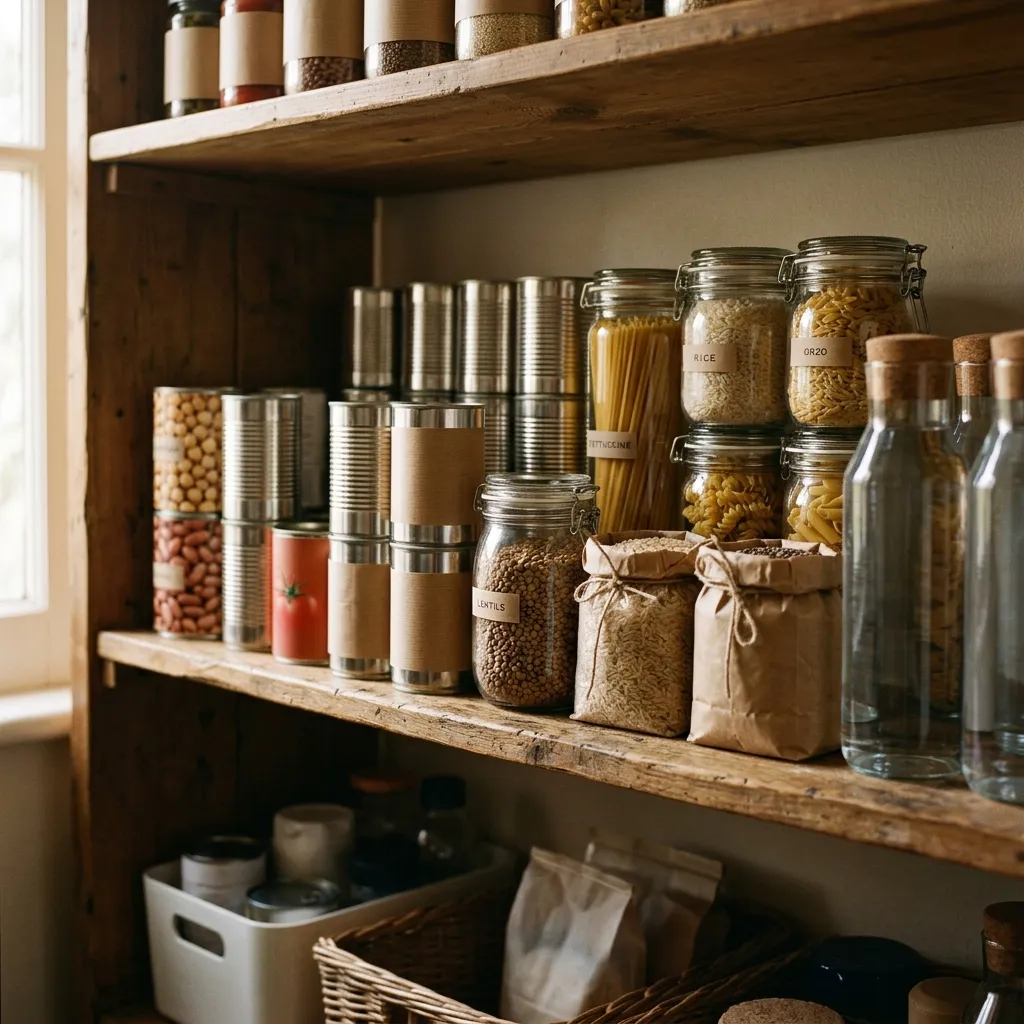
Family Emergency Stock: A Real Plan
Most families think they have an emergency stock. Then someone opens the cupboard.
The pasta expired a year ago. The lentil cans are still in their original packaging because the kids won't touch them. The bottled water is long gone because someone thought it was regular pantry stock. That's what an emergency stock actually looks like in most homes, if you're honest about it.
How do you build a supply your family will actually eat, instead of watching it gather dust and expire?
At a glance
- The German Federal Office for Civil Protection and Disaster Assistance (BBK) recommends a minimum of 10 days; 4 weeks is more realistic for families.
- For 4 people and 10 days, you need roughly 20 kg of basics plus 80 liters of water.
- Kids eat familiar foods when stressed. Your stock must match your actual recipes.
- Rotation is the only system that works long-term: take from front, stock from back.
- Setup cost: €80–€150, spread over 8 weeks at €10–20 per week.
How long should a family emergency stock really last?
The German Federal Office for Civil Protection and Disaster Assistance (BBK) recommends a stock for at least 10 days. For a four-person family, that means roughly 20 kg of basic foods plus drinks, divided by calorie need and age. Two to four weeks is a smarter target for families with children, because supply shortages rarely end after 10 days. The German Federal Center for Nutrition (BZfE) confirms that long-term stock management with rotating foods is the most effective protection strategy for private households.
Calorie needs vary widely. A toddler needs 1,200–1,400 kcal per day; a teenager needs 2,200–2,800 kcal; adults fall in between. If you don't factor that in, you'll either buy too little or stock foods unsuitable for small kids.
Why do so many people underestimate the 10-day mark? Because they think in meals, not grams. 400 g of pasta sounds like a lot, but it's just two dinners for four people. Write down what your family actually consumes in a week, then multiply by 1.5. That's your starting point.
But quantities and days are only half the story, because what good is a perfectly calculated stock if the kids simply refuse to eat it?
What goes into a family emergency stock with children?
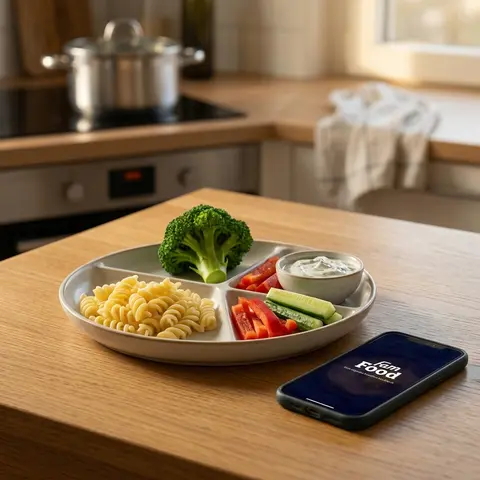
A family-friendly emergency stock has three layers: base calories (grains, legumes, oil), flavor carriers (canned goods, broth, tomato paste), and kid-approved items (oatmeal, nut butter, canned fruit). Without the third layer, your stock becomes a stress experiment, not a safety net. Kids who are picky under normal circumstances get even more reluctant when pressure rises, not more flexible. Your stock must match what your children actually eat every day.
Quantity chart for 4 people, 10 days
Category | Food | Amount (4 people, 10 days) | Shelf life |
|---|---|---|---|
Grains | Pasta | 3.0 kg | 2–3 years |
Grains | Rice | 2.0 kg | 4–5 years |
Grains | Oatmeal | 1.5 kg | 1–2 years |
Legumes | Lentils (dry) | 1.0 kg | 3–5 years |
Legumes | Chickpeas (canned) | 6 cans, 400 g each | 3–5 years |
Vegetables | Canned tomatoes | 8 cans, 400 g each | 3–5 years |
Vegetables | Mixed vegetables (canned) | 6 cans, 400 g each | 3–5 years |
Fruit | Peaches/pears (canned) | 4 cans, 425 g each | 2–4 years |
Fat | Olive oil / sunflower oil | 1.5 liters | 1–2 years |
Seasonings | Salt, sugar, broth cubes, tomato paste | 500 g each / 6 cubes / 3 tubes | 2–5 years |
Kid-approved | Nut butter (peanut/almond) | 2 jars, 350 g each | 1–2 years |
Kid-approved | Long-life whole milk (UHT) | 8 liters | 3–6 months |
Protein | Tuna in oil (canned) | 8 cans, 185 g each | 3–5 years |
These amounts cover breakfast, lunch, and dinner at moderate calorie needs. Adjust the chart based on what your family actually consumes.
When kids are picky: the backup plan in your stock
What we see again and again with FamFood families: parents buy with health optimization in mind and forget what their kids actually eat. Millet and brown rice sit untouched on the shelf. Our tests clearly show that children prefer familiar foods the moment everyday life gets stressful. Parents tell us their kids reject lentil soup they already refuse during normal times, and absolutely reject it in a crisis. So buy what you actually eat, and build a small buffer of it.
The backup plan is simple. For each kid breakfast favorite, plan a small reserve. Oatmeal is quick to prepare, lasts forever, costs little, and most kids accept it. Nut butter on crackers works as a snack that needs no cooking. Canned fruit is a real treat for many kids, not a fallback.
Allergies and intolerances belong in your planning from day one. Rice-based stock instead of pasta, oatmeal from certified gluten-free production, legumes as your protein source: all of this keeps well. Find more in our article Cooking Gluten-Free for Kids: How It Works Daily.
Buying the right things solves only one problem. The other is that your stock then sits untouched on a shelf for years, and not for the reasons you might think right now.
How do you organize your emergency stock so it doesn't expire?
Spend €200 once and never check again: in 18 months, most of it is waste.
That's the heart of the problem.
The only system that works long-term is rotation: take from front, stock from back. You don't buy once for stock; you weave stock into your normal shopping routine. Done consistently, you'll never have expired goods and zero extra effort. The difference from classic panic buying is you're not buying extra, just maintaining a small buffer all the time.
First-in-first-out (FIFO) means: the product you bought first gets used first. New cans go to the back, older ones move to the front. No special storage needed; it works in a regular kitchen cupboard.
Our best-by date check runs once a quarter. Five minutes, fixed calendar slot, tie it to spring cleaning once a year. Anything expiring in the next three months goes straight into weekly shopping.
For storage: cool, dark, dry. A basement under 15°C is ideal. No basement? A closet or cool room works. Direct sunlight and heat over 20°C speed decay significantly for oil and canned goods.
Digital inventory lists help. In FamFood, you can track your stock as a list, see exactly what you have, spot what needs replacing, and avoid double-buying. Keeping it all in your head fails eventually, especially with kids who regularly raid the cupboard.
And this is exactly where most families quietly fail: not at the buying stage, but at one line item almost no checklist mentions.
Water in your emergency stock: how much does your family really need?
Two liters per person per day for drinking and cooking, according to BBK minimum guidance. For a four-person family over 10 days, that's 80 liters, or 40 bottles of 2 liters. The BZfE recommends adding 20–30 liters for basic handwashing and preparing hot meals. Hygiene and cooking sit on top of drinking needs.
PET bottles from the store are the simplest solution. Shelf life: typically 1–2 years. Water canisters at 10 liters save space if stacked compactly. Swap filled canisters regularly, at least every 12 months.
Water filters (ceramic or activated charcoal, for example) are a useful backup if tap water is available but quality is limited. But they don't replace stored water. Plan with stored water, not the filter.
Water is settled, but what good are all your stored water and food if, when crisis hits, nobody knows how to turn it into meals the kids will actually accept under pressure?
How do you plan meals from emergency stock that kids will actually eat?
The biggest mistake: buy stock that never lands on your table during normal times. If your kids refuse lentil soup normally, they'll refuse it even more in a crisis. Your stock must be compatible with your actual recipes, not a theoretically balanced diet plan. Think of stock like a silent promise: it delivers only if it fits your family.
Three recipes you can make entirely from stock and that most kids accept:
- Pasta with canned tomato sauce. 500 g pasta, 2 cans tomatoes, olive oil, salt, dried oregano. Done in 20 minutes. Kids know it, kids like it.
- Rice skillet with canned vegetables. Cook rice, quickly sauté drained mixed vegetables, season with broth and soy sauce. Protein: add chickpeas or tuna.
- Oatmeal porridge with canned fruit. Heat oatmeal with UHT milk, top with drained peach or pear slices. Kids accept it even as dinner when pressure is high.
Spices and sauces are the most commonly forgotten gap in emergency stock. Salt and oil alone won't make food taste good. Garlic powder, oregano, paprika, soy sauce, hot sauce, and mustard cost almost nothing, last forever, and turn ration food into real meals.
How you weave stock into your weekly routine as part of meal planning instead of a special project is explained in our article Meal Planning for Families: Plan Stress-Free for 7 Days.
Now you know what you'd actually eat. The remaining question is what it really costs, and whether you can answer that in 8 weeks.
How much does a solid emergency stock for a family cost?
You can build a 10-day stock for four people for €80–€150, depending on whether you choose brands or store brands. The setup doesn't happen all at once: an extra €10–20 per week is enough to reach your goal in 8 weeks.
Category | Example products | Cost approx. |
|---|---|---|
Grains (pasta, rice, oatmeal) | 6.5 kg total | €8–12 |
Legumes (canned + dry) | 6 cans + 1 kg lentils | €7–10 |
Vegetable and fruit cans | 14 cans | €14–20 |
Tuna, nut butter, UHT milk | 8 cans + 2 jars + 8 l | €20–30 |
Oil, spices, salt, broth | Basic stock | €10–15 |
Water (40 × 2-liter bottles) | Store-brand supermarket | €15–25 |
Total | €74–112 |
These prices are based on a market check at German store brands (Rewe, Edeka, DM) in December 2024. Name brands cost €20–40 more. For legumes and grains, store brands are worth it because quality difference is minimal. For tuna in oil, a better product makes sense: cheap tuna in water tastes even worse under stress. According to Stiftung Warentest, quality gaps between store and name brands for basic foods are usually small.
The 8-week build plan: weeks 1–2 base grains and water. Weeks 3–4 canned goods and legumes. Weeks 5–6 spices, oil, broth. Weeks 7–8 kid-friendly items and fill gaps.
The budget is set, but money alone won't protect you from the three mistakes that make a stock worthless anyway.
Which emergency stock mistakes cost you time and money?
The three costliest mistakes: buy too much at once (goods expire), buy foods your family won't eat (lands in trash), and never rotate stock (everything is worthless after two years). All three are avoidable with a simple system, without reorganizing your life.
Mistake 1: Panic-buy without a rotation plan. Spend €200 once and never check again: in 18 months, most is waste. Better to buy a small surplus weekly and weave it into daily life.
Mistake 2: Health-optimized instead of family-compatible. Quinoa, amaranth, and buckwheat kernels aren't bad foods. But if your kids don't know them, they'll reject them in a crisis. Buy what you actually eat.
Mistake 3: No fixed storage location. If stock is scattered across three cupboards, the basement, and the garage, you lose track guaranteed. One fixed place, clear structure, digital inventory.
One question remains that almost everyone overlooks: what good is the best stock if nobody eats it? What you can do this week is smaller than you think. Check what's already in your house. Write a list. At your next shopping trip, buy 3 extra cans and 6 liters of water. That's the start.
Frequently asked questions about family emergency stock
Which foods have the longest shelf life for emergency stock?
Dry rice, salt, sugar, and honey last nearly indefinitely with proper storage. Dried legumes and pasta last 3–5 years. Metal-can canned goods last 3–5 years, sometimes longer. Oils and oatmeal should be used and replaced every 1–2 years.
How do I store emergency stock in a small apartment with no basement?
Use existing spaces strategically: under the bed (flat boxes), in cupboards behind clothing, in a cool hallway. What matters is darkness and temperatures under 20°C. Water bottles can be stored flat to save space. Skip bulky large containers and go with many small units instead.
Do I need a separate emergency stock for infants?
Absolutely yes. Exclusively breastfed babies are fine as long as the mother drinks and eats enough. Formula-fed babies need powdered infant formula as backup, plus clean water for preparation. Plan at least 2 weeks of powder and enough water to mix it. Jarred prepared foods as a short-term buffer for babies eating solids makes sense.
How often should I check and refresh my emergency stock?
A best-by date check once a quarter is enough. Set a fixed date, like the first Sunday of March, June, September, and December. Anything expiring in the next three months goes into weekly shopping. Anything expired doesn't automatically go in the trash: many canned goods are fine 1–2 years past the best-by date. Smell and look before you throw away.
About FamFood
At FamFood, we're building the digital family cookbook for everyday German life. What drives us: families should eat well without asking every evening what goes on the table. Stock management, meal planning, recipes with kids, it's all connected. And that's exactly what we build.