Gluten-Free Cooking for Kids: Daily Family Meals Made Simple
One family member can't eat gluten, everyone else eats normally. It sounds like double work, but with a few clear rules, you can run a kitchen that keeps everyone fed and happy without cooking two separate meals. You don't need a second burner, a second oven, or exotic superfoods. You need a plan.
Key Takeaways
- A mixed kitchen (one child gluten-free, everyone else normal) works when you actively prevent cross-contamination.
- Wheat, spelt, rye, and barley are off-limits. Hidden gluten in sauces and processed foods is the most common mistake.
- Three kitchen adjustments are enough to start: separate cutting boards, a dedicated shelf, and one simple rule about crumbs.
- Naturally gluten-free dishes like potato soup or risotto cost no more than regular meals and need no substitute products.
- Specialty gluten-free products cost 2–3 times as much as conventional alternatives. Basic ingredients like rice flour and legumes keep costs down.
Does the whole family need to eat gluten-free if one child has celiac disease?
No, they don't. But a mixed kitchen based on a few shared rules makes daily life easier for everyone and significantly reduces cross-contamination risk. The alternative—cooking two completely different meals every day—takes more time than it saves.
Celiac disease is an autoimmune condition where even tiny amounts of gluten damage the intestinal lining. It's medically different from gluten sensitivity, where people feel uncomfortable but don't risk measurable gut damage. With celiac disease, there's no safe threshold. A single crumb counts.
According to the German Society for Gastroenterology (DGVS), celiac prevalence in Germany is about 1% of the population—roughly 800,000 people. Many cases go undiagnosed for years. That means many families already have an affected member without knowing it.
The main risk in a mixed kitchen is cross-contamination. Using the same pan for gluten-containing and gluten-free food? Problematic. Bread crumbs on the cutting board? Enough to trigger a reaction. If you address this risk consistently, you can easily run a mixed kitchen. And if you don't want the hassle, you can just cook more naturally gluten-free dishes—then you don't need special versions at all.
What can't go in a gluten-free kitchen?
Wheat, spelt, rye, barley, and regular oats are off-limits. The tricky part is hidden gluten in sauces, spice mixes, baking powder, and even some ketchups. If you only watch out for obvious grains, you'll miss the real culprit.
The most common hiding spots at the supermarket
EU food labeling rules (LMIV) require manufacturers to mark gluten-containing ingredients on packaging, usually in bold. But "starch" with no source listed or "spices" without details can contain gluten. When shopping, don't just read the big letters—read the ingredient list.
Product | Gluten Trap | Safe Alternative |
|---|---|---|
Soy sauce | Usually contains wheat | Tamari (gluten-free soy sauce) |
Bouillon cubes / stock | Often wheat-based yeast extract | Gluten-free broth, or make your own |
Baking powder | Wheat starch as anti-caking agent | Gluten-free baking powder (e.g., cream of tartar) |
Breadcrumbs | Directly from wheat bread | Ground almonds, cornmeal, GF panko |
Ketchup / condiments | Thickeners from wheat starch | Varieties labeled "gluten-free" |
Quick-swap list for everyday use: Tamari instead of soy sauce, cream-of-tartar baking powder instead of standard, cornmeal instead of breadcrumbs. These three swaps cover the most common daily pitfalls.
How do you set up a gluten-free family kitchen without extra work?
Three steps are enough to start: separate cutting boards and sieves for gluten-free ingredients, a dedicated shelf for gluten-free pantry items, and one simple family rule about crumbs. Follow these three things consistently, and you've eliminated the most common cross-contamination sources.
Color-coding your kitchen tools is the easiest trick. One red cutting board for gluten-free ingredients, one blue for everything else. Kids understand colors instantly. Same goes for sieves: the colander you use for gluten-free pasta can't touch the same mesh as the one for regular pasta. Wooden spoons and porous materials are hard to clean and should be separated for gluten-free use.
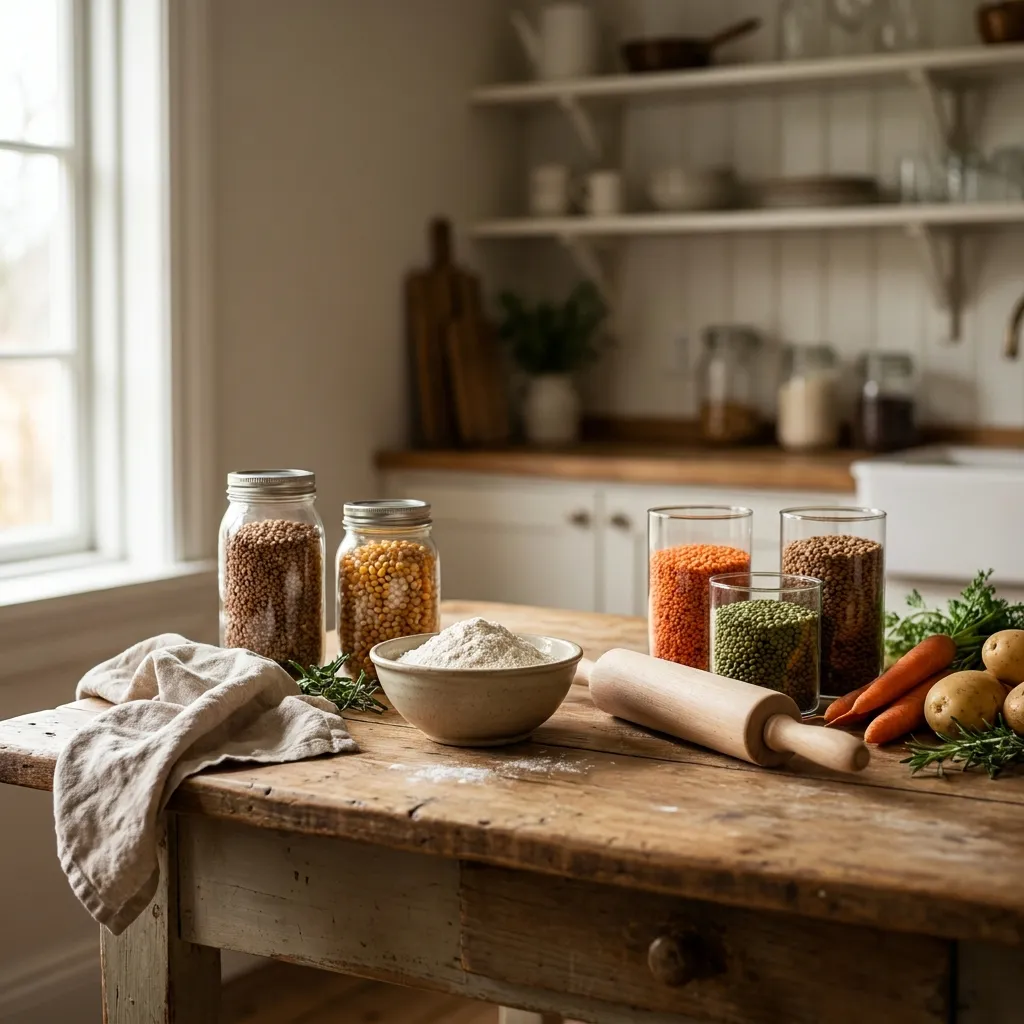
Pantry staples: Rice flour, cornmeal, buckwheat flour, potato starch, rice noodles, legumes. These six basics should always be on hand. They're cheap, last forever, and cover 80% of everyday meals.
Family rule: "gluten-free zone at the stove." If someone holds bread over the skillet or dips fingers into the flour container, that's not a failure. But the rule that no gluten-containing crumbs land in the pot protects everyone. For kids, explain it like this: "The pot on the right is for [name], and it stays clean."
What we observe in FamFood testing: The switch to these routines feels laborious in week one. By week two, it runs on autopilot. The trick is not to try to change everything at once.
Which flours actually replace wheat flour in family dishes?
Rice flour, cornmeal, buckwheat flour, and potato starch are the most reliable everyday swaps. For baked goods, you usually need a blend because no single flour fully copies wheat's gluten structure. Understand this, and baking experiments get a lot less frustrating.
Flour Type | Taste | Best Uses |
|---|---|---|
Rice flour | Mild, neutral | Pancakes, light sauces, sponge cake |
Cornmeal (fine) | Slightly sweet | Polenta, muffins, coating/breading |
Buckwheat flour | Strong, nutty | Blinis, dark bread, savory pancakes |
Potato starch | Neutral | Binding sauces, airy cakes, mixed with rice flour |
Chickpea flour | Savory | Savory waffles, omelet substitute, falafel |
Almond flour | Sweet, fatty | Moist cakes, cookies, not for bread |
For Bread & Rolls
Bread is the hardest part of gluten-free baking. No single flour works alone. The standard blend of 60% rice flour, 20% potato starch, and 20% buckwheat flour works reliably. Psyllium husk (1 tsp per 200 g flour) takes over some of gluten's binding job and makes the crumb less crumbly. For families who rarely bake bread, ready-made gluten-free flour blends are a smart starting point.
For Cakes & Pancakes
Pancakes made from pure rice flour are thin, slightly chewy, and kids love them because toppings stick well. For cakes, a 1:1 mix of rice flour and potato starch keeps them lighter. Xanthan gum can help but isn't essential. In our internal pizza-crust comparison, rice flour plus potato starch plus a bit of olive oil produced a crust most kids actually preferred to regular dough because it gets crispier.
5 Quick Family Meals That Are Naturally Gluten-Free
Many classics are gluten-free without any changes: potato soup, risotto, scrambled eggs with vegetables, lentil Bolognese over rice noodles, and fried rice with egg need no substitution. These dishes save not just time but also shopping effort.
- Potato soup (30 min): Potatoes, carrots, leeks, broth. Naturally gluten-free, filling, kids love it. Only catch: check store-bought broth for gluten-free label.
- Risotto with Parmesan (35 min): Short-grain rice, vegetable broth, Parmesan. No swaps needed. Works with mushrooms, peas, or squash.
- Scrambled eggs with bell pepper and zucchini (15 min): Four ingredients, one pan. Perfect for nights when you're done.
- Lentil Bolognese over rice noodles (25 min): Red lentils don't need soaking, and the sauce thickens without flour. Rice noodles are in every bigger supermarket.
- Fried rice with egg and vegetables (20 min): Leftover recycling at its finest. Day-old rice fried cold works best.
Among the most-saved recipes on FamFood, many use only 6–8 ingredients and happen to be gluten-free, simply because good everyday cooking rarely relies on processed foods. "Naturally gluten-free" means: no special product to buy, no price premium, no workaround.
Still: even with these meals, processed ingredients like packaged rice mixes or seasoning pastes can contain gluten. Always read the ingredient list.
How do you explain gluten to kids and grandparents?
Best with a simple body-image analogy: "Your belly has a guard cell that sounds an alarm when it detects gluten, even if you don't feel anything." Kids from age 5 understand this. It explains the rule without creating fear.
Ages 4–6: "Some flours make your belly sick. It's like an allergy, but different. That's why [name] uses the red board." No complexity needed.
Ages 7–12: Kids this age can read labels. Making them "gluten detectives" who check ingredient lists while shopping connects the topic to their own power. It's also good motivation for baking together.
Teenagers: They want facts, not metaphors. Brief explanation of the autoimmune reaction, reference to actual symptoms, and the fact that there's no safe threshold.
Grandparents: Common pushback is "a little bit won't hurt." A calm conversation with a concrete example helps: "Even a crumb too small to see triggers a gut reaction." No debate, just information.
School and daycare: Write a short one-page note with three points: diagnosis (celiac disease), what to avoid (all gluten-containing foods), and what the child brings from home. A practical summary works better than a medical explanation.
What does a gluten-free family kitchen actually cost, and how can you save?
Specialty gluten-free products cost about 2–3 times as much as regular alternatives. When you use naturally gluten-free ingredients instead of substitute products, you often spend less than expected. Cost is the biggest practical concern families raise, and it has a solid answer.
Product | Specialty Product (approx.) | Naturally Gluten-Free Alternative (approx.) | Savings |
|---|---|---|---|
Gluten-free packaged bread (500 g) | €4.50–6.00 | Homemade with rice flour: ~€1.20 | up to 80% |
Gluten-free pasta (500 g) | €2.50–3.50 | Rice noodles from Asian store: ~€1.20 | up to 55% |
Gluten-free baking powder | €1.80 (50 g) | Cream of tartar: ~€1.20 (50 g) | ~33% |
Gluten-free flour blend (1 kg) | €4.50–7.00 | Rice flour + potato starch: ~€2.00 | up to 65% |
The smartest budget approach: bulk buy staples. Rice, lentils, chickpeas, and corn in larger quantities and keep them stocked. That cuts your weekly food costs significantly.
Stiftung Warentest has found in tests of gluten-free ready-made products that many come with higher prices but worse taste and nutrition than homemade alternatives. The price premium doesn't automatically buy better quality.
For weekly meal planning, the smart approach is: first look for naturally gluten-free meals, then plan one or two dishes that need flour swaps, and use specialty products only where they really matter (like gluten-free bread for packed lunches). That saves money and planning stress.
Frequently Asked Questions About Gluten-Free Family Cooking
Is oats gluten-free or not?
Oats are naturally gluten-free but are usually processed in the same mills as wheat, so regular oats are heavily cross-contaminated. For people with celiac disease: use only certified gluten-free oats, marked by a crossed-out grain symbol on the package. Regular oatmeal porridge isn't suitable for them.
Which pasta is gluten-free and actually tastes good to kids?
Rice noodles from the Asian aisle are the cheapest and most accepted option. Key point: cook them al dente, not overcooked, or they turn mushy. Corn pasta is firmer and works well for Bolognese. Lentil pasta (red or green lentil) adds extra protein and wins over many kids because it holds sauce better.
How do you spot gluten-free products reliably in a German supermarket?
The official mark is the "crossed-out grain" symbol (Cross Grain Symbol), issued by the German Celiac Society (DZG). Products with this symbol have been tested to contain no more than 20 mg gluten per kilogram, the EU limit. Additionally, EU labeling rules (LMIV) require all gluten-containing ingredients to be marked in bold on the ingredient list.
Can celiac disease in children go away?
No. Celiac disease is a lifelong autoimmune condition with no cure. Some symptoms may improve so much on a strict gluten-free diet that kids barely notice anything. But that doesn't mean they can eat gluten again. The intestinal lining keeps reacting, even without obvious symptoms.
Do I need two ovens or is one enough for gluten-free family cooking?
One oven is completely fine. The oven itself isn't a cross-contamination risk if you work cleanly. The baking sheet is what matters: one dedicated sheet or baking form for gluten-free products that never touches gluten-containing dough. If you bake bread and regular pastries on the same day, start with the gluten-free item before you open the wheat flour.
For anyone who wants better meal planning for their families, less double work, cleaner shopping lists, and more dishes everyone at the table actually enjoys, a structured weekly plan is worth the effort. Many of the best everyday meals are gluten-free anyway.
About FamFood
FamFood is a digital family cookbook that understands real kitchen life: celiac disease in one child, allergies, picky-eater phases, rushed school mornings. Every tip here comes from families cooking daily, not from textbooks.




