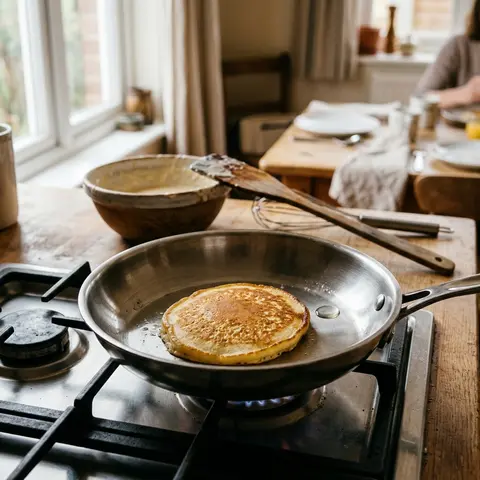
Something smells like Sunday. Like childhood. Like the feeling that everything is going to be okay.
Most of the time, that's grandma's kitchen. And most of the time, it's a recipe she never quite wrote down.
Grandma's classic recipes aren't a trend. They're culture. They're a family's culinary memory — and that memory dies when we don't act.
Why Grandma's Recipes Taste Different
No cookbook beats grandma. That's not a myth — that's science.
Cook the same dish for decades and you develop a precision no recipe can replicate. Your hand knows how much salt. Your nose knows when the oil is hot enough. Your eyes see the right consistency before any thermometer confirms it.
Then there's the principle of "culinary memory": taste is the most powerful sensory trigger for emotional recollection. Neuroscientists have documented this repeatedly. One spoonful of goulash and suddenly you're nine years old again, sitting at the kitchen table without a care in the world.
But there's even more to it.
Grandma cooked with ingredients she knew. Often regional, often seasonal, rarely from a supermarket shelf. She had patience we've nearly lost. Braises that sat on the stove for three hours. Doughs that rested overnight. Broths pulled from real bones.
That's not something to fear. That's craft. And craft can be learned.
The 10 Greatest Classics from Grandma's Kitchen
Ask ten people and you'll get ten different lists. But some dishes always make the cut.
1. Beef roulades – tenderly braised beef rolled around bacon, pickle, and mustard. The gravy is the real star.
2. Sauerbraten – marinated beef that needs 48 hours. Patience that pays off.
3. Pea soup – hearty, filling, with smoked bacon or coarse sausage. Winter comfort in a bowl.
4. Käsespätzle – not the quick version, but the one with real mountain cheese and long-caramelized onions. Käsespätzle is a classic German pasta dish, like a rustic mac and cheese.
5. Sheet-pan apple cake – moist, simple, always right.
6. Braised red cabbage – simmered from scratch with apples, cloves, and a splash of red wine. Not from a jar.
7. Semolina porridge with butter and cinnamon – a children's dish with serious adult nostalgia value.
8. Potato soup – creamy, warm, almost embarrassingly simple — and completely unbeatable.
9. Plum cake – on a yeast dough, not a quark-and-oil dough. That's what makes the difference.
10. Goulash – rich with paprika, fall-apart tender, served with bread dumplings or just a hunk of bread.
These dishes share one thing: they need time, but not ingredients you have to hunt down.
What These Recipes Reveal About Us
Grandma's classic recipes aren't antiques. They're mirrors.
They show how a generation made a lot with very little. How bones became broth. How leftovers became new meals. How simple ingredients became something extraordinary.
Research shows that families who cook and eat together report stronger bonds and better communication. Cooking together isn't a nice-to-have. It's glue.
When grandma cooked, the family was in the kitchen. Kids grated cheese, peeled potatoes, stirred batter. Not as a chore. As a matter of course.
Rediscovering that sense of course — that's the deeper value behind every classic dish.
Why These Recipes Are Being Lost
Grandma knows it by heart. So it's written down nowhere.
That's the problem.
Stories shared in online communities paint the same picture again and again: important family recipes became inaccessible after older relatives passed away, simply because they were never written down. The collective regret is the same every time: "The recipe is gone. We never thought to ask."
Recipes that live only in someone's head are recipes that die.
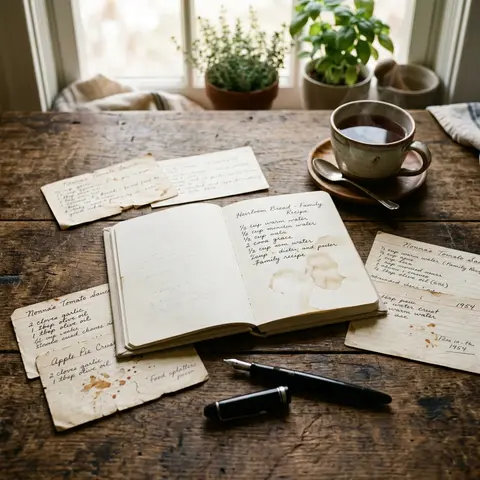
And it doesn't take a big digitization project to fix that. It takes one afternoon. A pen. Or, even faster, a smartphone.
How to Preserve Grandma's Classic Recipes Today
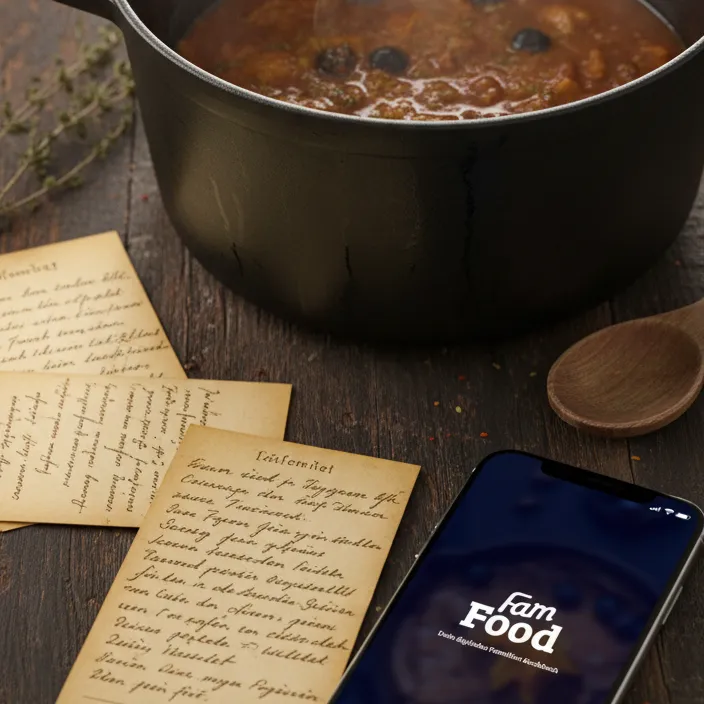
Back then: index cards. Today: something much better.
The first step is the easiest: ask grandma. Now. Not next year.
Sit with her while she cooks. Write down what she does — not just what she says, because what she says is often "a handful" or "until it smells right." Write down both. The measurement and the feeling behind it.
Then comes the crucial step: saving it.
With FamFood you can capture recipes using voice recording. Grandma doesn't need to type a thing. She just talks — and the recipe is saved. Exactly as she experiences it: in her voice, at her pace, with her humor.
The app isn't a sterile cookbook. It's a family archive. Recipes can be supplemented with photos, sorted into categories, and shared with the whole family. The sauerbraten from 1983 is secured for 2043.
That's not technological overkill. That's a digital legacy.
FAQ: Grandma's Classic Recipes
Why do grandma's recipes taste better than restaurant food?
Because they're cooked for people, not for profit. Grandma knew her "customers" — who doesn't like fat, who needs more salt, who goes wild for the dumplings. That level of personalization is something no restaurant can pull off.
What makes grandma's classic recipes so special ingredient-wise?
Often it's humble basics — onions, lard, sour cream, broth made in the pot rather than poured from a carton. The difference isn't in the price of the ingredients. It's in the technique and the time.
Can I recreate grandma's recipes without exact measurements?
Yes — but it takes practice. Start as close to the recipe as you can, taste as you go, and adjust. Grandma did exactly the same thing. No recipe is set in stone.
What's the best way to store grandma's recipes digitally?
The safest option: an app built specifically for family recipes. FamFood lets you save recipes with voice, photos, and notes — and share them with the whole family, so no recipe ever gets lost again.
What if grandma can't remember the recipe exactly?
Cook it together with her. The memory often comes back in the kitchen — with the smell of onions hitting the pan, with the feel of dough in her hands. The body remembers what the mind has forgotten. Write down everything you work out together.
Act Now, Before It's Too Late
That sounds harsh. But it's the truth.
Family recipes have no backup. They live in people's heads, on yellowed scraps of paper, in memories that disappear with the people who hold them.
No grand gesture is needed. Just one first step today: call grandma. Ask about the goulash. Ask about the plum cake. Ask about the pea soup.
Then write it down. Record it. Share it.
With FamFood it's faster than ever — and you make sure these classics don't just live in your memory, but in the pots of your children and grandchildren.
Grandma's classic recipes don't belong to the past. They belong to the future — if we let them.
Try FamFood free today and save your first family recipe right now: famfood.app