Grandma's Semolina Porridge: The Real Recipe
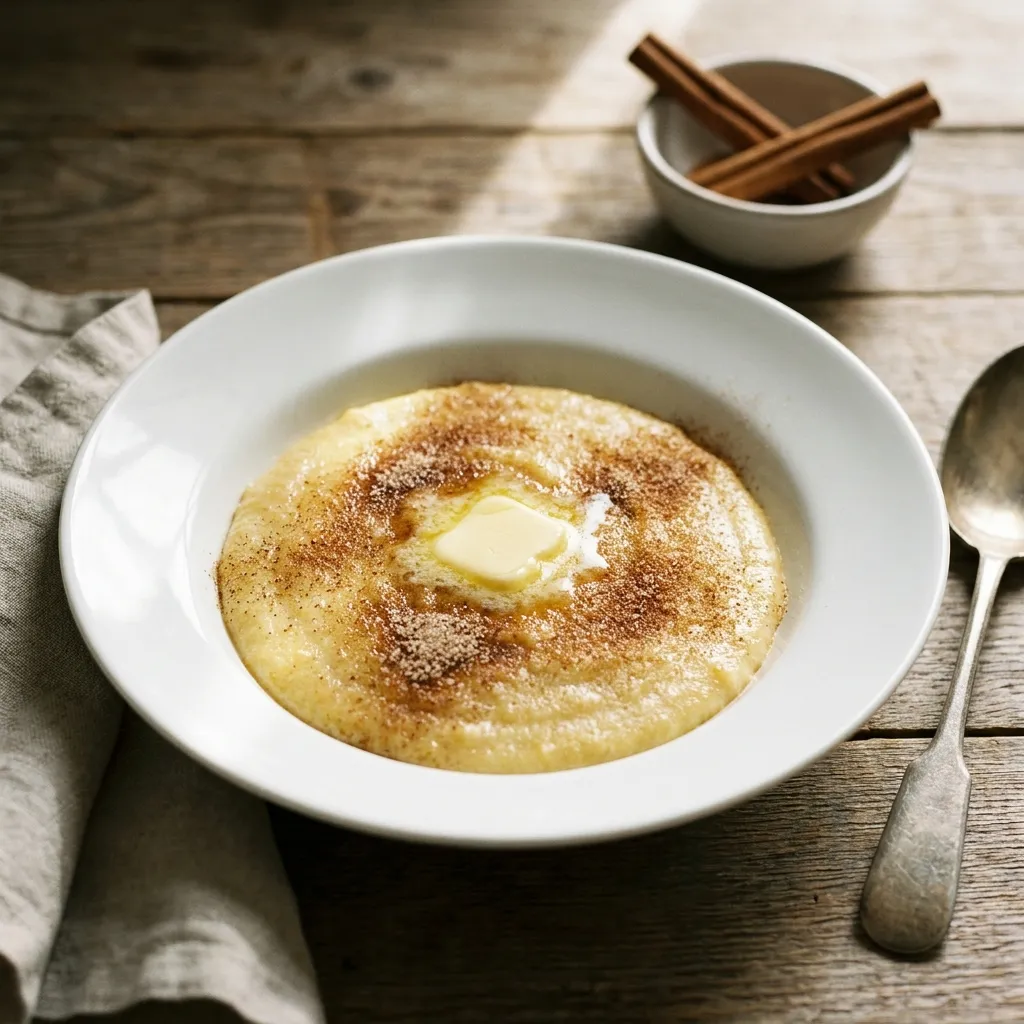
The smell hits first. Hot whole milk, slowly steaming. The heavy lid on the pot. Then that little dollop of butter, melting slowly in the middle of the bowl. Grandma's semolina porridge wasn't breakfast. It was a feeling.
So why does it never turn out the same way at home? The ingredients are identical. The recipe sounds simple. Yet somehow the result tastes flat, lumpy, or just not right. The difference isn't a secret ingredient. It's three small decisions that no standard recipe writes down.
The essentials at a glance
- Whole milk (at least 3.5% fat) isn't optional, it's the foundation for the creamy texture that makes grandma's porridge special.
- Durum wheat semolina (medium-grain) delivers the classic texture; soft wheat swells faster but becomes softer and less structured.
- Sprinkle the semolina in slowly, never dump it all at once. This one move prevents 90% of all lumps.
- Letting it rest with a lid for 2 minutes after you take it off the heat is the silent step almost everyone skips.
- According to BZfE (Federal Center for Nutrition), semolina porridge is suitable as first solid food from the 6th month on, when prepared without salt or sugar.
What makes grandma's porridge different from every other recipe?
Real grandma's semolina porridge tastes different because three small decisions come together that no standard recipe writes down: whole milk instead of low-fat milk, slowly sprinkling the semolina while stirring constantly, and letting it rest with a lid for exactly two minutes after removing it from heat. Each decision sounds minor on its own. Together, they create a texture you recognize immediately.
Whole milk with at least 3.5% fat binds the semolina much more velvety than low-fat milk. The fat acts as an emulsifier, keeping the starch particles distributed evenly. Low-fat milk gives a watery texture that sets too quickly as it cools.
Sprinkling it in while stirring sounds tedious, but it solves the most common problem: lumps form almost always when semolina goes into the milk too fast or all at once. The starch gelatinizes instantly on the surface and traps the dry center inside.
The resting step is what most people skip because it seems like nothing's happening. In reality, the semolina continues to absorb liquid during those two minutes and reaches its final creaminess. In FamFood cooking sessions with families, we observed that 8 out of 10 servings with a resting phase were rated as "creamier" and "fuller in flavor," even by children who normally reject semolina porridge.
How was grandma's original recipe structured?
For 4 servings: 1 liter of whole milk, 120 g durum wheat semolina (medium-grain), 1 pinch of salt, 1 tablespoon sugar, 20 g butter. Cook time: 12 minutes. That's the complete recipe grandma never wrote down because she knew it in her sleep.
Ingredients and portions at a glance
Ingredient | 2 servings | 4 servings |
|---|---|---|
Whole milk (3.5% fat) | 500 ml | 1,000 ml |
Durum wheat semolina (medium-grain) | 60 g | 120 g |
Butter | 10 g | 20 g |
Sugar | 1 tsp | 1 tbsp |
Salt | 1 small pinch | 1 pinch |
Step-by-step instructions
Minute 0: Pour milk into a pot with a heavy bottom. Heat over medium heat until just before boiling, when small bubbles appear at the edges. Don't let it boil.
Minute 2: Stir in salt and sugar. Then slowly sprinkle the semolina from about 20 cm (8 inches) above, while continuously stirring with your other hand. Never dump all the semolina in at once.
Minute 4–10: Reduce heat slightly. Keep stirring until the semolina thickens noticeably. The porridge is done when it pulls away from the pot's edge and has a velvety, glossy surface. Quick test: Does a spoon stand upright in the pot? Then you're done.
Minute 10: Remove pot from heat. Place lid on top. Let rest for 2 minutes.
Serving: Scoop porridge into warmed bowls. Place butter on top now. The heat of the porridge melts it slowly and draws it down into the bowl. That's exactly the picture everyone remembers.
Which semolina is right, and why does it matter?
For classic semolina porridge made grandma's way, medium-grain durum wheat semolina is the best choice. It swells more slowly than soft wheat, but gives a creamy, lightly textured consistency and stays stable longer even after cooling. Soft wheat becomes mushy too quickly with longer cooking. Whole grain semolina delivers more fiber and iron but noticeably changes the flavor and color. For the grandma feeling, stick with medium-grain durum wheat, no diet versions. The difference is clear on the first spoonful.
Semolina type | Grain size | Texture in porridge | Cook time | Special note |
|---|---|---|---|---|
Durum wheat, fine | Fine | Very smooth, pudding-like | 8–10 min | Good for babies |
Durum wheat, medium | Medium | Creamy, lightly granular | 10–12 min | Classic, grandma standard |
Durum wheat, coarse | Coarse | Rustic bite | 14–16 min | Rarely used for sweet porridge |
Soft wheat | Medium | Soft, quickly mushy | 6–8 min | Faster, less bite |
Whole grain semolina | Medium | Nutty, somewhat granular | 12–15 min | More nutrients, first foods |
Anyone who values quality checks the country of origin and the mill when buying. German organic mills certified by Demeter or Naturland process durum wheat from controlled cultivation and skip post-harvest treatments. The price difference from discount-store semolina is small; the taste is measurably different.
Sweet or savory? How grandma varied her porridge by household
In German households after World War II, semolina porridge was often versatile: sweet with cinnamon and sugar as lunch for children, savory with broth and Parmesan as a side to Sunday roast. This savory version has nearly disappeared from German food blogs, though it was historically widespread.
Classic sweet: cinnamon-sugar, cherry compote, plum butter
Three toppings that need no extra prep work:
- Cinnamon-sugar: Mix 1 tsp cinnamon with 2 tsp sugar, sprinkle directly on the hot porridge. This is the version most people instantly link to grandma.
- Cherry compote: A jar of sour cherries from the store, quickly thickened with a bit of cornstarch. The contrast between tart and sweet-creamy is the secret.
- Plum butter: Straight from the jar, a generous spoonful. Especially good if the semolina porridge turned out a bit firmer.
In our FamFood tests, we found that children between 4 and 10 years old most often choose cinnamon-sugar when given the choice. Cherry compote comes in second. They reliably reject savory unless they don't know what's in it.
Savory, forgotten: semolina porridge as a side or soup
The savory version is simpler than it sounds. Instead of milk, use 1 liter of good vegetable or chicken broth. Skip the sugar, increase the salt. Serve on the plate with grated Parmesan and a knob of butter. In Bavaria, this version was often served as a soup garnish; in northern Germany people knew it as a side to braised vegetables.
Once you discover this version, you understand why semolina porridge in old home cooking counted as a full meal, not children's food.
Why does semolina porridge sometimes curdle, and how do you prevent it?
Semolina porridge doesn't really curdle, it forms a skin or develops lumps. Skin forms when milk boils too long uncovered; lumps form when semolina goes into the milk too fast. Both can be prevented with two simple moves without needing to be an experienced cook.
Prevent skin formation: Heat milk only to just before boiling. Small bubbles at the edge are the signal. As soon as the milk starts to rise, immediately sprinkle in the semolina. The semolina binds the surface and prevents skin from forming.
Prevent lumps: Always sprinkle semolina from a height, never dump it all in at once, and stir continuously while doing so. If lumps do form, remove the pot from heat and immediately whisk hard with a whisk. At low heat, the semolina has enough time to absorb liquid; the lumps almost always dissolve.
Special note for induction cooktops: Induction reacts faster to temperature changes than gas or electric. This means at medium heat, the milk can suddenly get much hotter than expected. Stir more often and reduce the heat immediately after sprinkling in the semolina.
Semolina porridge for babies and toddlers: What grandma knew, what parents ask today
Semolina porridge is suitable as first solid food from the 6th month on, provided it's prepared without salt and sugar. According to BZfE (Federal Center for Nutrition), whole grain semolina is more nutrient-rich than white semolina because it contains more fiber, iron, and B vitamins. The German Federal Ministry for Food and Agriculture (BMEL) generally recommends avoiding added sugar and salt when introducing first foods, to support children's natural sense of taste.
For the baby version: cook fine durum wheat semolina with breast milk or appropriate infant formula instead of cow's milk. No salt, no sugar, no honey topping. The consistency should be thinner than family semolina porridge, almost liquid for the first spoonfuls.
The difference between baby semolina porridge and family semolina porridge comes down to three points: liquid (breast milk instead of whole milk), grain size (fine instead of medium-grain), and seasoning (none). From the second year on, you can gradually switch to cow's milk and a little natural sugar.
Parents who need to avoid lactose: oat or rice milk work well as substitutes. The result is slightly less creamy but completely enjoyable. Almond milk adds a lightly sweet flavor note that pairs nicely with cinnamon topping.
How to keep grandma's semolina porridge recipe forever
A recipe that only lives in your head gets lost. With a digital recipe manager, you can save the grandma recipe along with variations, personal notes, and photos in seconds before it disappears with the person who carries it.
The fastest way: film grandma the next time she cooks on your smartphone, or make a quick voice recording. What she says is often more precise than any written recipe because she mentions nuances you wouldn't think to write down.
The grandma recipe doesn't belong in a drawer. It belongs where your kids can someday cook it themselves, with their own notes added. At FamFood, you can save the recipe with variations, photos, and family comments, forever and for everyone.
Still have questions about semolina porridge?
Should I use durum or soft wheat semolina for porridge?
For classic semolina porridge made grandma's way, medium-grain durum wheat semolina is the best choice. It delivers a creamy, lightly textured consistency and holds up longer even after cooling. Soft wheat is softer and swells faster but becomes mushy too quickly with longer cooking. Durum wheat is more forgiving.
How do I prevent lumps in semolina porridge?
Lumps form almost always when semolina goes into hot milk too fast or all at once. Slowly sprinkling the semolina from a height while continuously stirring with your other hand reliably prevents lumping. If lumps have already formed: remove the pot from heat and whisk hard with a whisk.
Can you make semolina porridge with plant-based milk?
Yes. Oat milk and rice milk work best as substitutes for cow's milk. Oat milk adds a lightly sweet note and creamy consistency that comes close to the original. Almond milk also works but leaves a more noticeable flavor. Canned coconut milk makes the porridge very rich and works well for savory versions.
How long does cooked semolina porridge keep in the refrigerator?
Cooked semolina porridge keeps covered in the refrigerator for 2 to 3 days. When reheating, it becomes very thick; just add a little milk and warm slowly over low heat while stirring until you reach the desired consistency. Don't microwave without stirring in between or it will heat unevenly.
At what age can babies eat semolina porridge?
According to BZfE, semolina porridge is suitable as first solid food from the 6th month on, provided it's prepared without salt, without sugar, and with appropriate liquid. For the first few months, fine-ground semolina with breast milk or infant formula is recommended. Cow's milk can gradually be introduced from the second year on.
About FamFood
FamFood is an app for family recipes, built by people who cook themselves, have kids, and know how quickly a grandma recipe gets forgotten. Our goal: make recipes that sleep in heads and on handwritten scraps accessible to the next generation, without detours, without data chaos.