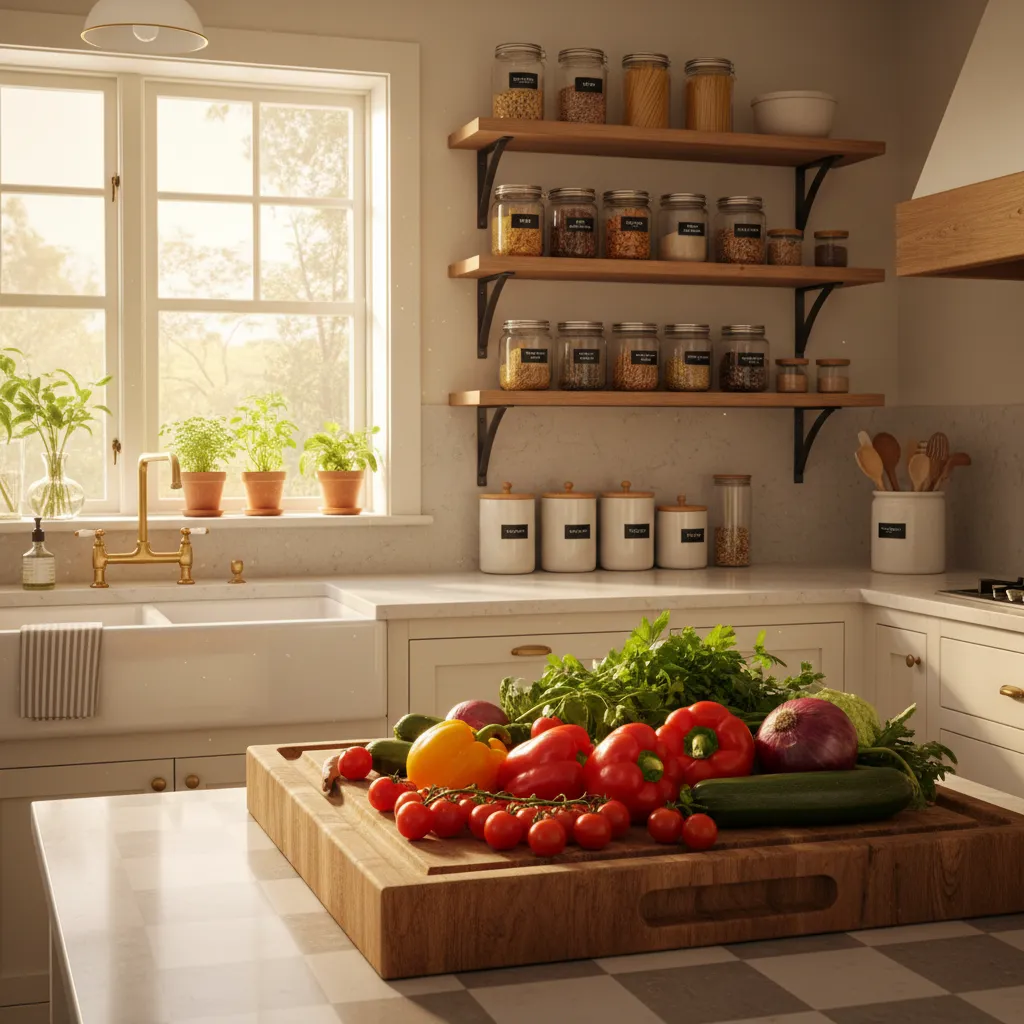
The chaos in the kitchen starts quietly. A forgotten chopping board here, three half-empty spice jars there — and suddenly dinner takes twice the effort it should. You don't need new gadgets or a renovation. Small, concrete habits are the key. Treat your kitchen as a system and you'll cook more calmly, more quickly, and with more enjoyment — even on a Tuesday evening with hungry kids.
Key Takeaways
- Prepping everything before you start cooking reduces active cooking time by up to 30% (BZfE).
- The average German throws away around 78 kg of food per year — 40% of that is preventable through better storage (BMEL, 2023).
- Shopping with a list saves an average of 20% on grocery bills (Stiftung Warentest, a leading German consumer testing organisation).
- Short cleaning habits after each meal replace the big weekly scrub-down.
- Kitchen tips that every family member knows take the pressure off one person — and lighten the load on the whole household.
Why does the kitchen make or break family life?
According to Germany's Federal Ministry of Food and Agriculture (BMEL), German households spend an average of more than an hour each day cooking and tidying up — more time than in any other room. The kitchen is not simply a workspace. It is the emotional heart of the family.
Small amounts of chaos in that room create a large mental burden. Spending ten minutes looking for the vegetable peeler, or having to clear the hob before you can even start cooking every evening, drains energy — long before the first vegetable hits the pot. That cognitive load adds up over weeks into real stress.
New kitchen appliances rarely solve the problem. A stand mixer gathering dust in the corner doesn't make anything easier. Habits cost nothing and work permanently. The key is to decide, once and deliberately, how the kitchen should function — and then build small routines that repeat themselves automatically.
In conversations with families who have consciously reorganised their kitchens, almost all of them report the same thing: it wasn't the renovation that helped, but the first thorough clear-out.
How do you set up a family kitchen to be genuinely efficient?
Most families use only about 20% of their kitchen space on a daily basis. The rest is storage for things that don't belong anywhere else: birthday candles, spare batteries, the rolling pin from 2018. That wastes space that's actually needed for cooking.
The first step is a clear separation of work zones: chopping, cooking, and plating each need a fixed spot. Constantly rearranging things between these stations wastes time and patience.
The 3-zone rule helps. Everything used daily goes within easy reach in Zone 1 (the countertop and top drawer). What's used weekly moves to Zone 2 (cupboards at arm's reach). What's rarely needed belongs in Zone 3 — right at the top or the very bottom. A thorough one-off clear-out is worth it. Anything that hasn't been used in a year won't be needed next year either.
Which utensils are actually used every day
Knives, a chopping board, a vegetable peeler, a large cook's knife, one pot, and one frying pan — these are the real everyday tools in most families. Speciality gadgets like egg slicers or asparagus peelers can happily disappear into Zone 3.
Drawer organisation that even children can maintain
Simple systems work better than perfect ones. A drawer with clearly labelled sections — knives, spoons, spatulas — is easy to maintain. Children keep things tidy when they understand where everything belongs. Pictures instead of labels work best for younger children.
Area | Frequency of use | Storage |
|---|---|---|
Knives & chopping board | Daily | Zone 1, countertop |
Pots & pans (everyday) | Daily | Zone 1, lower shelf |
Mixing bowls & sieves | Several times a week | Zone 2, cupboard |
Baking tins & speciality tools | Rarely | Zone 3, top/bottom |
Seasonal tableware | Very rarely | Cellar or top shelf |
Which kitchen tips genuinely save time when cooking?
Weighing, chopping, and laying out everything before you start cooking — this principle reduces active cooking time by up to 30%, according to the BZfE (Germany's Federal Centre for Nutrition). Professional chefs have sworn by it for decades. For families, it means ten minutes of preparation that makes the whole evening more relaxed.
The principle is easy to apply. Chopping vegetables for two or three meals at once saves time and effort. Carrots for tonight's dinner? Cut double the amount — half goes into tomorrow's soup. Chop once, use multiple times.
Using heat properly is another time-saver. Many mistakes when searing food happen because the pan isn't hot enough. Meat and vegetables stick instead of browning. Simply put: let the pan get hot first, then add the oil, then add the ingredients.
Boiling water in the kettle instead of on the hob sounds trivial — but it saves real minutes. A litre of water in the kettle is hot in around 90 seconds. On the hob, depending on the ring, it takes three to five minutes. For pasta, potatoes, or rice, that adds up every single day.
Anyone who tries this preparation routine consistently for one week quickly notices: the real time gain isn't the minute saved at the hob — it's the calm that comes from knowing everything is already ready.
Keeping food fresh for longer: what actually works?
The average German throws away around 78 kilograms of food per year — equivalent to roughly 235 euros per person (BMEL, 2023). An estimated 40% of that is preventable through better storage. This isn't a luxury problem — it's everyday waste that can be stopped.
The fridge has zones with different temperatures. Ignoring that means storing yoghurt next to tomatoes and wondering why both go off quickly.
Air out, freshness in: food kept in well-sealing containers stays fresh significantly longer. Cut onions, grated cheese, or cooked leftovers should always be stored covered — no expensive accessories needed, a normal lid is enough.
The FIFO principle (First In, First Out) is simple: new items go to the back, older ones move to the front. That way, fresh yoghurt never ends up in front of the one that's already been in the fridge for three days.
Fridge zones at a glance
Fridge zone | Temperature | What goes there? |
|---|---|---|
Top shelf | ~8 °C (46 °F) | Leftovers, cheese, deli meats |
Middle shelf | ~5 °C (41 °F) | Dairy products, yoghurt, eggs |
Bottom shelf | ~2 °C (36 °F) | Meat, fish, raw poultry |
Vegetable drawer | ~8–10 °C (46–50 °F) | Vegetables, salad, herbs |
Door compartments | ~10–12 °C (50–54 °F) | Drinks, mustard, jam |
These 6 foods stay fresher outside the fridge
Tomatoes lose flavour and texture in the fridge. Potatoes sprout faster in the cold and develop unwanted bitter compounds. Bread goes mouldy more quickly in fridge humidity than at room temperature. Bananas, avocados, and onions also belong in the light — not in the cold.
Keeping the kitchen clean without scrubbing every evening?
A kitchen that never gets completely dirty doesn't need a big clean — just short habits after each meal. The 2-minute rule is simple: wipe it up straight away and it won't stick. Hot grease comes off in seconds with a damp cloth. The same spill after an hour needs soaking.
Natural products reliably replace many cleaning agents. Baking soda and lemon juice dissolve limescale. White vinegar disinfects work surfaces and removes odours from the fridge. These three items cost less than a pound together — and are safe for children.
Task | Frequency | Product |
|---|---|---|
Wipe hob and countertops | Daily | Damp cloth, washing-up liquid |
Wipe inside of fridge | Weekly | Vinegar-water solution |
Clean microwave | Weekly | Heat lemon in water |
Degrease oven | Monthly | Baking soda paste |
Clean extractor hood filter | Monthly | Hot water, washing-up liquid |
Defrost freezer | Every 2–3 months | Warm water, cloths |
Stress-free grocery shopping: how do you plan the weekly shop?
Shopping with a list saves an average of 20% on grocery bills, according to Stiftung Warentest (a leading German consumer testing organisation; shopping behaviour study, 2022) — and means you buy fewer things that end up being thrown away. It sounds simple. But without a fixed system, you still end up with two tins of tomato purée in the cupboard.
Checking your supplies once a week before writing the list prevents duplicate purchases. Two minutes at the fridge saves five euros at the supermarket. Using seasonal vegetables as the backbone of the week's meals has another advantage: they're cheaper, taste better, and need less planning because what's available guides the choices.
Digital shopping lists that all family members can access solve a classic problem: you're standing in the supermarket and can't remember what's still needed. With a shared list that everyone can add to, that's a thing of the past.
How do you keep track of recipes and kitchen tips in everyday family life?
The best tip is worthless if it's forgotten three weeks later. Families who record their routines and recipes digitally cook noticeably more calmly — because they don't have to think everything through from scratch each time. The knowledge is there, accessible to everyone.
Collecting recipes and tips in one central place means every family member can access them. Whoever is cooking on Tuesday doesn't need to hunt for the note Mum wrote last Friday.
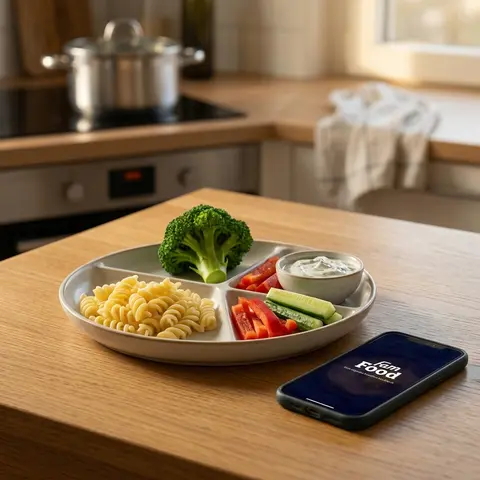
A digital family cookbook like FamFood does exactly that — save and share recipes, and generate shopping lists directly from them. If you want to preserve Grandma's tips before they're lost forever: you can do it via voice recording, quickly and without any hassle.
FAQ
Which kitchen tips save the most time?
Laying out everything before you start cooking reduces active cooking time by up to 30% (BZfE). Chopping vegetables for several meals at once and boiling water in the kettle instead of on the hob are two further tricks that save minutes every single day.
How do I keep my kitchen tidy long-term, even with children?
Clear, simple systems work better than perfect ones. Children keep things tidy when they understand where everything belongs — ideally with pictures instead of labels. The 2-minute rule after each meal stops mess from piling up.
Which foods should not be stored in the fridge?
Tomatoes, potatoes, bread, bananas, avocados, and onions do not belong in the fridge. Tomatoes lose their flavour, potatoes develop bitter compounds, and bread goes mouldy faster in fridge humidity than at room temperature.
How can we as a family waste less food?
The FIFO principle helps immediately: new food goes to the back, older items move to the front. Using the correct fridge zones extends shelf life. A weekly stock-check routine before shopping prevents duplicate purchases — according to BMEL, up to 40% of food losses are preventable through better storage.
What belongs in a well-organised family kitchen?
Daily-use utensils within easy reach in Zone 1, weekly-use items in Zone 2, and everything rarely needed in Zone 3. A shared shopping list and clearly defined fridge zones make the biggest difference to the daily kitchen routine.
About the author: Mara Hoffmann is a nutritional scientist and cookbook author with more than twelve years of experience in family cooking. She has helped hundreds of households make their daily kitchen life less stressful, and writes regularly about practical kitchen tips for families.