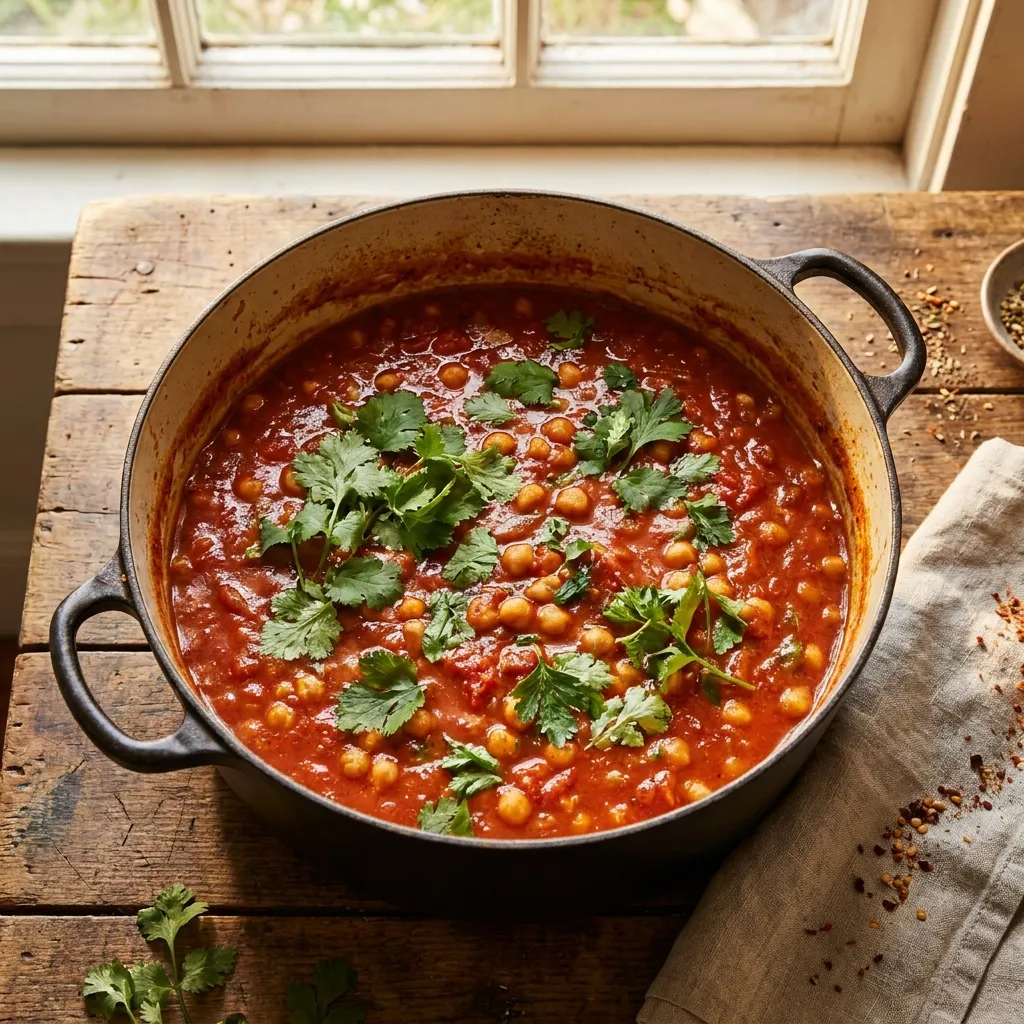
One-Pot Family Meals: One Pot, No Stress
The evening's going sideways. Everyone's hungry. The kitchen still looks tidy afterwards. One pot is all you need.
One-pot cooking isn't a trend for Instagram kitchens. It's the most honest answer to family life that most cookbooks still ignore: hunger comes fast, time doesn't.
Key Takeaways
- One-pot dishes reduce dishwashing, planning, and active cooking time all at once.
- If you stock canned tomatoes, lentils, rice, and broth, you can make a complete family meal anytime without shopping.
- The 5 recipes in this article cover cooking times from 20 to 35 minutes, vegetarian to meat.
- The most common mistake: too little liquid at the start. Second most common: throwing all ingredients in at once.
- Two to three one-pot nights per week cut your real cooking effort in half when you plan leftovers intentionally.
What makes one-pot meals so practical for families?
One-pot dishes work because they cut cooking time, dishwashing, and planning all at the same time: everything goes into one pot, and a complete family meal lands on the table without having to watch multiple burners. Sounds simple. It is simple. That's exactly the point.
If you're washing four pots and two pans every evening, you spend more than 40 minutes daily on cooking-related housework—including setup and cleanup—according to Germany's Federal Statistical Office (Destatis). One pot cuts that down dramatically.
Here are five concrete benefits:
- Real time savings on dishwashing: one pot instead of four pots and two pans.
- No timing stress: multiple components don't have to finish at the same time.
- Better flavors: everything cooks together, ingredients exchange taste in ways separate cooking steps never achieve.
- Easy portion control: one pot splits quickly, and leftovers go straight in the fridge.
- Beginner-friendly: if you're starting to cook, you don't need multitasking superpowers.
In FamFood tests, we've observed that families who cook one-pot meals regularly spend about 15 minutes less daily in the kitchen than families with classically separate sides and mains. Not dramatic. But across a week, that's an hour free.
We also see this consistently: families starting Monday with a hearty stew and reheating leftovers Tuesday find their week's start much less stressful than families cooking something new every single night. The mental load drops because the decision-making vanishes.
Which one-pot methods fit which family evenings?
Not every one-pot method works for every night. Twenty minutes? Grab a pan. Thinking ahead in the morning? Use the slow cooker. Impatient family at the table? Reach for the pressure cooker. The method shapes the evening more than the recipe does.
Method | Active Cooking Time | Best For | Typical Dishes |
|---|---|---|---|
One-Pan (Skillet) | 15-25 Min. | Weeknights, short on time | Scrambled eggs, shrimp skillet, pasta pan |
Large Pot / Dutch Oven | 30-60 Min. | Weekends, planning leftovers | Stews, curries, soups, braised dishes |
Slow Cooker | 10 Min. active | Prep in the morning | Pulled chicken, lentil soup, pot roast |
Pressure Cooker | 20-30 Min. total | Impatient families | Beans, meat dishes, risotto |
We cover the slow cooker in depth in Slow Cooker Family Meals: Recipes, Sizes, Tips—here we're focusing on the faster versions.
Quick Option: One-Pan in 20 Minutes
The skillet is your best friend on evenings when you can't waste a minute between 6 p.m. and dinner. Frozen shrimp, zucchini, coconut rice, all in one big skillet: done in 22 minutes. No draining, no waiting. Heat's higher than in a pot, so keep stirring and watch your liquid.
Patient Option: Braising Pot for Relaxed Evenings
A Dutch oven or large cast-iron pot works for evenings when dinner can simmer peacefully for an hour while the family does something else. Braised dishes need little attention but plenty of time. The payoff: flavors that have burrowed deep into meat and vegetables without you standing there watching.
What pantry staples should you always keep on hand?
If you stock onions, canned tomatoes, lentils or rice, broth, and fat (oil or butter), you can pull together a complete one-pot family meal anytime without a shopping trip. That's not a claim—it's a checklist. Cover these seven categories and you're ready for 80% of all one-pot nights, confirmed by the German Federal Ministry of Food and Agriculture (BMEL), which recommends legumes and canned goods as your pantry foundation.
Category | Examples | Shelf Life |
|---|---|---|
Base Carbs | Rice, pasta, lentils, canned chickpeas | 6-24 months |
Liquid / Flavor | Vegetable broth, canned tomatoes, coconut milk | 12-24 months |
Fat | Olive oil, butter, ghee | 6-12 months |
Protein (Frozen) | Chicken thighs, ground beef, frozen shrimp | 3-6 months (frozen) |
Fresh Wildcards | Cauliflower, spinach, zucchini, carrots | 3-7 days |
Sauce Binders | Sour cream, cream cheese, coconut milk | 1-3 weeks |
Aromatics | Garlic, onions, ginger | 1-3 weeks |
Note on frozen shrimp: thaw for at least 6 hours in the fridge, or overnight. If you're short on time, place them in a colander under cold running water—that cuts it to 20-30 minutes. Never thaw at room temperature; it promotes bacteria.
5 One-Pot Family Recipes That Actually Work
These five recipes cover different tastes, cooking times, and budgets. Each needs just one pot or large skillet and under 35 minutes active cooking. All quantities make 4 servings; scaling logic follows in the next section.
Cauliflower-Lentil Curry (Vegetarian, 28 Min.)
Ingredients: 1 head cauliflower, 200 g red lentils, 1 can coconut milk, 1 can tomatoes, 1 onion, 2 garlic cloves, curry powder, salt.
Instructions: Sauté onion and garlic in oil (3 min.). Add curry powder, toast for 1 minute. Pour in tomatoes, coconut milk, and broth. Add lentils and cauliflower florets. Cover and simmer on medium heat for 20-22 minutes. Season with salt, serve with fresh cilantro if your family likes it.
Difficulty: easy. Tip: Add cauliflower last so it doesn't fall apart.
Ground Beef Tomato Pasta in One Pot (25 Min.)
Ingredients: 400 g ground beef (mixed), 300 g short pasta (penne or fusilli), 1 can tomatoes, 600 ml broth, 1 onion, garlic, oregano, salt, pepper.
Instructions: Brown ground beef in a large pot without fat until crumbly (5 min.). Add onion and garlic, cook for 2 more minutes. Pour in tomatoes, broth, and pasta straight into the pot. Bring to a boil, then reduce heat. Simmer for 12-14 minutes, stirring occasionally. Pasta cooks right in the sauce—no draining needed.
Difficulty: very easy. Tip: Lay the lid half on so steam can escape and sauce won't boil over.
Chicken-Rice Pot with Sour Cream (35 Min.)
Ingredients: 4 chicken thighs or 500 g chicken breast, 300 g long-grain rice, 1 red bell pepper, 200 g sour cream, 500 ml chicken broth, paprika powder, salt.
Instructions: Brown chicken in oil on both sides (3 min. per side). Add bell pepper, cook briefly. Add rice, broth, and paprika powder. Bring to a boil, reduce heat, cover. Simmer for 20 minutes. Stir in sour cream, let it finish cooking uncovered for 5 minutes.
Difficulty: medium. Tip: Add sour cream at the end; higher heat makes it separate.
Spinach-Chickpeas with Feta (20 Min.)
Ingredients: 2 cans chickpeas, 200 g baby spinach (frozen works too), 150 g feta, 1 can tomatoes, garlic, cumin, salt.
Instructions: Sauté garlic in oil. Toast cumin briefly. Add tomatoes and chickpeas, simmer on medium heat for 10 minutes. Fold in spinach, cook for 3 more minutes. Crumble feta over top. Done.
Difficulty: very easy. Tip: This tastes just as good cold in a lunchbox as it does warm.
Shrimp-Coconut Rice in a Skillet (22 Min.)
Ingredients: 300 g frozen shrimp tails (thawed), 300 g jasmine rice, 1 can coconut milk, 1 zucchini, lime, ginger, salt.
Instructions: Toast rice briefly in a dry skillet (2 min.). Pour in coconut milk and equal amount of water. Bring to a boil, reduce heat, add diced zucchini. Cover and cook for 12 minutes. Lay shrimp on top, cover, cook 4-5 minutes more. Season with lime juice and fresh ginger.
Difficulty: easy. Tip: Don't add shrimp too early; they're done in 4-5 minutes and become rubbery with longer cooking.
How do I scale one-pot recipes for bigger families or leftovers?
Most one-pot recipes scale smoothly to 6-8 servings by proportionally increasing all ingredients. Pasta dishes follow one special rule: don't double the liquid 1:1; start with 75% of the calculated amount and add more as needed. Pasta releases starch as it cooks, which changes the ratio.
For 6 servings or more, aim for at least a 5-liter pot. If you cook regularly for a larger family, Meal Planning for Families: 7 Days Stress-Free gives you a complete weekly structure with shopping lists and leftover strategies.
Other scaling rules:
- Plan leftovers intentionally: cook for 6 servings and freeze one or save it for the next day.
- Freezing: stews and soups freeze beautifully. Pasta dishes lose texture when thawed.
- Tastes better reheated: most one-pots, especially curries and stews, intensify the next day because flavors have melded overnight.
What are the most common one-pot cooking mistakes?
The most common one-pot mistake is too little liquid at the start, which makes pasta stick or rice burn. The second biggest: throwing all ingredients in at once when some need much longer than others. Both are easy to avoid once you know. Among families who write after failed first attempts, over 70% of problem reports come down to exactly these two points.
The four classic one-pot mistakes:
- Timing mistakes: cauliflower needs 20 minutes, spinach needs 3. Add both at once and you get mushy cauliflower and scorched spinach.
- Heat too high: one-pot cooking needs medium, steady temperature. Vigorous boiling evaporates liquid too fast and burns food on the bottom.
- Not seasoning the liquid early: because everything cooks together, the cooking liquid needs salt and spices from the start. Seasoning at the end won't fully make up for it.
- Lid mistakes: for pasta dishes, rest the lid half on so steam can escape. A fully closed lid lets liquid boil over the rim.
Know these four points and you'll turn out a solid one-pot meal on your first try.
How do I plan a week around one-pot meals?
If you plan two or three one-pot nights per week and deliberately build in leftovers, you cut your real weekly cooking effort in half. Monday stew, Tuesday leftovers, Wednesday one-pan, and suddenly the week has structure.
That means: cook for 6 servings Monday, reheat Tuesday, new one-pan in 20 minutes Wednesday. Three nights where you spend max 35 minutes in the kitchen total, including cleanup.
We see this pattern over and over with families: the start is easier if an uncomplicated stew opens the week. It sets the tone, kids know what to expect, and the mental load for the rest of the week drops noticeably because leftovers are already in the plan.
Seasonal vegetables are worth it twice over: they cost less and taste better. Swap zucchini for squash in fall, add spinach and young cabbage in spring. The German Center for Nutrition (BZfE) recommends seasonally focused meals for exactly this reason—both your wallet and balanced nutrition benefit.
Frequently Asked Questions About One-Pot Family Meals
Can I cook one-pot recipes with frozen vegetables?
Yes. Frozen vegetables work well for one-pot cooking and slash prep time even more. Frozen spinach, peas, corn, or broccoli florets go straight in frozen. One adjustment: pour in slightly less liquid since frozen vegetables release water as they thaw. Cooking times drop by 2-4 minutes.
What pot works best for one-pot family recipes?
For 4 servings, a 3-liter pot with a heavy bottom is enough. For 6 servings, aim for a 5-liter pot or a cast-iron Dutch oven. Cast iron distributes heat more evenly than thin stainless steel, preventing scorching on the bottom. We don't recommend nonstick pots, because their PTFE coating belongs to the PFAS family. With pasta dishes, just stir now and then.
How do I stop pasta sticking together in the pot?
Pasta sticks when there's too little liquid or heat was too high. Rule of thumb: pasta should be fully covered by liquid at the start. Stir regularly during the first 5 minutes to prevent sticking. A splash of olive oil in the cooking liquid helps too. Keep the lid half on so excess steam escapes.
Are one-pot meals really cheaper than regular family cooking?
One-pot meals are cheaper when they're built on legumes, vegetables, and affordable proteins like chicken or ground beef. The German Center for Nutrition (BZfE) recommends these ingredient groups for exactly this reason—affordable, balanced family nutrition. A cauliflower-lentil curry for 4 people costs under 4 euros. A comparable dish with meat and separate sides costs twice as much.
Can I cook one-pot meals with toddlers at the table?
Yes, with two adjustments: add salt at the end and pull out the toddler's portion before seasoning the main pot. Always offer heat separately, never in the main pot. Cook legumes until they're soft enough to mush with a fork. Avoid shrimp and fish for children under 1 year. From 18 months on, most one-pot meals work in a milder form.
About FamFood
FamFood is where family recipes don't disappear. We cook ourselves, test methods in real life, and write down only what actually works when six hands are hungry at once and thirty minutes feels like the whole world. Find all recipes, plans, and tips at famfood.app.




