Overripe Bananas: 7 Family Recipes That Work
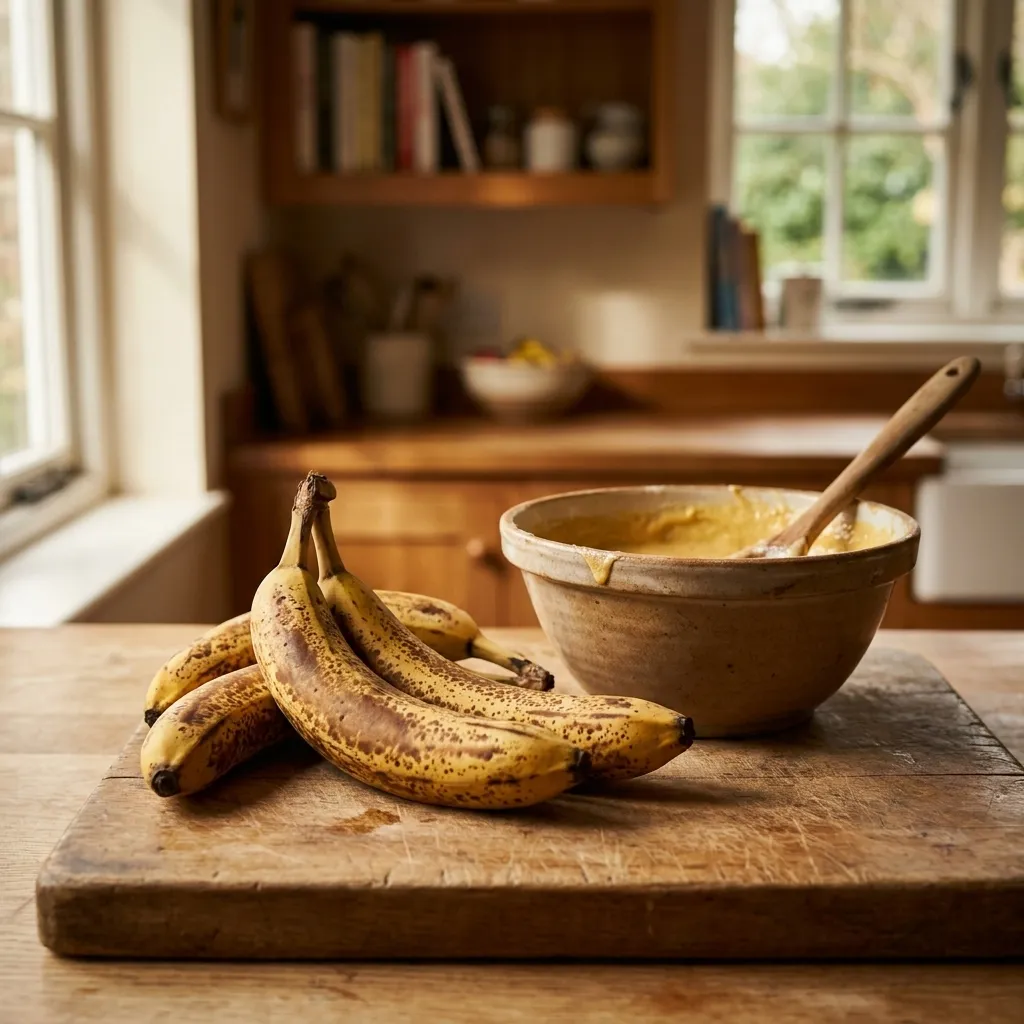
The banana sits brown and soft on the counter. Everyone walks past. Maybe you're still hoping it will save itself. It won't.
But here's the good news: Right now, in this moment, that banana is at the peak of its flavor. Not despite the brown spots. Because of them.
Key Takeaways
- A banana is ripe and ready for baking once more than 50% of the peel shows brown spots.
- As it ripens, a banana converts starch to sugar: 2 overripe bananas replace about 3 tablespoons of household sugar in a simple cake.
- Freezing stops the process immediately; peeled and portioned, a banana keeps for up to 3 months.
- Children from age 3 can actively help with mashing and stirring, turning leftover use into a real kitchen moment.
How do you know when a banana is really overripe?
A banana counts as overripe once the peel shows brown spots covering more than 50% of the surface and the flesh gives slightly when gently pressed. That's when the sugar content is highest and the flavor most intense. Color matters less than texture and smell.
The color scale helps guide you: yellow with a few spots means ripe and sweet, completely brown means baking-ready, almost black means ideal for nice cream or puree. But two other indicators are really what matters. First, smell: a very ripe banana has an intense fruity aroma, almost like banana essence. Second, texture: the flesh gives evenly when you squeeze it gently, with no watery patches.
A banana is truly spoiled only when you see mold or the flesh inside smells gray and rotten. That's a clear difference from simply being very ripe.
Nutritionally, ripening changes things: starch breaks down into free sugar, pectin softens, and the glycemic index rises. For healthy people that's not a problem; for recipes, it's actually an advantage.
Why do overripe bananas taste better in recipes?
As a banana ripens, it converts nearly all its starch into simple sugars. That makes it not just sweeter but means baked goods stay moister and you need less household sugar.
The conversion from starch to glucose and fructose happens enzymatically, without you doing a thing. A fresh, yellow banana contains about 2 grams of free sugar per 100 grams; a very ripe one up to 16 grams. You notice that clearly in the batter.
Practically speaking: 2 overripe bananas replace about 3 tablespoons of sugar in a regular cake mix. One banana equals roughly 2 tablespoons of sugar. That's not a guess but a rule of thumb that works reliably when baking.
There's also moisture. Very ripe bananas release more liquid during baking. That means if you use very brown bananas, you can add 2-3 tablespoons less milk or oil to the batter. Or you can take the extra moisture as a bonus for especially moist results.
FamFood testing showed that banana bread made with very dark bananas needs 10 to 15 minutes less baking time than recipes using yellow bananas. Do the toothpick test earlier—it pays off.
The 7 best recipe ideas for overripe bananas
From banana bread to nice cream: seven ideas that really work, take little time, and land well with kids.
Recipe | Prep Time | Baking Time | Why It Works |
|---|---|---|---|
Banana bread | 10 min. | 50-55 min. | Most-saved recipe on FamFood |
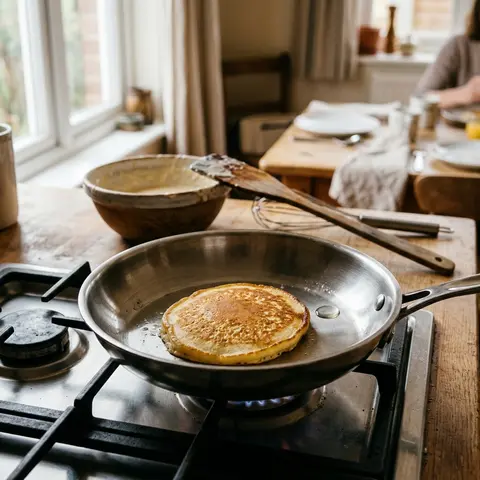
Banana pancakes (flour-free) | 5 min. | 10 min. | Just banana and egg, ideal for toddlers |
Nice cream | 5 min. | 0 min. (freeze time) | One ingredient, kids can make it themselves |
Banana oat bars (no-bake) | 10 min. | 0 min. | No oven, perfect school snack |
Banana muffins | 10 min. | 20 min. | Works great with frozen bananas straight from the freezer |
Banana smoothie bowl | 5 min. | 0 min. | Quick breakfast, toppings your choice |
Banana puree | 2 min. | 0 min. | Baby food or frosting substitute when baking |
Baking with overripe bananas: bread, muffins, and bars
Banana bread is the classic for good reason. You need 2-3 very ripe bananas, flour, eggs, a little baking powder, and oil. No mixer, no food processor. A fork is enough. The batter comes together in 10 minutes, then the oven takes over.
Banana muffins work the same way but faster. Ideal if you have frozen bananas in the freezer that you can use straight without thawing. Just set the frozen bananas in the fridge overnight or let them soften briefly at room temperature, mash, and go.
No-bake oat bars need no oven. Mix mashed banana with oats, a bit of nut butter, and dried fruit, press the mixture into a pan, and refrigerate for 2 hours. Good school snacks that get by without added sugar because the banana provides the sweetness. According to the German Federal Centre for Nutrition (BZfE), bananas are the most-purchased fruit in German households, making them a natural starting point for practical family snacks.
Use them cold: ice cream, smoothies, and raw ideas
Nice cream is the simplest recipe you'll ever make. Freeze ripe bananas, put them frozen in a blender, and blend briefly. The result has the texture of soft ice cream. No sugar, no milk, no guilt.
The smoothie bowl works similarly: one frozen banana, some plant milk, blend it all, put in a bowl, and top with granola, berries, or coconut flakes. Done in 5 minutes.
Banana puree is the quiet star of the list. Mash a very ripe banana with a fork, and you're done. The puree works on oatmeal, in yogurt, as baby food, or as a sweet substitute for icing on muffins. You rarely think of it, but it works surprisingly well.
How do you freeze overripe bananas the right way?
Overripe bananas freeze without trouble and keep for up to three months. Peel them, cut into chunks, freeze on a baking sheet, then transfer to a freezer bag. This way they won't stick together later.
The most common mistake: freezing the banana unpeeled. The problem is that after freezing, the peel barely comes off. It sticks to the flesh, and peeling it apart takes time and patience. So always peel first.
Then cut into slices or rough chunks and spread on a baking sheet or tray to freeze for 1-2 hours. Only then put into a freezer bag or container. That way the pieces stay individually removable instead of forming one solid banana block.
Label the bag with the date. After 3 months the flavor drops noticeably; the banana is still edible but duller in aroma.
The best part: you don't need to thaw frozen bananas for most recipes. For nice cream they go straight from the freezer into the blender. For muffin batter, 20 minutes at room temperature is enough to soften them.
Can children help use up the bananas?
Yes, and they should. Mashing bananas, stirring batter, shaping banana ice: these are tasks children from age 3 can handle on their own. It turns leftover use into a real kitchen moment.
From age 3, children can mash with a fork and stir batter. It needs no knife, no heat, and is genuinely fun because the result shows so fast. From age 6, tasks like measuring, filling muffin cups, or weighing ingredients come into play.
Nice cream is the ideal entry project. No heat, no knife, clear results after a few minutes of blending. The child can choose the toppings themselves and serve the finished ice cream themselves. That's self-efficacy in a bowl.
One small motivational trick that works: let the child name the recipe themselves. "Maya's banana ice" or "Leon's banana bread" gives the dish personal meaning. Saving the recipe together on FamFood and adding a photo makes it a real family memory.
What if you don't have time to cook right now?
Just freeze them. Two minutes, no recipe needed. The overripe banana waits for you until you have time. Alternatively, turn it into banana puree in 5 minutes and keep it in the fridge for 2-3 days.
Freezing is the least stressful solution. You lose nothing, neither flavor nor nutrients. The banana will be softer and darker after thawing, which is no problem for smoothies, banana bread, or pancakes, but for eating raw it means: stick to using thawed bananas in recipes.
If you'd rather keep the banana as puree, stir in a splash of lemon juice. Banana puree oxidizes quickly and turns brown. The browning is harmless, but doesn't look very appealing. Citric acid slows the process considerably.
Stored this way, puree keeps 2-3 days in the fridge and works in oatmeal, yogurt, or as quick sweetening in pancake batter.
How many bananas end up in German trash cans?
According to the German Federal Ministry of Food and Agriculture (BMEL), Germans waste about 78 kilograms of food per capita annually. Fruit and vegetables make up the largest share. According to the WWF Germany, bananas rank among the ten most-discarded foods.
That's not an abstract number. 78 kilograms per capita means a four-person family throws away roughly 300 kilograms of food yearly. And the banana, Germany's most-purchased fruit, is disproportionately often among what gets tossed.
Every banana saved is no grand gesture. But it counts.
If you're looking for more leftover ideas, you'll find additional approaches for family cooking in our guide on creative ways to use leftovers.
Common questions about overripe bananas
Can you eat overripe bananas raw?
Yes, very ripe bananas are completely safe to eat raw and actually easier to digest because the starch is already converted to sugar. They taste intensely sweet and feel soft. Only when you see mold or the flesh inside smells rotten should you throw the banana away.
How long do frozen bananas keep?
Peeled, cut into chunks, and sealed airtight, frozen bananas keep up to 3 months with no significant quality loss. After that the flavor fades. Always label the bag with the freeze date.
Why do bananas turn brown so quickly?
Browning happens through enzymatic oxidation: at pressure marks or damage, the flesh reacts with oxygen. Also, the ripening gas ethylene continues the ripening process, and temperatures below 50°F like in a refrigerator speed up peel browning without spoiling the banana.
Can I use overripe bananas for baby food?
Yes. Mashed banana puree from very ripe bananas is good as solid food starting around 6 months. The soft texture and natural sweetness make it easy for babies to tolerate. You can skip added sugar entirely. For questions about introducing solids, it's worth checking with your pediatrician or midwife.
About FamFood: We're a small team that cooks with kids ourselves, sometimes buys too much, and knows exactly how it feels when the banana sits on the counter. FamFood helps families save recipes, use leftovers, and make daily cooking a little easier.