Preserve Grandma's Recipes: The Real Way
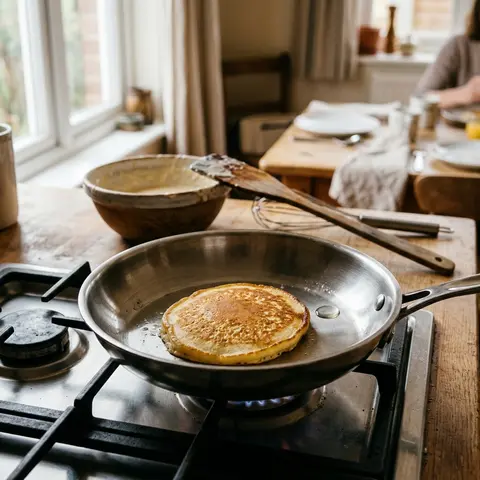
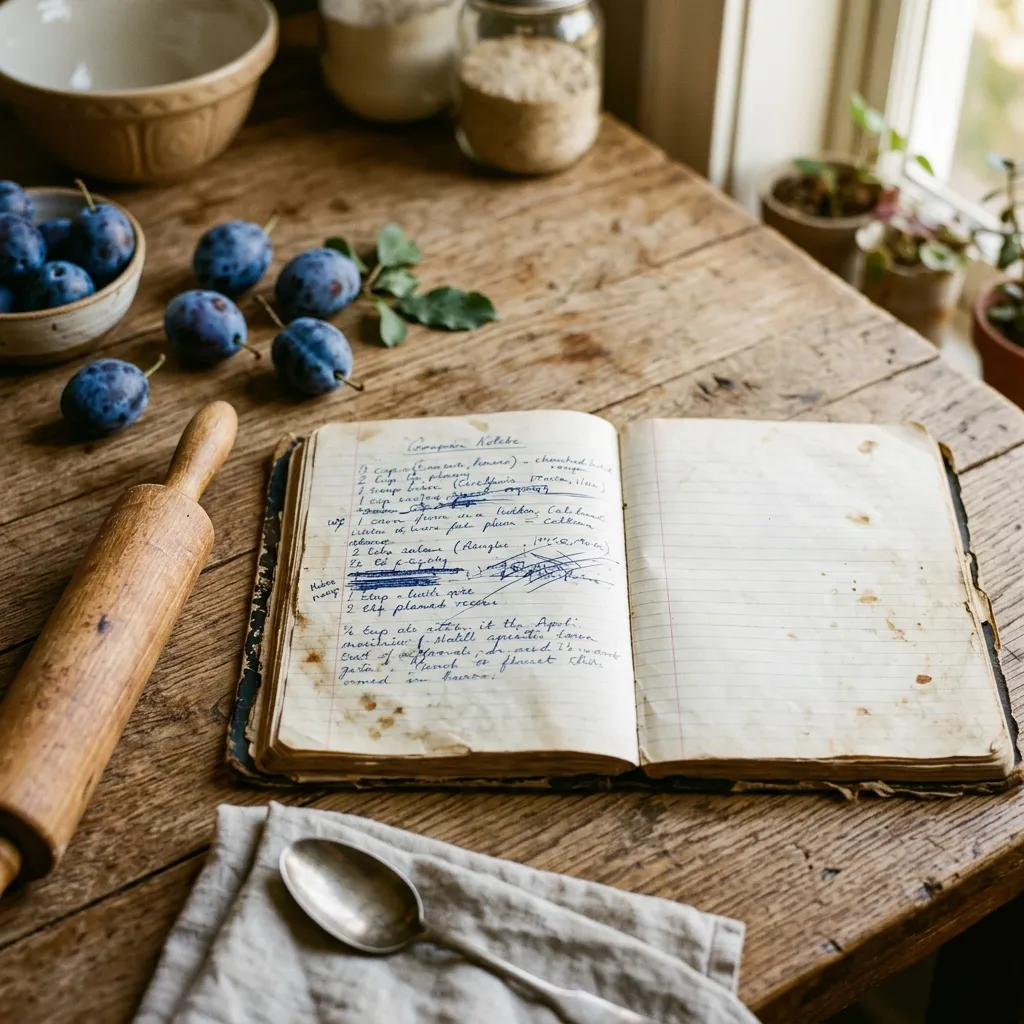
The plum cake tasted like summer. Like her house. Like her.
And now you're standing in the kitchen, staring at flour and plums, and you can't remember if it was 300 grams of butter or 250. You don't know if the dough baked for 20 minutes or 35. All you really know is that it was perfect.
A real loss only becomes clear when it's too late. At FamFood, we see families every day desperately searching for half-remembered recipes, watching the feeling grow that it's too late. None of these moments needed to happen.
Key Takeaways
- According to a Forsa survey commissioned by the German Federal Ministry of Food and Agriculture (BMEL), 62% of Germans have lost at least one family recipe forever.
- The difference between a recipe and the cooking knowledge behind it is enormous, and almost nowhere is this explained.
- The Three-Time Method (observe, cook together, cook alone) is the most reliable way to preserve oral recipes.
- Even after grandma is gone, reconstruction is possible: inherited documents, siblings, regional cookbooks.
- A structured digital archive plus a printed notebook is the most durable combination.
What really gets lost when grandma's recipes disappear?
According to a Forsa survey commissioned by the BMEL, 62 percent of Germans have lost at least one family recipe forever. This isn't a romantic problem about the past. It's a concrete loss of cooking knowledge that no search engine will recover, and that often was never written down in the first place. What disappears isn't just an ingredient list—it's a piece of lived everyday culture.
The crucial difference lies between "recipe" and "knowledge." A recipe lists ingredients and steps. Cooking knowledge is what's underneath: descriptions like "a handful" or "until the dough stops sticking" make no sense without the person who's saying them. Regional variations, the Swabian fat-to-flour ratio or Bavarian dough temperature, don't die with whole regions—they die with individual people.
And then there's the Proust effect: smell and taste are the strongest memory anchors we have. A recipe without the right context might produce the same dish, but not the same memory. This distinction between recipe and cooking knowledge is almost everywhere ignored. It's the real heart of the problem.
Which recipes are most at risk?
Preserving and canning recipes, dough foundations requiring "a feel for it," and seasonal specialties made only once a year sit at the top of the loss list. These recipes rarely exist in written form because they were never considered worth writing down. They were simply made, year after year, until nobody was left to make them.
Recipe Type | Why It's at Risk | Reconstruction Difficulty |
|---|---|---|
Canning & preserving | Purely oral, technique-dependent | Very high |
Bread baking | Amounts by feel, dough feel is crucial | High |
Christmas cookie variants | Once a year, regionally unique | High |
Rendering lard | No step-by-step, pure observational knowledge | Very high |
May punch, harvest stews | Seasonal, rare, no written records | Medium to high |
Then there are recipes without measurements: "as much flour until the dough stops sticking" is completely correct instructions if you know how the dough should feel. If you don't, you're facing a puzzle.
Techniques vs. Recipes: An Important Distinction
You can write down a recipe. A technique you have to experience. Grandma's bread baking wasn't the recipe on the paper—it was how she kneaded the dough, when she thought it was ready, why she preheated the oven ten minutes longer than the recipe said. These actions were never explained because they were never seen as needing explanation. That's why they're the first things to disappear.
When is the right moment to start preserving?
Start before you feel it's urgent. According to the German Federal Ministry of Food and Agriculture (BMEL), cooking together ranks among the most frequently mentioned family practices that connect generations, and yet most families wait for an occasion that often comes too late. The right moment rarely comes on its own.
The typical triggers that make families act are moving to a care home or a death. Both moments come too late or make the process emotionally harder than necessary.
More concrete occasions are better: cooking together at Christmas, a milestone birthday, a family gathering where grandma is cooking anyway. These moments create a natural opening—no difficult conversation about mortality and passing things on, just: "Can I stand here today and watch?"
If you want to start the conversation without awkwardness, never ask "Can you give me your recipe?" but "Can you show me how you make it?" The difference is huge. One sounds like handing something over. The other sounds like keeping it alive.
How do you preserve a recipe that was never written down?
Cook it together at least three times with the person who knows it. Once observing, once cooking together, once cooking alone while they sit by and correct you. Only then do you really have the recipe, not just notes about it. This Three-Time Method sounds labor-intensive, but it's the only way to transfer the feel for cooking.
The first time: Just watch. No jumping in, no "Wait, I need to write this down." Set your phone sideways against a glass and let it record. You want to see the rhythm, not get ingredients dictated.
The second time: Cook together. Now you can ask about amounts and write things down with a kitchen scale and measuring cups. Note everything, even what seems minor: pot size, whether the window was open, whether the tomatoes came from the garden.
The third time: You cook alone, they sit beside you. They correct you. This is the crucial moment because only now do you realize what you still don't understand.
What FamFood users report as their most common mistake: they write down the ingredients but not the context. No oven model, no pot size, no season for the ingredients. Tomatoes in August taste different from tomatoes in March, and the recipe changes accordingly.
What you absolutely must capture during the first cooking session together
- The order of actions, not just the ingredients
- Descriptions of consistency and color: "until it looks golden brown," "until the dough pulls away from the bowl"
- What she does when things go wrong: How does she rescue dough that's too wet?
- Which ingredient substitutions she knows for things that no longer exist
- The name the dish has in your family, often not the official one
Which format really preserves grandma's recipes long-term?
Paper yellows, photos fade, USB sticks die. The only format that does both—physical tangibility and digital searchability—is a combination: a structured digital archive plus a simple printed notebook for the kitchen drawer.
Format | Advantages | Risks |
|---|---|---|
Handwritten notebook | Tangible, personal, no device needed | Yellows, becomes illegible, no backup |
Word document / PDF | Easy to create | Lost without cloud backup, no structured fields for context |
Pinterest board | Visually appealing | Outside your control, can disappear anytime |
App without family sharing | Searchable, structured | Data loss when switching devices, no shared access |
Digital archive with family sharing | Searchable, shareable, context fields | Requires setup effort |
A good recipe format for family inheritance contains more than ingredients and steps: origin (who made it, since when?), season (when is it typically cooked?), variations (what changes by region or family?), and personal context (what makes this recipe this recipe?).
FamFood offers exactly this structure: context fields for origin and season, family sharing so siblings and cousins can access and add to it at the same time, and no data loss when switching devices. Among the most saved recipes in FamFood, 8 out of 10 contain a handwritten comment from whoever added it, often the only place where context is preserved.
What a complete recipe entry should contain
- Ingredients with measurements (and the original wording as a note: "a handful more flour if the dough is too soft")
- Steps with timing and consistency descriptions
- Origin: From whom, which region, how long in the family
- Season: When is it typically made?
- Variations: How has it changed across generations?
- Context: What makes this dish special?
How do you get the whole family involved?
Preserving recipes only works long-term if it doesn't stay a solo project. Families that introduce a "recipe archive day," for example on a holiday once a year, demonstrably build larger and better-maintained collections than individuals collecting alone who eventually give up. According to the German Institute for Youth and Family Research (DJI), shared food rituals are the strongest factor for preserving family traditions across generations.
A "recipe archive day" doesn't need to be a big event. An afternoon at Christmas or Easter where one person cooks, one writes things down, and one photographs or films is completely sufficient. The key is dividing the roles: Who cooks? Who writes? Who films or photographs?
Kids and teenagers are easier to involve if recipes are presented as family history, not homework. "That's what great-grandma brought from Breslau" is more exciting than "We need to write that down sometime." Let them illustrate the recipe, record the story behind it, or take the photos. They'll remember it.
What if grandma is no longer here?
Even then, all isn't lost. Other family members, old notebooks, regional cookbooks, and even neighbors can provide puzzle pieces. Reconstruction takes method, but it's possible. According to the Max Rubner Institute, the Federal Research Institute for Nutrition and Food, regional cooking practices in Germany are comparatively well documented in local publications, which often gives reconstruction attempts a solid foundation.
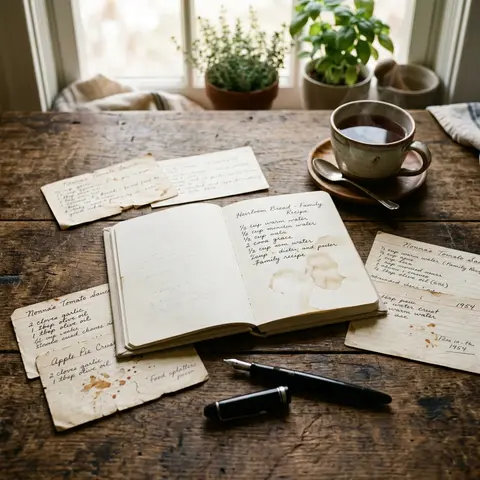
First steps: Search through inherited belongings for cookbooks, handwritten notes, letters, loose papers in drawers. Grandmothers wrote things down more often than families realize—just not in official recipe notebooks.
Interview siblings and cousins separately from each other. Each person remembers different details. Put together, they often create a surprisingly complete picture.
Regional cookbooks are an underestimated resource: rural women's associations, local church cookbooks, local history society publications. Many recipes that seemed personal are variations of regional standards that are recorded there in writing.
Accept that some recipes will become personal reconstructions. Your version of the plum cake isn't grandma's version. But it's yours, and that's the beginning of your own family version that carries on.
Frequently Asked Questions
How do I ask grandma for her recipes without it seeming weird?
Never ask for the recipe—ask to cook together. "Can you show me how you make that?" sounds like interest, not taking things over. The best entry point is a concrete occasion: a family gathering, a birthday, a weekend visit. Not a conversation about memories, but an invitation to participate.
What do I do if grandma's recipes only exist on yellowed paper?
Photograph each page immediately with good lighting, preferably with a scanner app like Microsoft Lens or Adobe Scan. Keep the original, but don't rely on it. Type the text and add context: When was this written? By whom? What else do you remember about it?
How exactly should I write down an orally transmitted recipe?
Detailed enough that someone else can make it without asking you questions. That means: real measurements (grams, not "a handful"), timing, temperatures, and consistency descriptions. Also note the original wording as a comment so the character of the recipe is preserved.
Can I reconstruct recipes I only remember?
Yes, methodically. First write down what you're sure about: ingredients, approximate amounts, texture, color of the finished dish. Then find regional reference recipes as a base. Cook several variations, note the differences. After three to five attempts, you get a version that matches memory, even if it's never identical.
How do I preserve not just the recipe but also the context and story behind it?
Note with each recipe: Where does it come from? For what occasion was it made? What did it mean in your family? Add photos if you can. Use a format with context fields, not just ingredients and steps. An app with note fields or a notebook with space for stories is better than a bare ingredient list.
About FamFood
FamFood is an app for family recipes, created by people who understand how it feels to search for a recipe that no longer exists. We believe cooking knowledge deserves to be preserved just as much as photos or letters. That's why we built a home that does both: store things in a structured way and share them with your family.