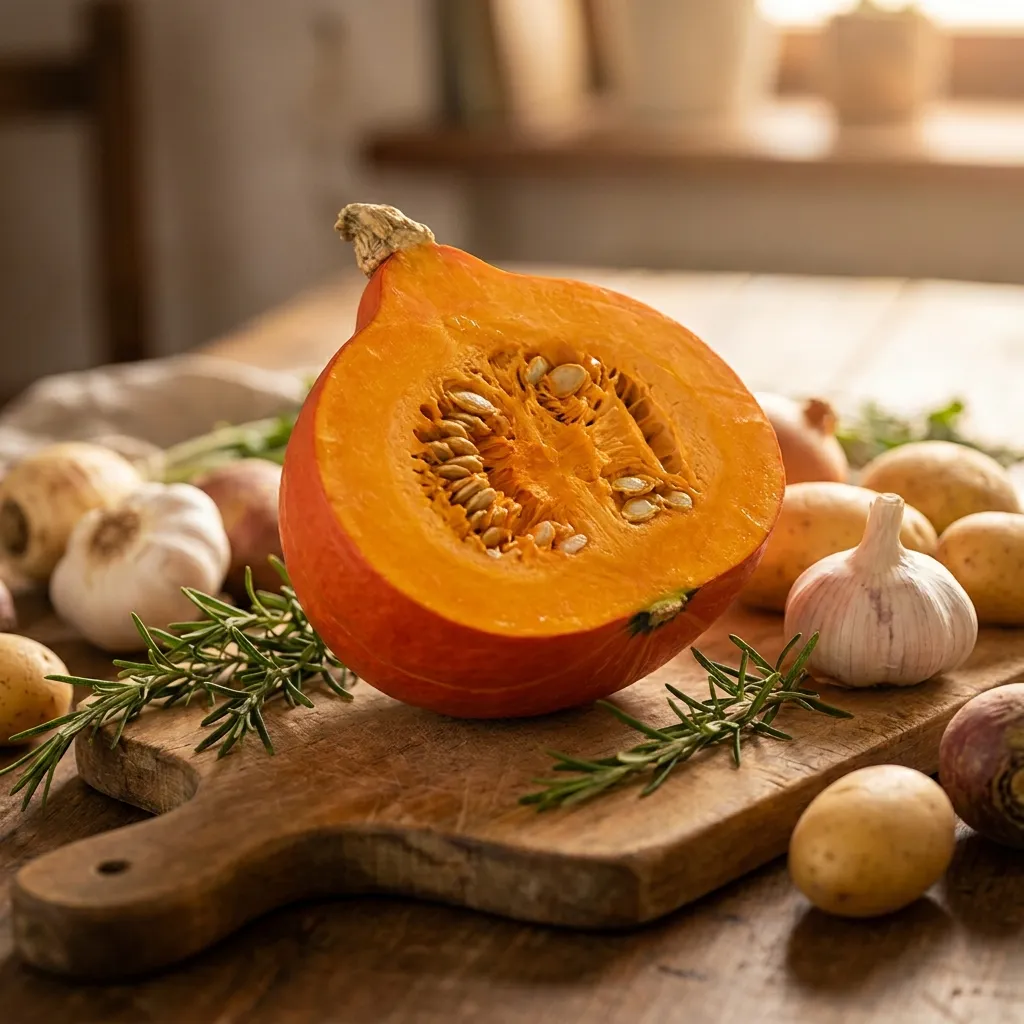
Pumpkin Recipes for Families: The Fall Guide
Every October, the same scene plays out: the pumpkin sits on the counter, the kids eye it skeptically, and your mind goes blank. What do I cook with it? Will it be quick? Will the little ones even eat it?
This post gives you concrete answers, sorted by effort and age, instead of just throwing a generic ingredient list at you.
Key Takeaways
- Kabocha is the best beginner pumpkin variety: no peeling needed, mild sweetness, ready in 25 minutes (German Federal Centre for Nutrition, peak season September to November).
- Roasting before cooking brings depth to soup that no store-bought version achieves.
- Among the most-saved soup recipes in FamFood, 8 out of 10 include a topping variation (data snapshot October 2024, 1,200+ saved recipes), because families value flexibility over perfection.
- Cooked pumpkin flesh keeps for three days in the fridge and transforms into three completely different dishes.
Which pumpkin varieties work best for family cooking?
For family kitchens, kabocha and butternut are the most reliable varieties. Kabocha doesn't need to be peeled, which saves you one tedious step entirely. Butternut tastes so mild and slightly sweet that even picky eaters come along. Both varieties peak from September to November according to the German Federal Centre for Nutrition and are available in almost every German supermarket during that window.
Variety | Peeling needed? | Flavor | Cooking time (cubed) | Best use |
|---|---|---|---|---|
Kabocha | No | Nutty, lightly sweet | 15-20 min. | Soup, roasted, baking |
Butternut | Yes | Mild, buttery | 20-25 min. | Soup, purée, casserole |
Muskat | Yes | Spicy, intense | 25-30 min. | Soup, savory dishes |
From our experience in FamFood kitchens, we recommend kabocha as the starter variety. Not just because of the edible skin, but because the bright orange flesh also makes kids hungry—visually, which matters more than you'd think with children. Muskat pumpkin is worth it if you want deep flavor and have time, but on a regular Tuesday evening, kabocha is the right call.
How do you prep pumpkin so it goes fast?
The biggest time sink with pumpkin is cutting it. With a heavy chef's knife that you press straight down along the natural ridges, you can halve a medium kabocha in under two minutes. No sawing, no wrestling.
Step by step:
- Place the pumpkin on a stable cutting board, cut off the stem.
- Position the knife in the middle, press down with the heel of your hand.
- Scoop out the seeds with a large spoon, set them aside (don't throw them away—they roast beautifully).
- Cube the kabocha directly with the skin on, about 1-1.5 inches per side.
Kids around age 5 can scoop out the seeds. It's safe and gives them a real job. By ages 9-10, they can help with a less sharp vegetable knife on the pre-cut halves.
If you know you'll be cooking several pumpkin dishes that week, cut the whole pumpkin and freeze half in portion bags. It keeps three months in the freezer and goes straight from the bag into the pot.
How do you make pumpkin soup actually creamy and aromatic?
A creamy pumpkin soup needs three things: enough onion, an acid component (ginger or a squeeze of lemon juice), and the patience to let it simmer five minutes longer before blending. Blending too early costs you depth. It's the most common mistake, and it only takes a handful of minutes to fix.
Basic recipe (4 servings, 25 minutes):
- 1 kabocha (about 1.75 lbs), cubed
- 2 onions, roughly chopped
- 1 piece ginger (about 3/4 inch), grated
- 600 ml vegetable broth
- 150 ml coconut milk (optional, makes it milder)
- Oil, salt, pepper, nutmeg
Sauté the onions and ginger in oil until soft, add the pumpkin and roast over medium heat for 3-4 minutes until it starts to color. Pour in the broth, simmer for 15 minutes, blend, then stir in the coconut milk.
That quick roast of the pumpkin flesh right in the pot brings roasted flavors that no store-bought product can recreate. It takes three minutes and separates "please make it again" from "okay." According to the German Federal Centre for Nutrition, vegetables that are briefly roasted develop more flavor compounds than those added directly to liquid.
If your kids don't like ginger, just leave it out or offer it separately as a topping bowl. Kids who get to choose eat more willingly.
What toppings turn soup into something kids actually want to eat?
Toppings transform a simple soup into a make-your-own experience and add texture, acid, and heat. Roasted pumpkin seeds for crunch, crème fraîche for creaminess, croutons for bite, chili oil for spice. Kids choose what goes on their bowl. It works reliably. Set out small bowls on the table and let each child "finish" their own soup.
What we keep seeing in FamFood kitchens: families save soup recipes almost twice as often when they include a topping variation, because Tuesday's version is different from Friday's.
Roasted pumpkin: What quick dishes work on busy weeknights?
Roasted pumpkin is the most understated and at the same time the most practical fall family dish: 10 minutes prep, 25 minutes in the oven, done. No pot, no stirring, no babysitting. The German Federal Ministry of Food and Agriculture confirms: pumpkin peaks in quality in October, which makes roasted dishes especially worth it at that time.
Recipe 1: Roasted kabocha with feta and pomegranate (35 minutes total)
Spread kabocha cubes on a sheet pan with olive oil, salt, pepper, and paprika. Roast at 400°F (200°C convection) for 25 minutes until the edges are golden brown. Arrange on a platter, crumble feta over the top, scatter pomegranate seeds. Done. The sweet-salty-sour play wins over even kids who normally refuse pumpkin.
Recipe 2: Pumpkin sheet pan with chicken and Brussels sprouts
Spread kabocha cubes, chicken thighs, and halved Brussels sprouts on one sheet pan. Same cooking time, one pan, one cleanup. Season with garlic, rosemary, and a little honey. If you use chicken breast, flip it after 20 minutes so it stays juicy and doesn't dry out.
In households with working parents, the chicken sheet pan is our most-saved fall main dish in FamFood. What we observe: it shows up in recipe lists especially often on Tuesdays and Wednesdays, because the actual prep time really is just 10 minutes. The oven does the rest while you help with homework or just breathe for a moment.
Is pumpkin baking actually worth it for families?
Yes, but stick to recipes with fewer than 8 ingredients. Pumpkin muffins and pumpkin cake work reliably because the flesh provides moisture and can replace some butter. The result is moister than many fruit cakes and rarely turns out dry. If you use grated pumpkin instead of purée, you also get better texture: the batter rises higher and stays compact enough for muffin tins.
Cinnamon pumpkin muffins (12 muffins, 40 minutes):
- 200 g grated kabocha (with skin)
- 2 eggs
- 80 ml oil
- 120 g sugar
- 180 g flour
- 1 tsp baking powder
- 1 tsp cinnamon
- 1 pinch salt
Mix everything together, fill muffin cups, bake at 350°F (180°C) for 20-22 minutes. Kids can fill the cups. It's precise enough to feel proud of but not finicky enough for things to go wrong.
For pumpkin cake, use grated pumpkin instead of purée. Purée makes the batter wet and heavy. Grated pumpkin adds texture and structure, and the cake rises better. The pumpkin seeds left over from prep, just rinse them, dry them, and roast at 320°F (160°C) for 10 minutes. That's a standalone job for kids age 4 and up with supervision.
How do you turn leftover pumpkin into new dishes?
Cooked pumpkin flesh keeps for three days in the fridge and transforms into pasta, spread, or pancakes without tasting like leftovers. The key is seasoning: leftovers need more acid or salt than freshly cooked pumpkin.
3 concrete ideas for leftover pumpkin:
- Pumpkin pasta sauce: Blend pumpkin flesh with a little pasta cooking water, Parmesan, and sage. Ready in 5 minutes, yields a creamy orange sauce that kids usually love.
- Pumpkin hummus: Blend pumpkin with chickpeas, tahini, lemon, and garlic. Serve as bread spread or veggie dip, keeps another two days in the fridge.
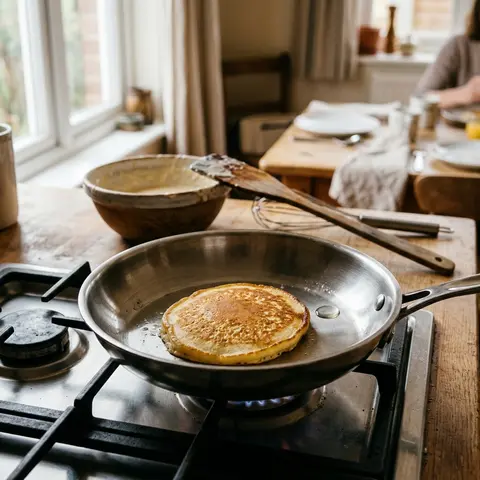
- Savory pumpkin pancakes: Mix pumpkin into a simple pancake batter and cook in butter. Tastes good with applesauce or with sour cream and chives.
If you know you won't use everything right away, freeze the cooked pumpkin flesh in 200-g portions. That way you'll still have fall cooking on hand in November. For more ideas on creative leftovers, check out our post Reinvent leftovers: 9 ideas that actually work.
Where do you save your best pumpkin recipes for next fall?
The biggest problem with seasonal recipes: you find them in October, forget them by winter, and search from scratch the next fall. A digital recipe collection with a fall folder solves this permanently. No screenshot chaos, no half-forgotten bookmarks.
In FamFood you can save the recipes from this post right away, note variations ("skip ginger for Max"), and create your own fall folder. That way you know in September what hits the table in October instead of improvising at the last minute.
Try it with one recipe from this post. Save it, jot down your adjustment, put it in a fall folder. Next October you'll find it in 10 seconds.
Frequently asked questions
Which pumpkin do I not have to peel?
Kabocha pumpkin is the only common variety that doesn't need peeling at all. The skin softens during cooking and is edible. All other varieties—butternut, muskat, spaghetti squash—require peeling before cooking. That makes kabocha the fastest option for family cooking.
How long does pumpkin keep in the fridge after cooking?
Cooked or roasted pumpkin flesh keeps reliably for three days in a covered container in the fridge. Pumpkin soup likewise keeps three to four days. In the freezer, both keep up to three months, best frozen in portion sizes so you don't have to thaw everything at once.
Can I eat pumpkin raw?
Yes, kabocha and butternut can be grated or sliced thin, for example in salads or as a raw vegetable side. Raw, the flavor is more intense and slightly earthier than cooked. Kids often like raw pumpkin less, but as a raw veggie with a mild dip it's worth a try.
How do I make pumpkin soup creamier if it's too thin?
Three ways: First, just simmer it uncovered longer so liquid evaporates. Second, cook and blend a raw peeled potato with it—the starch binds the soup. Third, stir in a tablespoon of cashew butter or crème fraîche for creaminess without overpowering the pumpkin flavor.
About FamFood: We're a team of parents, home cooks, and tech geeks who all had the same problem: too many recipe cards, not enough order. FamFood is our answer. Not a glossy food blog, but an app for real family cooking with real time estimates.