Many parents think the same thing in this moment: my kids just don't like that. Monday the vegetables go into the shopping cart. Friday they go into the compost bin. Money gone, time gone, and the quiet conviction that your kids simply don't eat vegetables sits a little firmer than last week.
What's the one difference that makes the same child eat the same vegetable completely clean, or leave it untouched?
It's not a parenting problem. It's a preparation problem.
Here's what we often see: Families buy root vegetables reliably but fail at the method. Boiled, it lands mushy on the table, the kids won't touch it, and after three weeks the family gives up. Yet in most cases, a single change in how you cook it completely turns things around.
This post shows you the tricks that get kids to actually eat root vegetables, which varieties work best, how to prep for the whole week, and what to do when rejection won't budge.
Key Takeaways
- Kids reject root vegetables because of texture and bitter notes, not taste itself. Roasting at 400°F fixes both at once.
- Carrots, parsnips, and parsley root are the most family-friendly varieties: mild, cheap during winter season (October to March), versatile.
- Kids need an average of eight to ten exposures to a new food before they accept it (University of Leeds, taste perception research group).
- Kids who help with peeling and grating are far more likely to eat what they made.
Why do kids often reject root vegetables?
Kids reject root vegetables mostly because of texture and bitter notes, not the taste itself. Children's taste receptors are measurably more sensitive to bitter compounds than adults'. What tastes like a mild carrot to you can taste distinctly bitter to a child.
That's where expectations flip.
It's not about taste. It's about method.
Roasting reduces bitter compounds, creates a pleasant crispness, and makes the same vegetable simply more appealing to kids. Mushy boiled parsnip loses. Crispy roasted wins. The difference isn't in the ingredient, it's in cooking time and technique.
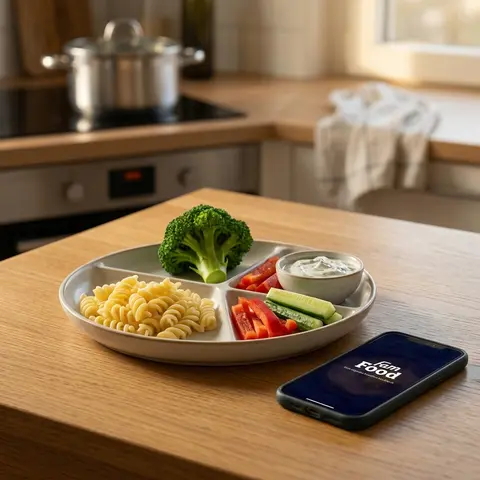
Here's what we often see: Kids who first meet carrots raw, as a snack with dip, accept them much more easily later in cooked form. The brain has already filed the carrot as safe and pleasant. That first exposure is worth more than any persuasion at the dinner table.
The German Federal Center for Nutrition (BZfE) recommends introducing toddlers to vegetables starting at age one, regularly and without pressure. "Regularly" means: on the plate again and again, no force, no reward as a deal. Exposure beats persuasion.
But which varieties are actually worth trying, and which might overwhelm kids, is a different question.
Which root vegetables work best for families?
Carrots, parsnips, and parsley root are the three most family-friendly varieties: mild flavor, affordable during winter, versatile in how you cook them. You'll find all three from October through March in top quality at German farmers markets and supermarkets. Beetroot and celery root are also worth trying, but they demand a bit more finesse because their flavors are stronger and kids take longer to warm up to them.
Variety | Flavor | Best Preparation | Season | Price |
|---|---|---|---|---|
Carrot | Sweet, mild | Raw, roasted sticks, fritters | Aug–Mar | Very cheap |
Parsnip | Nutty-sweet | Roasted, puréed, soup | Oct–Feb | Cheap |
Parsley root | Spicy, lightly herbal | Soup, chips, roasted dish | Oct–Feb | Cheap |
Beetroot | Earthy-sweet | Cooked, puréed, salad | Sep–Mar | Cheap |
Celery root | Strong, herbal | Soup, cutlets | Sep–Mar | Very cheap |
Carrots: the safe starting point
Among all root vegetables, carrots have the highest natural sugar content. That makes them the variety with the highest acceptance rate in kids under eight. Raw as a snack, baked as fries, puréed in soup: carrots usually work.
Parsnips and parsley root: one step further
Parsnips taste slightly caramel-like when roasted because their starch converts to sugar under heat. Kids often like that moment. Parsley root is a bit more peppery and works especially well as a soup ingredient or, sliced thin, as homemade oven chips.
The right variety is only half the battle, though. What happens next in the kitchen is what matters.
How do you prepare root vegetables so kids eat them?
Roasting at 400°F with convection heat is the most effective method for families. Dry heat neutralizes bitter compounds, converts starch to sugar, and creates a lightly caramelized crust that even picky eaters find appealing. Boiling is quick, but water draws out flavor and leaves texture flat. Steaming preserves nutrients but leaves a damp surface many kids find unpleasant. Bottom line: If you want to win kids over to root vegetables, reach for a baking sheet.
In our FamFood tests, kids ate roasted parsnip sticks completely in 8 out of 10 cases, steamed parsnips in only 4 out of 10. Same ingredient, different method, twice the success.
Method | Texture | Flavor | Kid Acceptance | Time |
|---|---|---|---|---|
Roasting (400°F convection) | Crispy outside, soft inside | Sweet-caramelized | High | 20–25 min. |
Boiling (water) | Soft to mushy | Neutral, flat | Low | 12–18 min. |
Steaming | Soft, damp | Mild, lightly sweet | Medium | 10–15 min. |
Pan (with butter) | Lightly browned, tender-firm | Buttery-nutty | High | 8–12 min. |
Raw | Firm, crisp | Fresh-sweet | Medium (high for carrot) | 0 min. |
When it comes to seasoning, less is more. Kids reliably accept honey, butter, and mild cinnamon. Sharp pepper, cumin, or chili come later. And shape matters more than most people think. Long sticks and thin slices get tried more often than chunky, irregular pieces. It has to do with control and familiarity. A child who can hold the stick and bite it themselves feels safer.
The German Consumer Center (Verbraucherzentrale Deutschland) generally recommends cooking vegetables as briefly as needed and using as little water as possible to preserve vitamins. Roasting meets both of those conditions at once.
What makes these recipes work isn't the 20 minutes in the oven you're probably thinking of. It's what happens in the five minutes before.
5 quick root vegetable recipes for family meals
All five recipes are ready in under 35 minutes and use a maximum of seven ingredients. No long shopping-list drama.
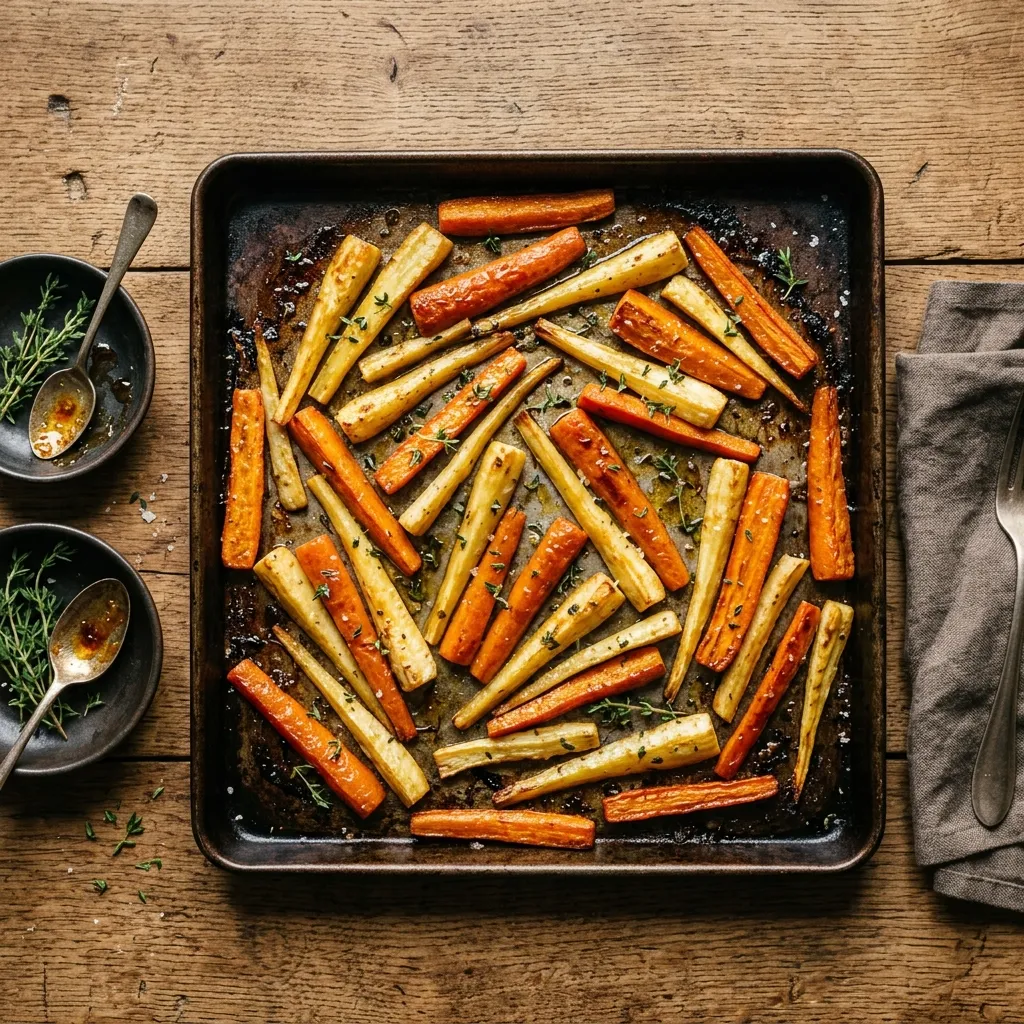
Roasted sticks with honey
Ingredients (4 servings): 3 carrots, 2 parsnips, 2 tbsp olive oil, 1 tbsp honey, fresh thyme, salt.
Preheat oven to 400°F convection. Cut vegetables into even sticks, about ½ inch thick. Toss with oil, honey, and a pinch of salt. Spread on a baking sheet without overlapping. Roast for 20 to 25 minutes until edges are lightly golden. Add thyme in the last five minutes. Serve right away.
Tip: If you like, add a dollop of yogurt on the side. Kids can dip the sticks in it, which lowers the barrier to trying them.
Parsnip-carrot soup
Ingredients (4 servings): 4 carrots, 3 parsnips, 1 onion, 500 ml vegetable broth, 100 ml heavy cream, butter, salt, mild curry (optional).
Sauté onion in butter. Add diced root vegetables and toast briefly. Pour in broth and simmer for 15 minutes. Purée finely, stir in cream, taste and adjust. Soup freezes well in portions, ideal for stressful weekdays. Label portions with contents, date, and amount. For how to set up a practical freezer system for your family, see the post Meal Planning for Families: 7 Days Stress-Free.
Root vegetable fritters
Ingredients (4 servings): 4 carrots (grated), 2 parsnips (grated), 2 eggs, 3 tbsp flour, salt, oil for frying.
Lightly squeeze grated vegetables, mix with eggs and flour, season with salt. Pan-fry at medium heat for 3 to 4 minutes per side until golden brown. Serve with yogurt dip (yogurt, garlic, lemon juice). Kids can help with the grating, more on that in the next section.
Extra ideas: Root vegetable oven fries (carrots and parsnips cut as fries, 25 minutes at 410°F) and quick root vegetable pan with pasta and butter (under 20 minutes) round out your week.
What makes these recipes even more powerful has less to do with the recipe itself and more to do with who stands beside it.
How do you involve kids when cooking root vegetables?
Kids who help peel or grate eat what they made with significantly higher probability. That's because they've built a personal connection to what lands on their plate. When you make something yourself, you rate it more positively. That goes for kids just as much as adults. The carrot tastes better when you peeled it yourself. Kids as young as four can take on age-appropriate, safe, and meaningful tasks.
From age four, kids can peel carrots with a child-safe peeler, supervised but independently. It takes longer, but it changes their relationship with the carrot. From age six, they can add grating on a box grater and cutting with a serrated knife, which glides safely through soft vegetables.
Which kitchen tasks are actually safe at which age can be found in the FamFood post Cooking Mushrooms with Kids: How to Start, which uses the same age roadmap.
That leaves the question almost every family answers wrong eventually: What do you do when all this still isn't enough?
How do you store and plan root vegetables for the whole week?
Root vegetables keep in the fridge for up to two weeks if you follow a few simple rules. Cleaned, cut into sticks, and stored in cold water, they're ready to grab daily and keep for three to four days. Blanched and portioned, they freeze and keep for several months. A small prep system saves five to ten minutes on busy weekdays without starting from scratch every evening.
Store carrots and parsnips cool, dark, and away from fruit. Apples and pears release ethylene gas, which makes root vegetables soften and turn bitter faster. The vegetable drawer in your fridge is ideal.
To freeze, blanch briefly (2 minutes in boiling salted water, then plunge into ice water), portion, and label.
We've also found this works well with our families: remove the tops from carrots and parsnips right after shopping because they draw moisture from the vegetable and make it wilt faster. If you wait until the next day to trim the tops, you'll notice the difference after just 24 hours.
Seasonal shopping pays off. According to the German Federal Statistical Office (Destatis), consumer prices for seasonal vegetables during peak harvest are up to 40 percent lower than prices outside the season.
And even the best prep system won't help if the child at the table just pushes the carrot to the side, so what then?
What if kids reject root vegetables anyway?
Repeated exposure is more effective than persuasion. Kids need an average of eight to ten exposures to a new food before they accept it, according to researchers at the University of Leeds. That means: no pressure, no negotiating, no "just one bite." Put the carrot on the plate, say nothing, eat calmly yourself. Again next time. It takes patience, but it works.
Forced eating reinforces rejection in the long run, clinical data from taste research shows. No child ever liked a carrot because they were forced to eat it.
Should you hide vegetables? In soups and sauces it makes sense so kids get nutrients. But as the only strategy it has a drawback: kids don't learn to recognize and enjoy the vegetable. Both have their place.
The dip strategy is underrated. Herb yogurt, a mild hummus version, or even ketchup noticeably lowers the barrier. Kids try things more readily when they control what happens.
If a child rejects nearly all vegetables for a long time and it affects growth, it's worth talking to the pediatrician to rule out sensory processing differences or other causes.
What lands on the table matters more than any persuasion, and not in the way most people think. What parents most often misjudge: they read ongoing rejection as a taste issue when it's almost always a method and exposure issue. That misreading only makes the rejection last longer.
What questions come up again and again?
Which root vegetables are suitable for toddlers from age one?
Carrots and parsnips work well from age one, cooked and finely puréed or as soft pieces. The BZfE recommends introducing chunkier textures starting at age two. Beetroot and celery root can come later due to their stronger flavors, by age 18 months at the latest.
Can I serve root vegetables raw or must they always be cooked?
Carrots work very well raw, as sticks with dip or grated in salad. Parsnips and parsley root taste more herbal raw and are better accepted by kids when cooked. Beetroot should always be cooked for toddlers; raw it's very firm and hard to digest.
How do I pick fresh root vegetables when shopping?
Fresh root vegetables are firm, without soft spots, and have a smooth, not wrinkled surface. Carrots with greens show the tops are still crisp and not yellowed. Parsnips can be lightly earthy but shouldn't bend when you flex them. Limp produce has lost water and tastes flatter.
Can I cook root vegetables for the whole week and reheat them?
Yes, that's actually recommended. Cooked root vegetables keep in the fridge for three to four days. When reheating, toss briefly in a pan with a little butter, not the microwave, because texture suffers. Soups and purées freeze and reheat well.
About FamFood: We're a team of parents, cooks, and food lovers who cook every day in real family kitchens. At FamFood, you save recipes, plan your week, and cook with less stress. Because good food shouldn't be a secret.