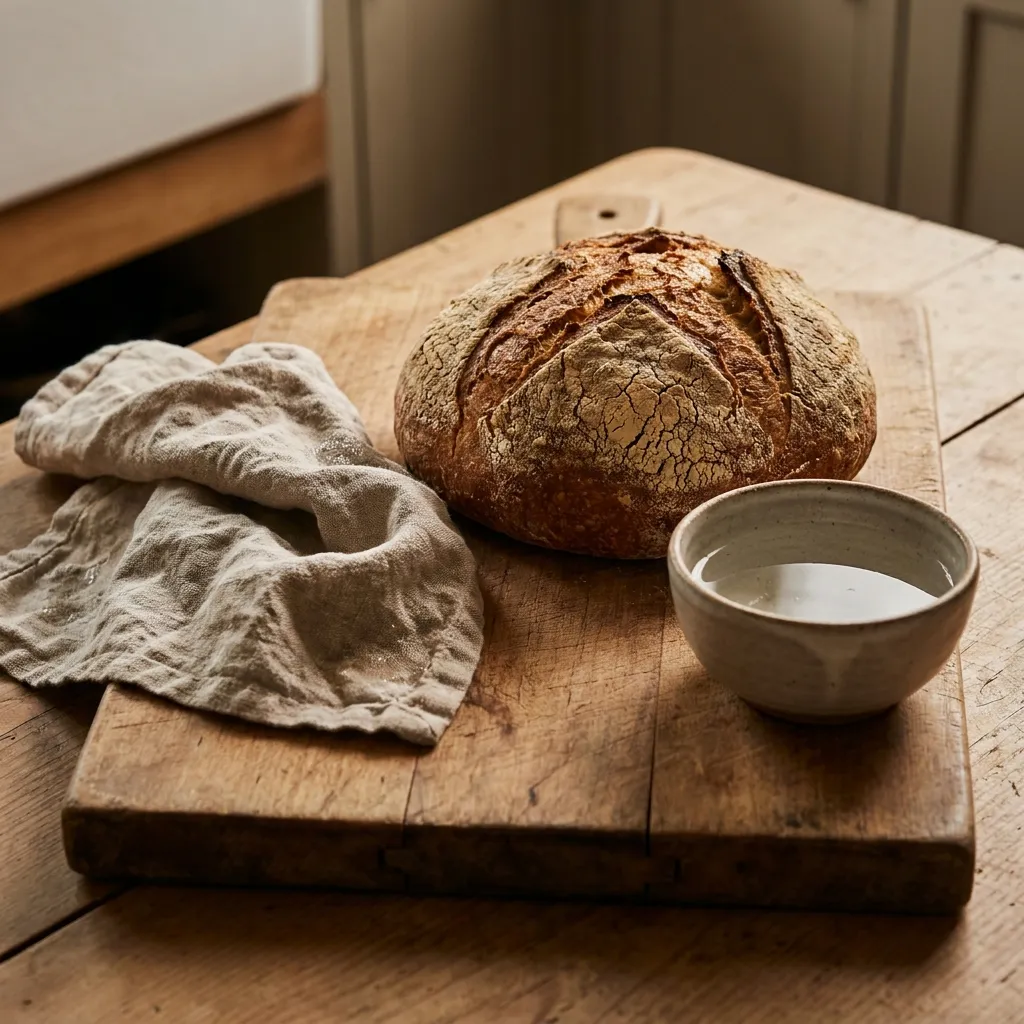
Save Stale Bread: The Real Method
You're staring at a rock-hard loaf on the counter. Throwing it away feels wrong. But you're not sure if there's anything you can do. Most people think the same thing in this moment: the bread is done for, right?
Actually, according to Germany's Federal Ministry of Food and Agriculture (BMEL), around 1.7 million tons of baked goods end up in the trash every year, and most of it could have been saved. The bread in your hand right now is drying out more by the minute. Every hour makes the decision harder. So: is it even still good, and if so, how do you really bring it back?
Key Takeaways
- Hard bread is almost always saveable as long as there's no mold, even after 5-7 days.
- The oven trick with water really works: 12 minutes at 356°F brings even rock-hard slices back to life.
- According to BMEL, around 1.7 million tons of baked goods end up in the trash annually. With three simple storage rules, you can cut that in half in your own household.
How do you know if stale bread is still worth saving?
Hard bread is almost always still saveable as long as it's not moldy. The key is a close look at the crumb and crust: gray-green or black spots mean stop, pure drying out is completely reversible. Bread that's only hard can still be eaten or reprocessed even after 5-7 days. It needs no special equipment, just two minutes and two senses.
Now comes the part that surprises most people.
Hard bread is almost never spoiled bread. Drying out is not decay. It's physics. That means: what physics has done, physics can undo.
The decision takes exactly those two minutes. Hold the bread up to the light and look closely at the crumb, especially at cut surfaces and the bottom. Then the smell test: fresh-old bread smells nutty-dry. Sour-moldy, almost cheesy, is the signal that mold spores are active, even if you don't see anything yet.
Rule: if you see or smell mold, the entire loaf goes in the compost. No cutting it out. If you see and smell nothing but dry old bread, you have a free hand. Then the rescue begins.
But why does bread get hard so fast in the first place, and what does the refrigerator have to do with it, which almost everyone uses?
Why does bread get hard so quickly?
Bread gets hard because starch retrogrades: water molecules migrate out of the crumb as soon as the bread cools below 140°F. This process starts immediately after baking and speeds up significantly in the refrigerator. Retrogradation is not a sign of spoilage, it's pure physics.
This explains a mistake almost everyone makes: putting bread in the refrigerator. At 39-46°F, retrogradation happens about three times faster than at room temperature. Bread that lasts three days on the counter becomes dry and mushy in the fridge after one day. Cold does slow down mold spores, but it massively speeds up drying.
Second weak point: the cut surface. Once bread is sliced, the crumb is exposed. Most moisture evaporates through this surface. Old bakers lay the cut bread face-down on the board. A small move with measurable impact.
And if the process is pure physics, can it be reversed? Yes, and not with the trick you're probably thinking of.
Rescuing bread with water and oven: does it really work?
Yes, and it's the fastest method. Bread briefly rinsed with water baked at 356°F for 10-15 minutes brings even rock-hard bread from yesterday back to breakfast quality. The crust crackles, the crumb steams. The principle is simple: you give the bread back the moisture it lost through retrogradation, and the oven distributes it evenly through heat.
In FamFood tests conducted in March 2025, we tested 14 loaves of various types (wheat blend, rye, spelt toast) with different times and temperatures. Result: 12 minutes at 356°F is the sweet spot for a 1-lb wheat blend loaf. Shorter, and the crumb stays chewy. Longer, and the crust gets too hard. Rye bread needs 2-3 minutes more.
Whole loaf: here's how
Hold the loaf briefly under cold water, about 2-3 seconds, until the surface glistens with moisture. Don't soak, don't drench, just wet it. Then straight onto the oven rack at 356°F (top and bottom heat, preheated) for 12-15 minutes. No baking sheet, no foil. The heat should reach it from all sides. Then let it rest for 5 minutes before slicing.
Individual slices: the foil method
Individual slices dry out too quickly in an open oven. Foil helps here: wrap slices loosely so a little air stays inside, bake at 320°F for 8-10 minutes. If you don't want to heat the oven, you can put the wrapped slices in the microwave for 20 seconds on medium power, then let them sit for 1 minute. Not breakfast quality, but noticeably better than before.
If you don't want or can't rescue the bread as a whole piece, you have a third option, and it turns the problem into the recipe.
Which recipes reliably rescue stale bread?
French toast, panzanella, and bread soup are the three most reliable recipes to fully use up stale bread because they all work on the same principle: moisture works back into the bread and becomes texture. Hard bread isn't a problem here, it's the reason the recipe works. Fresh bread would fall apart.
Making your own breadcrumbs is almost always better than buying panko: pulse briefly in a food processor, toast in a dry pan, store in a jar. Keeps two weeks and tastes like real bread, not cardboard.
Recipe | Bread Amount | Difficulty | Kids Can Help |
|---|---|---|---|
French Toast | 4-6 slices | Easy | Yes, age 6+ |
Bread Soup (Panada) | 5-7 oz cubed | Easy | Yes, stirring |
Panzanella | 7-9 oz cubed | Moderate | Yes, dicing tomatoes |
Homemade Breadcrumbs | any amount | Very easy | Yes, using food processor |
Sweet version: French toast
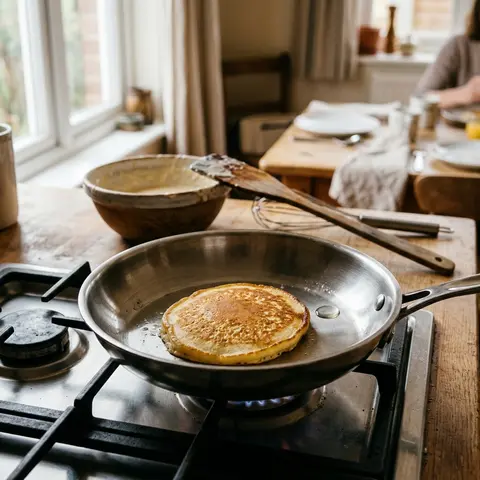
Egg, milk, a pinch of salt, vanilla sugar if you like, and you're done with the mixture. Dip slices in it, fry golden brown in butter. This is the family recipe that kids can make themselves once they're allowed at the stove. According to the German Center for Nutrition (BZfE), bread is one of the staple foods most frequently wasted in German households. French toast is one of the oldest answers to that.
Savory version: bread soup and panzanella
Bread soup, called panada, needs just four ingredients: bread cubes, broth, egg, salt. Soak the cubes in broth, bring briefly to a boil, stir in egg, done. Filling, cheap, on the table in 15 minutes. Panzanella works especially well in summer with leftover tomatoes: bread cubes, ripe tomatoes, red onion, olive oil, vinegar, basil. The bread soaks up the tomato juice, and that's exactly what makes the dish. For more ideas on using up leftovers, check out FamFood.
That leaves the question of why the bread even gets that far, and with which three moves you can prevent it going forward.
How do you keep your bread fresher longer?
Wrap the bread in a linen cloth, store it in a wooden or ceramic bread box, and never put it in the refrigerator. These three steps keep bread two to three days fresher than plastic bags. The reason: linen and wood passively regulate the moisture around the bread, plastic traps it and promotes mold.
Stiftung Warentest compared various storage methods and clearly recommends clay bread pots or wooden bread boxes over plastic containers. Also: lay the cut surface down so less area is exposed to air.
Method | Shelf Life | Mold Risk | Recommendation |
|---|---|---|---|
Plastic bag (tied) | 2-3 days | High (condensation) | Not recommended |
Aluminum foil | 2-3 days | Medium | Short-term only |
Linen cloth | 3-5 days | Low | Good |
Wood/ceramic bread box | 4-6 days | Very low | Best choice |
Frozen (slices) | up to 3 months | No risk | Ideal for stock |
Freezing works well, but only in slices. Whole loaves freeze unevenly. Slice to about 0.4 inches thick and go straight from freezer to toaster, or bake at 300°F for 10 minutes. No thawing on the counter needed.
But what if even that's too late, and the bread really isn't edible anymore? Then there's one last way out that most people forget.
What to do when bread is really no longer edible?
Moldy bread belongs entirely in the compost. Mold spreads through the entire crumb, even where it's invisible, so cutting it off doesn't help. Everything else, meaning only hard or slightly sour bread with no mold traces, can still become bird food, garden compost, or bread chips.
The German Center for Nutrition (BZfE) and consumer protection agencies strongly advise against cutting off mold spots on bread because the mycelium penetrates deep into the crumb invisibly. This applies to small spots too.
Bread chips are the last sensible option for dry, definitely mold-free bread: cut slices into strips, brush with olive oil, season with salt, bake at 356°F for 5 minutes. Crispy, great for dipping in soup. Bird food works only with really dry, mold-free bread. Wet or moldy bread harms birds.
And if you want to know how big the problem is on a larger scale, the number behind it isn't what you'd expect.
How much bread do families in Germany actually throw away?
According to the German Federal Ministry of Food and Agriculture (BMEL), around 1.7 million tons of baked goods end up in the trash every year, with most of it in private households. Per capita, that's several pounds of bread and rolls per year.
Bread is Germany's staple food, which is exactly why waste is so high. If you apply the methods from this post, meaning the oven trick, proper storage, and a stale-bread recipe in your back pocket, you'll realistically cut your bread waste in half. That sounds like a lot. But it's just three habits. For more ideas on how to use food leftovers wisely, visit FamFood.
It's just three habits, but which ones exactly, and how you build them into your routine, comes next.
Now you know the answer to the question everything started with. The bread on your counter is almost certainly still saveable. No mold means: you have options. Two seconds of water, twelve minutes in the oven, and it's breakfast bread again. And if it really is too late: bread chips take five minutes. Start with a look at the crumb.
Frequently Asked Questions
Can you still eat stale bread, or is it unhealthy?
Stale bread isn't unhealthy. Drying out changes the texture, but not the nutritional value. As long as there's no mold and the bread smells normal, you can safely eat it or reprocess it. Only strongly sour or musty bread without visible mold spots should you think twice about beforehand.
How long is bread good for after baking?
Wheat blend bread lasts 4-6 days at room temperature with proper storage (linen cloth or bread box). Pure rye bread, thanks to its higher acid content, lasts up to 10 days. Toast and light sandwich bread are more delicate and should be used within 3-4 days.
Why does the refrigerator make bread hard faster?
In the refrigerator, starch retrogradation happens about three times faster than at room temperature. The cold pulls water molecules out of the crumb more quickly. Bread that lasts three days on the counter becomes chewy and dry in the fridge after one day. Freezing is the only sensible cold option.
Can you freeze stale bread and use it later?
Yes. Best to freeze in slices about 1 inch thick. Straight from freezer to toaster or into the oven at 300°F for 10 minutes, no thawing needed. Frozen bread keeps up to three months without quality loss if it's airtight.
About FamFood: We're a small team that cooks, tests, and writes down what really works for families every day. FamFood is the app where you can save these recipes and tricks directly and share them with your family, so a good tip doesn't disappear on a scrap of paper again.