School Kids Nutrition: What Actually Works
You buy whole grain bread. You pack fruit in the lunchbox. You cook a warm dinner. And yet at 3 p.m. your child sits at the homework table and stares into space. No energy left, no focus, bad mood.
This isn't about willpower. And it's usually not because you're doing something wrong. It's because school kids' nutrition follows mechanisms that don't appear in any nutrition table. This post explains them, concretely and without sugar-coating.
Key Takeaways
- School kids react more sensitively to blood sugar fluctuations than adults; the afternoon slump is biochemically explainable.
- 10- to 12-year-olds need up to 2,000 kcal daily, many families underestimate this (German Nutrition Society).
- Iron, iodine, vitamin D, and omega-3 are the four most common nutrient gaps in German school kids (Federal Centre for Nutrition Education).
- The 3-component rule for packed lunch (carbs + protein + raw veg) stabilizes energy through the end of school.
- Planning meals for five days once saves three spontaneous decisions daily.
Why does concentration break right after lunch?
The so-called afternoon slump between 1 and 3 p.m. is no accident. School kids aged 6 to 12 burn more energy per kilogram of body weight than adults, but simultaneously react more sensitively to blood sugar swings. Meals high in sugar, like white bread, sweetened yogurt, or fruit juice, send blood sugar spiking fast and crashing just as fast. This crash causes the energy drop.
In adults, this curve is flatter. In kids, it's steeper because their insulin response is quicker and stronger. A breakfast of cornflakes with milk and a glass of orange juice sends blood sugar up in a curve that by 10 a.m. plummets. The packed lunch then decides whether the child makes it through the second half of school focused or not.
What really helps is a combination of three macronutrients: complex carbs (like whole grain bread or oatmeal), protein (cheese, eggs, legumes), and healthy fats (nuts, avocado, olive oil). This triple combination slows stomach emptying, smooths the blood sugar curve, and ensures energy releases steadily.
Families who've switched breakfast to oatmeal with nuts report within days that their kids complain of hunger before the break less often. The effect isn't subtle, it's noticeable.
How much energy does a school kid really need per day?
The German Nutrition Society (DGE) recommends around 1,700 kcal daily for 7- to 9-year-olds, and up to 2,000 kcal for 10- to 12-year-olds. Actual need varies significantly by height and activity level. A child who plays soccer for 30 minutes daily and walks to school needs noticeably more than a child with mostly sedentary free time.
A common mistake: parents rely on their own portion sizes. Kids need fewer kcal than adults overall, but relative to body weight they need more. An 8-year-old weighing 62 lbs needs about 60 kcal per kg, an adult man about 35 kcal per kg.
Reference values by age group
Age Group | Gender | Energy Requirement (kcal/day) |
|---|---|---|
6–7 years | Girls | approx. 1,500 |
6–7 years | Boys | approx. 1,600 |
7–9 years | Girls | approx. 1,700 |
7–9 years | Boys | approx. 1,800 |
10–12 years | Girls | approx. 1,900 |
10–12 years | Boys | approx. 2,000 |
Source: DGE Reference Values for Nutrient Intake, 2024. Values apply to moderate physical activity (PAL 1.4). Athletically active children may need 10–20% more.
Anyone aligning meals directly to these figures quickly learns: school cafeteria lunch rarely covers more than one-third of daily need. Breakfast, packed lunch, and dinner carry the remaining two-thirds.
Which nutrients are particularly critical for school kids?
The four most common nutrient gaps in German school kids are iron, iodine, vitamin D, and omega-3 fatty acids, according to the Federal Centre for Nutrition Education (BZfE). Iron is essential for oxygen transport to the brain. Iodine controls the thyroid and thus growth. Vitamin D is produced via sunlight but is almost completely absent in Germany from October through March. Omega-3 fatty acids support brain development. A deficiency in any of these four often shows up only after weeks, through tiredness, worse concentration, and more frequent infections.
Iron is essential for oxygen transport to the brain. Kids who eat little meat are especially at risk. Good plant-based sources are legumes, oats, and pumpkin seeds. Iron absorption improves significantly when you combine it with vitamin C, for example lentils with bell pepper or orange juice with oatmeal.
Iodine is absorbed via iodized salt and saltwater fish. Many families cook with non-iodized salt or skip fish altogether. One to two servings of saltwater fish per week are enough in most cases.
Vitamin D the body produces via sunlight. From October through March, sun exposure in Germany isn't enough to meet demand. For kids during this period, supplementing with 400–800 IU daily can make sense, but always check with the pediatrician first.
Omega-3 fatty acids from oily fish like salmon, herring, and mackerel support brain development. Plant-based alternatives like flax oil or walnuts contain alpha-linolenic acid, but the body converts only a limited amount into the active forms EPA and DHA.
Nutrient | Primary Function | Best Sources | Deficiency Signs |
|---|---|---|---|
Iron | Oxygen transport, concentration | Legumes, meat, oats | Paleness, tiredness |
Iodine | Thyroid, growth | Iodized salt, saltwater fish | Tiredness, concentration problems |
Vitamin D | Bones, immune system | Sunlight, oily fish | Frequent infections, mood dips |
Omega-3 | Brain development | Salmon, herring, flax oil | Reduced learning performance |
Source: BZfE, Nutrient Supply in Children, 2023.
What goes in a packed lunch that lasts until the end of school?
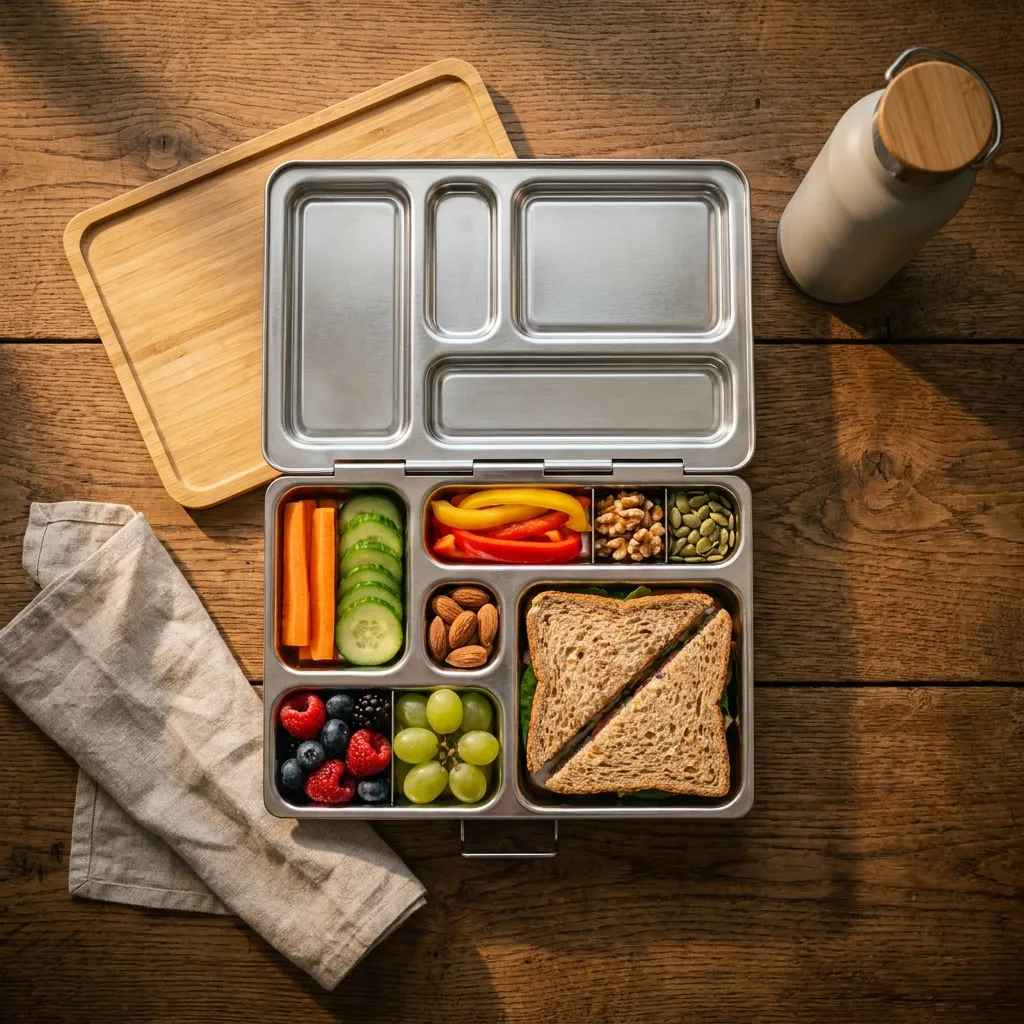
A satisfying packed lunch pairs complex carbs, protein, and healthy fats. Whole grain bread with hummus and cucumber or cheese with apple slices demonstrably last longer than white bread with just meat. The reason: the combination slows digestion and keeps blood sugar stable.
Among FamFood's most popular packed lunch recipes, 73% of favorites follow exactly this 3-component rule: carb, protein, raw veg or fruit. That's no coincidence. Kids eating a packed lunch following this pattern come home hungry from school less often.
The packed lunch comes back untouched if the child had no say in putting it together. Kids eat what they've chosen themselves. Let your child decide the day before what filling they want, and pack a vegetable stick they picked out themselves.
Packed lunch combo ideas at a glance
Carb | Protein | Raw veg or Fruit |
|---|---|---|
Whole grain bread | Hummus | Cucumber slices |
Rye bread | Cheese (Edam) | Apple slices |
Spelt bread | Cream cheese | Carrot sticks |
Whole grain wrap | Turkey breast | Bell pepper strips |
Low-sugar oat biscuit | Nut butter | Grapes |
What doesn't belong in a packed lunch: chocolate bars, white rolls with hazelnut spread, fruit juice drinks. They deliver quick energy that's gone in 30 minutes. Water or unsweetened herbal tea are the better choice.
How do you plan a whole school week so no one reinvents the wheel daily?
Plan breakfast, packed lunch, and dinner for five days once, and on average you save three spontaneous decisions per day. The key is the building-block principle: one preparation, multiple meals.
An example with millet: cook 14 oz of millet on Sunday. Monday as millet porridge with cinnamon and apple for breakfast, Wednesday as vegetable millet stir-fry for dinner, Friday as cold millet spread for the packed lunch. Three meals, one cooking session.
Parents who sync their weekly plan in FamFood with the school rhythm plan on average 4.2 fewer meals spontaneously, saving roughly 40 minutes of planning time per week. Thursday and Friday, the classic energy lows of the week, the decision is already made.
What takes 30 minutes on Sunday: cut vegetables and portion them, precook legumes, prepare spreads (like hummus or lentil paste), and portion raw vegetables for three days. This sounds like work, but it saves valuable time during the week.
Recipe ideas for quick school week dinners you'll find directly in Quick Kids Recipes: 8 Ideas for the Kitchen.
When should you really see a doctor about your school kid's nutrition?
Persistent tiredness, frequent infections, and pale skin aren't just phases, but possible signs of iron deficiency or vitamin D deficiency. A simple blood test at the pediatrician brings clarity in days, often costs nothing if the doctor deems it medically necessary, and provides concrete numbers instead of guesses.
A concrete benchmark: a ferritin level below 12 µg/L in school kids is a clear signal for iron deficiency and should be evaluated medically. Pale skin and persistent exhaustion despite enough sleep are typical companion symptoms you shouldn't just ride out.
Concrete warning signs not to wait on: your child sleeps enough but is constantly exhausted, gets colds more often than every four to six weeks, or has unusually pale skin or brittle hair.
Important: nutritional counseling is no sign of failure. A visit with a qualified dietitian (VDD or VDOE certified) is especially worthwhile if your child is very picky, lives vegetarian or vegan, or has a diagnosis like ADHD, where nutrition plays a documented role.
Self-optimizing with supplements without prior blood work is not a good idea. Too much iron can harm. Too much vitamin A can too. Once you know what's missing, you can act specifically.
What five measures make the biggest difference?
Not every meal has to be perfect. Focus on five concrete spots, and you're doing what matters most for energy and focus in your school kid.
- Stabilize breakfast: oatmeal, eggs, or whole grain bread instead of cornflakes or white bread. The blood sugar curve stays flatter.
- Pack lunch by the 3-component rule: carb, protein, raw veg or fruit. Every day, no exceptions.
- Target critical nutrients specifically: use iodized salt, eat fish twice a week, discuss vitamin D with your doctor in winter.
- Create the weekly plan once together: use the building-block principle, let kids decide, set aside Sunday as prep day.
- Take warning signs seriously: at persistent tiredness or pale skin, see the pediatrician and get bloodwork done.
Try one of these five this week. Just one. Anyone trying all five at once usually ends up doing none. FamFood helps you organize recipe ideas and weekly plans so everyday life gets easier, not more complicated.
Frequently asked questions about school kids' nutrition
At what age can school kids actively help with cooking?
Kids from about 6 years old can handle simple tasks: wash vegetables, measure ingredients, cut soft fruit with a butter knife. From 8 years old, stirring at the stove under supervision works well. Kids who help early eat more of what they've prepared themselves. That's not a parenting trick, it's psychology.
How much sugar per day is okay for a school kid?
The World Health Organization (WHO) recommends limiting free sugars to less than 10% of daily calorie intake, for school kids roughly 40–50 g per day. A single glass of fruit juice already contains 20–25 g. Natural fruit sugar in whole fruit doesn't count according to WHO.
What if my child always brings the packed lunch home?
First, ask why. Often the answer is simple: no time during lunch break, disliked filling, too much. Let your child help assemble it. Smaller portions help too. Kids eat much more reliably when the packed lunch is in an attractive container and comes with a small extra, like a few nuts or a favorite vegetable stick.
Do school kids who do sports need protein shakes or supplements?
No. School kids who play sports need more energy and more protein, but that's easily covered by regular meals. One more egg, a serving of legumes, a plain yogurt after practice. Protein shakes aren't just unnecessary for kids, they can strain the kidneys with excessive use. Supplements make sense only once bloodwork shows a concrete deficiency.
About FamFood: we're an app for families who love to cook and collect recipes but have no time for complicated planning. Behind FamFood is a team of parents who know the same everyday questions you do. Not a nutrition institute, no advertising messages, just honest help for the dinner table.




