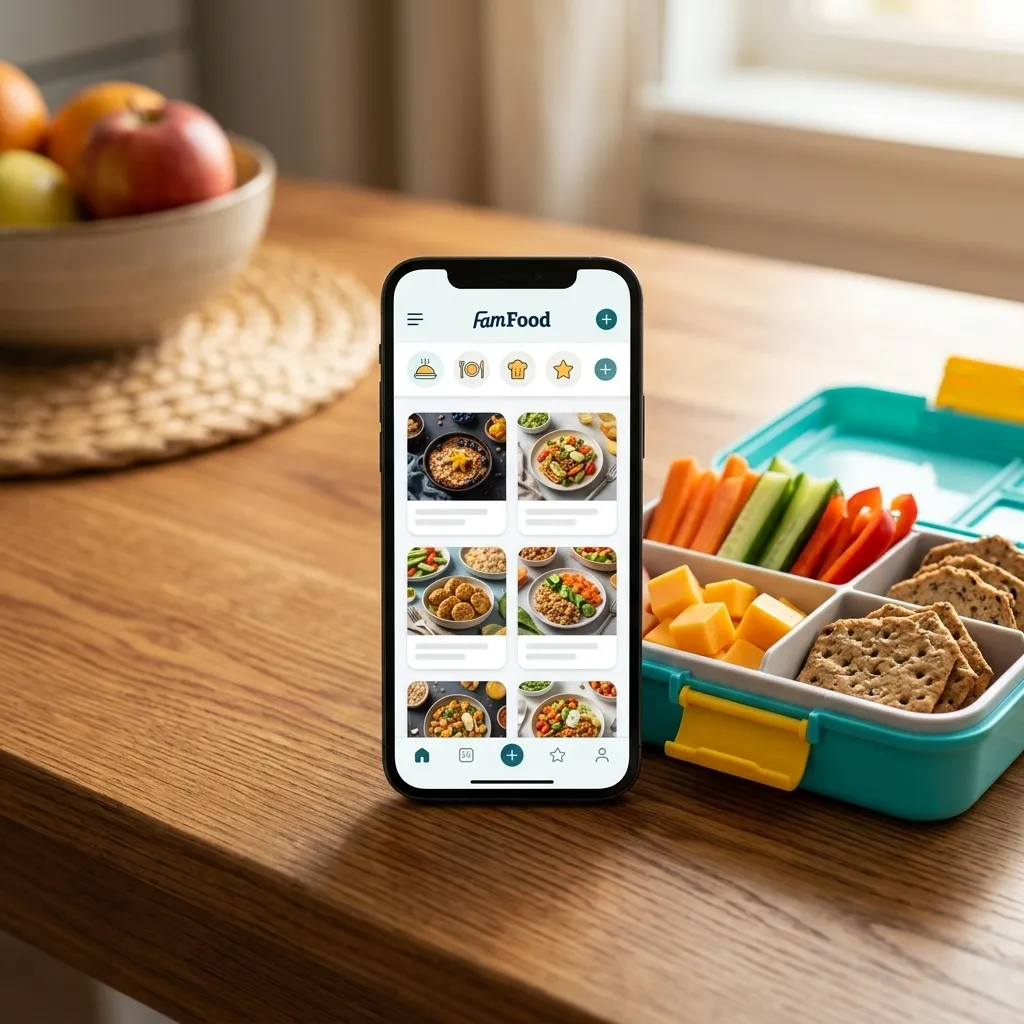
School Lunch Boxes: The 5-Day Meal Plan Guide
The lunch box comes back full every single afternoon. You put care into it, your child says nothing, and tomorrow morning you start all over again. This isn't a parenting problem. It's a system problem. And systems can be fixed.
This guide shows you why school kids often eat nothing at break time, what they actually need, and how a simple 5-day rhythm takes the daily stress out of packing, so you're not reinventing breakfast every morning.
The essentials upfront
- Break times at primary schools are often just 15–20 minutes: finger-food formats measurably increase what kids actually eat.
- School children (6–12 years) need 1,700–2,200 calories daily per DACH guidelines; a break snack should supply 250–350 calories.
- A fixed 5-day rhythm with 3 rotating lunch-box options cuts parent decision fatigue and eliminates the daily "my child won't eat it" battle.
- Whole grains, protein, and enough water prevent the energy crash after break time.
Why does the lunch box always come back full?
School children eat during break under time pressure, social distraction, and often without real hunger, because the gap since breakfast is too short. This isn't a taste problem. It's a timing and format problem. And it can be solved.
Break time at German primary schools is often just 15 to 20 minutes, according to surveys by the German Nutrition Centre (BZfE). In that window, kids play, talk, run around, and reaching for the lunch box is often the last priority. Complicated folding sandwiches, half-loaves with crust, or salad that needs a fork have no chance in this environment.
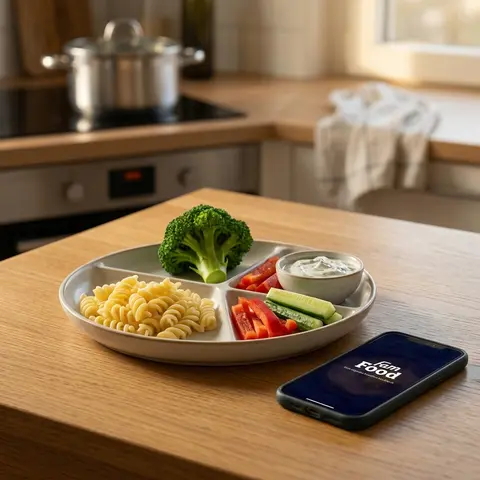
Kids at school prefer eating with their hands, no utensils needed, according to BZfE school-feeding studies. They go for small, bite-sized pieces they can pop in their mouth while doing something else. Finger-food formats—small cheese cubes, cucumber slices, mini wraps, grapes—show measurably higher consumption rates than traditional sandwiches.
What we regularly observe at FamFood: lunch boxes that take less than two minutes to pack in the morning and contain only two or three components come back empty far more often than elaborately constructed meals. Less decision-making at breakfast, more actual eating at break.
What does a school child actually need, and when?
Children aged 6 to 12 need roughly 1,700 to 2,200 calories daily per DACH guidelines, spread across 3 main meals and 2 snacks. The break-time snack should cover 15 to 20 percent of daily needs—roughly 250 to 350 calories. That sounds like a lot, but it's one cheese sandwich, a piece of fruit, and a drink.
Meal | Timing | Daily share | What matters |
|---|---|---|---|
Breakfast | 6:30–7:30 a.m. | 20–25% | Carbs + protein for focus |
Break snack | 9:30–10:30 a.m. | 15–20% | Finger-food format, complex + filling |
Lunch | 12:30–2:00 p.m. | 30–35% | Largest meal, especially after sports clubs |
Afternoon snack | 3:30–4:30 p.m. | 10–15% | Bridges to dinner, prevents junk snacking |
Dinner | 6:00–7:30 p.m. | 20–25% | Lighter than lunch, warm or cold |
Breakfast: The rhythm sets the tone
A child who doesn't eat breakfast enters the first lesson on an empty tank. Whole grain bread with cheese or egg, oatmeal with milk and fruit, or yogurt with nuts—these combos of complex carbs and protein deliver steady fuel to the brain until break time. Plain white bread with jam runs out after 60 to 90 minutes.
Break-time snack: small, quick, filling
The combo of whole grain, healthy fat, and protein keeps kids fuller longer than white bread alone. Concretely: a whole grain wrap with hummus and cucumber strips, whole grain crackers with cheese and a handful of grapes, or a hard-boiled egg with baby carrots. Everything edible without cutlery, everything packed in two minutes.
The 5-day rhythm: Which meals actually repeat well?
A fixed weekly rhythm cuts the daily decision load for parents and creates predictability for children. Research on habit formation shows kids eat familiar meals more willingly than daily new surprises. Routine isn't a lack of creativity here—it's a deliberate strategy.
Day | Breakfast | Break box | Lunch | Afternoon snack |
|---|---|---|---|---|
Mon | Oatmeal + berries | Wrap option A + apple slices | Batch-cooked (e.g. lentil soup) | Yogurt + nuts |
Tue | Whole grain bread + cheese | Crackers + hummus + cucumber | Cold: quark-veggie bowl | Fruit + nut butter |
Wed | Oatmeal + banana | Wrap option B + grapes | Batch-cooked (e.g. pasta & veg) | Veggie sticks + dip |
Thu | Whole grain bread + egg | Crackers + cheese + pepper | Cold: wrap with leftovers | Apple + nut butter |
Fri | Yogurt + muesli | Box of choice + favorite snack | Family cooking or leftovers | Baking together |
Batch cooking for school kids: What's worth it
Not everything is worth cooking ahead. What truly works: legumes (lentils, chickpeas), whole grain pasta with vegetable sauce, roasted veggies in bulk, and hard-boiled eggs for the whole week. You can serve these warm Monday and Wednesday, then transform them into cold bowls or wraps Tuesday and Thursday.
Friday stays intentionally open: remix leftovers creatively, involve your child, cook together. That's not bad planning—that's family culture.
The 3-box rotation
Three fixed lunch-box templates in rotation prevent surprises and refusals at the same time. Option A: wrap with rotating fillings. Option B: crackers or rice cake with spread and raw veg. Option C: warm thermos option (pasta, soup) for cold seasons. Your child knows what's coming, and you know what you're packing.
Which foods boost school focus?
Whole grains, legumes, nuts, and berries deliver glucose more steadily than white flour and sugar. The German Nutrition Centre (BZfE) recommends school children eat at least 2 servings of vegetables and 2 servings of fruit daily, with 1 serving in the break-time box. This is doable when the format works.
The combo of whole grain and protein—cheese on crackers, hummus in a wrap, egg as a side—prevents the typical energy crash after break. Blood sugar stays more stable, focus lasts longer. High-sugar snacks like gummy bears or chocolate bars do the opposite: a quick spike, then a sharp drop exactly when the next lesson starts.
Omega-3 fats from salmon, walnuts, and flaxseed matter for brain development at school age, according to the German Society for Nutrition (DGE). Walnuts in the lunch box or flax oil in the evening sauce are the easiest ways to add them.
One underrated factor: water. Kids don't reliably recognize dehydration as thirst, and even mild dehydration reduces focus. The DGE rule of thumb: school children need about 1.0 to 1.5 liters of fluid daily, ideally water or unsweetened tea. Fruit juices contain up to 6 sugar cubes per small bottle.
What if your school child refuses certain foods?
Food refusal in school children is often a question of exposure, not taste, according to research from the University of Leeds. Children need an average of 8 to 15 encounters with a new food before accepting it. Offered once and refused means nothing about the final outcome.
Three strategies that genuinely work:
Place new items next to familiar ones. Don't replace their favorite, just add a new element alongside it. Let the child decide whether to try. No comment, no pressure.
Involve your child in shopping or cooking. A kid who put broccoli in the cart or chickpeas in the pan eats the result far more often. The ownership effect is real. In kids' cooking at home, you see it all the time.
Switch the texture, not just the recipe. Steamed broccoli gets refused. Roasted broccoli with a little olive oil sometimes even gets requested. That's not magic—that's the Maillard reaction.
What doesn't work: force, bribing with sweets ("eat this, then you get dessert"), and emotional pressure at the table. All of these link the food to negative experiences, reinforcing rejection long-term.
School-child nutrition in daily life: the most common parent mistakes
Three mistakes come up again and again in conversations with FamFood parents: too much variety at once, packing the box with no plan, and forgetting drinks. None of these mistakes is hard to fix once you know what to look for.
Mistake 1: Something new in the box every day. Well-meant, counterproductive. Children need predictability, not surprises. A rotation of three or four familiar options beats daily new experiments.
Mistake 2: Juice as the break-time drink. A 200-ml bottle of fruit juice often contains 20 to 24 grams of sugar—up to 6 sugar cubes. Water is the better choice, always.
Mistake 3: No backup when the child refuses. If the box goes untouched, your child goes hungry through the afternoon. Keep a neutral backup—rice cakes, a piece of fruit—always ready.
Mistake 4: Adult portion sizes on your child's plate. What's a normal portion for you overwhelms a 7-year-old visually. Smaller amounts with a chance to ask for seconds motivates them more.
What does a good school week look like in practice?
A tried-and-tested school week needs no more than 30 minutes of planning on the weekend. When you think about breakfast, lunch box, and lunch as one system instead of three separate decisions, you save time and sanity every single day. The family meal-planning guide shows what that looks like concretely.
Day | Breakfast | Break box | Lunch |
|---|---|---|---|
Mon | Oatmeal, milk, banana | Whole grain wrap + cheese + pepper, grapes | Lentil soup (batch) |
Tue | Whole grain bread, egg, cucumber | Crackers + hummus + carrots, apple | Quark-veggie bowl (cold) |
Wed | Yogurt, muesli, berries | Whole grain wrap + tuna + corn, mandarin | Whole grain pasta with veg (batch) |
Thu | Whole grain bread, cheese, tomato | Crackers + cream cheese + cucumber, pear | Wrap with Wednesday leftovers |
Fri | Scrambled eggs, whole grain toast | Favorite snack + favorite fruit | Cooking together with child |
Your grocery list for this week fits on one page: oatmeal, whole grain bread, crackers, wraps, cheese, eggs, yogurt, hummus, cream cheese, seasonal vegetables (peppers, cucumber, carrots, tomato), seasonal fruit, lentils, whole grain pasta, vegetable sauce.
Anything you don't use from this week becomes leftovers ideas for the next.
Common questions about school-child nutrition
What's the best break-time snack for school kids?
The best break snack combines complex carbs with protein and is edible without utensils. Whole grain crackers with cheese and veggie sticks, a mini wrap with hummus, or whole grain bread with egg and cucumber all meet all three criteria. Format matters more than recipe: small, handy, no crust frustration.
How much should a school child drink per day?
Children aged 6 to 12 need 1.0 to 1.5 liters of fluid daily per DGE guidelines, more with sports or heat. Water and unsweetened tea come first. Fruit juices, spritzers, and sodas contain too much sugar and don't count as genuine hydration.
When can children pack their own lunch boxes?
Starting around 7 to 8 years old, children can fill their own box from a fixed set of pre-prepared ingredients. A labeled container in the fridge with five to six options provides structure. This builds independence and measurably increases eating rates because the child chose it themselves.
Which snacks give school kids energy without the sugar crash?
Snacks with stable energy combine fiber, fat, and protein: nuts with dried fruit, apple slices with nut butter, whole grain rice cakes with cheese, or yogurt with berries. These combos prevent the blood-sugar crash that gummy bears, cookies, or chocolate bars trigger after 30 to 45 minutes.
What if your child won't eat anything at school?
If a child consistently ignores the break-time box, try changing the format, not the contents. Smaller portions, more finger foods, a different lunch box shape. Meanwhile, check: Is the child eating enough breakfast? Stressed in class? Hunger often gets masked by social factors. If refusal continues, a conversation with the school or pediatrician makes sense.
About FamFood
FamFood is a digital family cookbook app built by people who cook every evening themselves and know exactly how short the window between coming home and dinner really is. We don't collect glossy showpiece recipes—we collect dishes that work in real kitchens, with real children, under real time pressure. If you want to save your school-kid recipes as your own collection so partners or grandparents can cook from them too: FamFood is free.