By the FamFood editorial team — our kitchen team has been cooking seasonally with families for years and has seen the price differences firsthand at the checkout.
In January, almost every family reaches for the supermarket tomato. It comes from Spain or Morocco, tastes of very little, and costs noticeably more than in summer. But it doesn't have to be that way. Once you understand what each season truly delivers, you cook better, spend less, and have far less stress when planning meals. This guide is not an eco-manifesto. It is a practical handbook for seasonal cooking — for families who want good food without spending hours thinking about it.
Key Takeaways
- Seasonally purchased vegetables can be up to 40% cheaper than imported produce, according to the BZfE (Germany's Federal Centre for Nutrition).
- Ripe produce lasts longer and goes to waste less often.
- Swapping just one ingredient per week is all it takes to get started.
- Every season offers a clear range of produce — no memorising required.
What does seasonal cooking actually mean?
Seasonal cooking means: you buy and cook what is ripe right now — in your region, at the right time of year. Nothing more, nothing less. According to the Federal Centre for Nutrition (BZfE), seasonally harvested vegetables ripen fully before being picked, which significantly improves both flavour and nutritional content.
Seasonal and regional sound similar, but they are not the same thing. Regional describes origin — whether a product comes from Bavaria or Brandenburg. Seasonal describes timing — whether a strawberry was harvested in June or December. Both together is ideal, but even just one of the two makes a real difference.
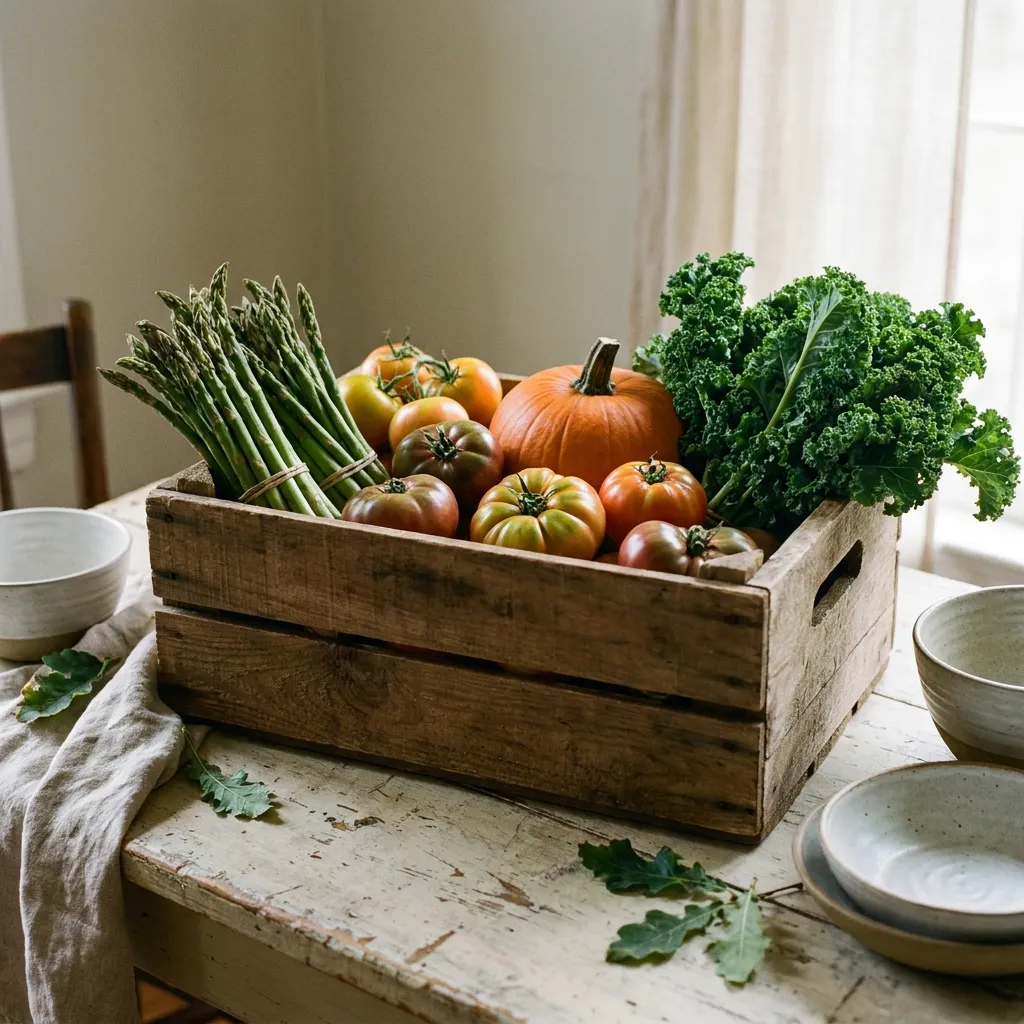
The most practical tool for seasonal cooking costs nothing: the seasonal calendar. It comes as a printed kitchen chart, an app, or simply a mental rule of thumb. Anyone who roughly knows that asparagus arrives in May and pumpkin in October already has an advantage over the average shopper.
No particular ideology is required. The focus is on flavour and price — two arguments every family immediately understands.
Is seasonal cooking really worth it for families?
According to the BZfE, seasonally purchased vegetables can be up to 40% cheaper than out-of-season imports — while also offering higher nutritional content at harvest. That is not a marginal difference; it is a noticeable reduction in the weekly food bill.
Price
Concrete examples make the price difference tangible. German field-grown asparagus costs during its season (April to June) roughly £2.50–4.50 per kilo. Imported asparagus outside of season regularly runs to £6–9. The same applies to tomatoes: in peak summer they are available for under £1.20 per kilo, while in winter the price climbs to £2.50–3.50.
Flavour
For picky eaters, the difference in taste is the strongest argument. A tomato ripened in the July sun tastes sweeter, more aromatic, and juicier than a winter greenhouse tomato. Children who get to bite into a ripe strawberry at the farmers market often develop a completely different curiosity about vegetables and fruit.
Shelf life
Ripe produce that has travelled a short distance keeps longer than under-ripe imported goods. That reduces food waste at home — a practical advantage, not a moral one.
Produce | In season (DE) | Out of season | Price difference |
|---|---|---|---|
Strawberries | Jun–Jul, ~£1.20/500 g | Dec–Feb, ~£2.80/500 g | approx. +133% |
Asparagus (white) | Apr–Jun, ~£3.20/kg | Nov–Mar, ~£7.20/kg | approx. +125% |
Tomatoes | Jul–Sep, ~£1.10/kg | Jan–Mar, ~£2.80/kg | approx. +150% |
Pumpkin | Sep–Nov, ~£0.65/kg | Apr–Jun, ~£2.00/kg | approx. +213% |
Guide prices based on average supermarket and farmers market prices in Germany.
What does each season have to offer?
Every season delivers a different range of produce — once you know it, you no longer need to trawl the internet for inspiration. A 2023 survey by Germany's Federal Ministry of Food and Agriculture (BMEL) found that 62% of German households consider seasonal shopping important, yet fewer than one in three actually know which products are in season when (BMEL, 2023).
Spring
Spring brings the first fresh greenery after winter. Asparagus, radishes, leaf spinach, and rhubarb take centre stage. The ingredients are light, quick to prepare, and need hardly any seasoning. For families with children, spring is a great entry point because the produce is colourful and fun to handle.
Summer
In summer, the vegetable and fruit basket overflows. Tomatoes, courgettes, peppers, cucumbers, corn, and berries of every colour are affordable and full of flavour. This is the season for unfussy dishes: a salad, a cold soup, a quick pasta. Lots of chopping, little cooking. In our editorial experience, families cook most consistently with the seasons in summer — because the difference on the plate is simply impossible to miss.
Autumn
In autumn, pumpkin takes centre stage — and it earns every moment of it. Hokkaido squash can be roasted with the skin on, butternut squash is perfect for creamy soups, and both varieties often cost less than £0.80 per kilo in October. Root vegetables such as carrots, parsnips, and parsley root join the line-up, along with apples and pears at their full harvest ripeness. Shopping in autumn means paying little while getting aromatic ingredients that freeze and prep beautifully — perfect for a meal-prep rhythm.
Winter
Winter is the underrated season in the kitchen. Cabbage in all its forms — white cabbage, red cabbage, curly kale, Brussels sprouts — delivers not just flavour but also impressive amounts of vitamin C. Beetroot, leek, and potatoes round out the range. These ingredients may seem unspectacular at first glance, but with the right techniques they show real potential: braised red cabbage with apple, roasted beetroot with goat's cheese, or a velvety kale and potato soup. Hearty, warming, affordable — that is seasonal cooking in winter.
Season | Top ingredients | Character |
|---|---|---|
Spring | Asparagus, spinach, radishes, rhubarb | Light, fresh, quick |
Summer | Tomatoes, courgettes, peppers, berries | Colourful, aromatic, raw-friendly |
Autumn | Pumpkin, apples, pears, root vegetables | Warm, subtly sweet, satisfying |
Winter | Cabbage, beetroot, leek, potatoes | Hearty, deep-flavoured, underrated |
How do you fit seasonal cooking into family life?
The biggest mistake: overhauling an entire meal plan. The smartest entry point: swap one ingredient per week. The BZfE recommends exactly this step-by-step approach because it is sustainable and never overwhelming.
The 1-Swap Method works like this: take a dish your family already cooks — pasta with tomato sauce, for example. In July, replace the tin with fresh tomatoes from the market. That's it. Next week, one more swap.
At a farmers market, you can spot seasonal produce by the fact that it is available in larger quantities and at lower prices. Signs showing a regional origin are a reliable indicator. In the supermarket, a quick glance at the country of origin helps: if it says your home country or a neighbouring region, the odds are good that it is in season.
Children love being involved when they get to choose for themselves. A simple question while shopping: "What looks the most colourful today?" Children who have picked an ingredient themselves are far more likely to eat it.
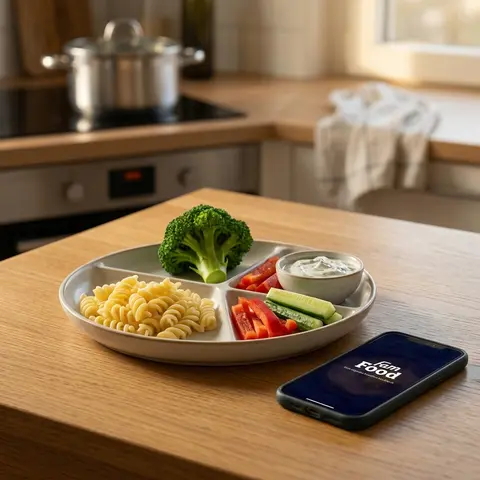
Anyone who wants their favourite recipes sorted by season and always within reach will find a digital solution with FamFood: save recipes, filter by season, cook straight from your phone. No paper chaos, no forgetting.
Which basic kitchen techniques bring out the best in seasonal ingredients?
Seasonally fresh ingredients need less technique — but the right technique is what separates good from unforgettable. Stiftung Warentest (Germany's leading consumer testing organisation) has shown on multiple occasions that gentle cooking methods preserve the nutritional content of vegetables far better than long boiling in water (Stiftung Warentest, 2021).
Roasting instead of boiling: Roasting root vegetables such as carrots, parsnips, or beetroot in the oven at 200°C caramelises their natural sugars. The result is a depth of flavour no spice can replicate. Boiling in water, by contrast, leaches soluble nutrients and flavour into the cooking water — which usually gets poured away.
Blanching and freezing: When spinach, peas, or green beans are in season and cheap, it is well worth blanching larger quantities and freezing them. Three minutes in boiling water, a quick plunge into cold water, then into portion-sized bags for the freezer. In winter, you pull out summer flavour on demand.
Minimal seasoning: Ripe vegetables at the peak of their season need no elaborate sauce. Olive oil, salt, a pinch of garlic. That is enough. Anyone who has experienced this once cooks differently from that point on.
Three quick seasonal recipes for the whole family
Seasonal cooking does not have to be complicated. These three recipes are on the table in under 30 minutes — one for spring, one for summer, one for winter. All three use no more than five main ingredients.
Spring pasta
Asparagus pasta with lemon and Parmesan (20 min.)
Cut green asparagus into pieces, sauté in a pan with olive oil, toss with pasta and freshly grated Parmesan, then season with lemon juice. Done. The seasonal case here is the price: green asparagus in season costs less than half its out-of-season imported equivalent.
Summer pizza
Courgette flatbread pizza for kids (25 min.)
Spread ready-made flatbread with tomato purée, top with thinly sliced courgette and pepper, add mozzarella, and bake at 220°C for 12 minutes. Children can assemble their own pizzas — what you make yourself, you eat. The seasonal argument: summer vegetables are so affordable in August that this pizza costs under £3.50 for a family of four.
Winter soup
Creamy potato and leek soup (30 min.)
Gently sweat leek and potatoes in butter, pour in vegetable stock, simmer until soft, blend, and finish with a spoonful of crème fraîche. This is the dish that reliably lifts the mood on any winter evening. Potatoes and leek are among the cheapest and most long-lasting winter vegetables available.
How do you save time with seasonal meal prep?
Cooking seasonally comes with a natural meal-prep advantage: the ingredients are cheaper to stock up on, they last longer, and they are often available in larger quantities. Preparing a seasonal base just once pays off across the entire week.
Once a week, prepare a base: roasted pumpkin cubes, sautéed leek, blanched spinach. These building blocks work in soups, pasta, wraps, or as a side dish — no starting from scratch every evening.
In our experience with families, just 30 minutes of prep on a Sunday changes the entire mood in the kitchen for the week. Less stress, better meals, more time at the table. Saving recipes in an app and filtering by season saves the planning time on top of that. All your favourite dishes in one place, ready to go instantly — and you can use the weekly planner at FamFood to add your base ingredients straight to the shopping list.
FAQ
What is the difference between seasonal and regional cooking?
Seasonal describes the timing of the harvest: was the product picked ripe, at the right time of year? Regional describes the origin: does it come from your own region or a neighbouring one? Both together is ideal. Seasonal has the greater impact on flavour and price.
Where can I find a reliable seasonal calendar for the UK or Germany?
Germany's Federal Centre for Nutrition (BZfE) offers a free seasonal calendar organised by month. The German Nutrition Society (DGE) also provides similar overviews. Both are free and accessible without registration.
Is seasonal cooking really cheaper than regular supermarket shopping?
Yes, often significantly so. According to the BZfE, seasonally purchased vegetables are up to 40% cheaper than out-of-season imports. For strawberries, asparagus, and tomatoes, the price difference in a direct comparison is frequently over 100%.
How do I explain to children why certain fruits are only sometimes available in the shops?
A simple image works best: plants sleep in winter, wake up in spring, and bear fruit in summer. A strawberry plant cannot make strawberries when it is snowing outside. Children grasp this intuitively — especially if they have ever picked strawberries themselves on a farm.
Can I cook seasonally if I have very little time?
Yes. The 1-Swap Method makes it possible to get started without changing anything fundamental. Replace one seasonal ingredient per week, try a farmers market once, prepare a base on the weekend. Together, that takes less than 20 extra minutes and pays off immediately — in flavour and in your wallet.