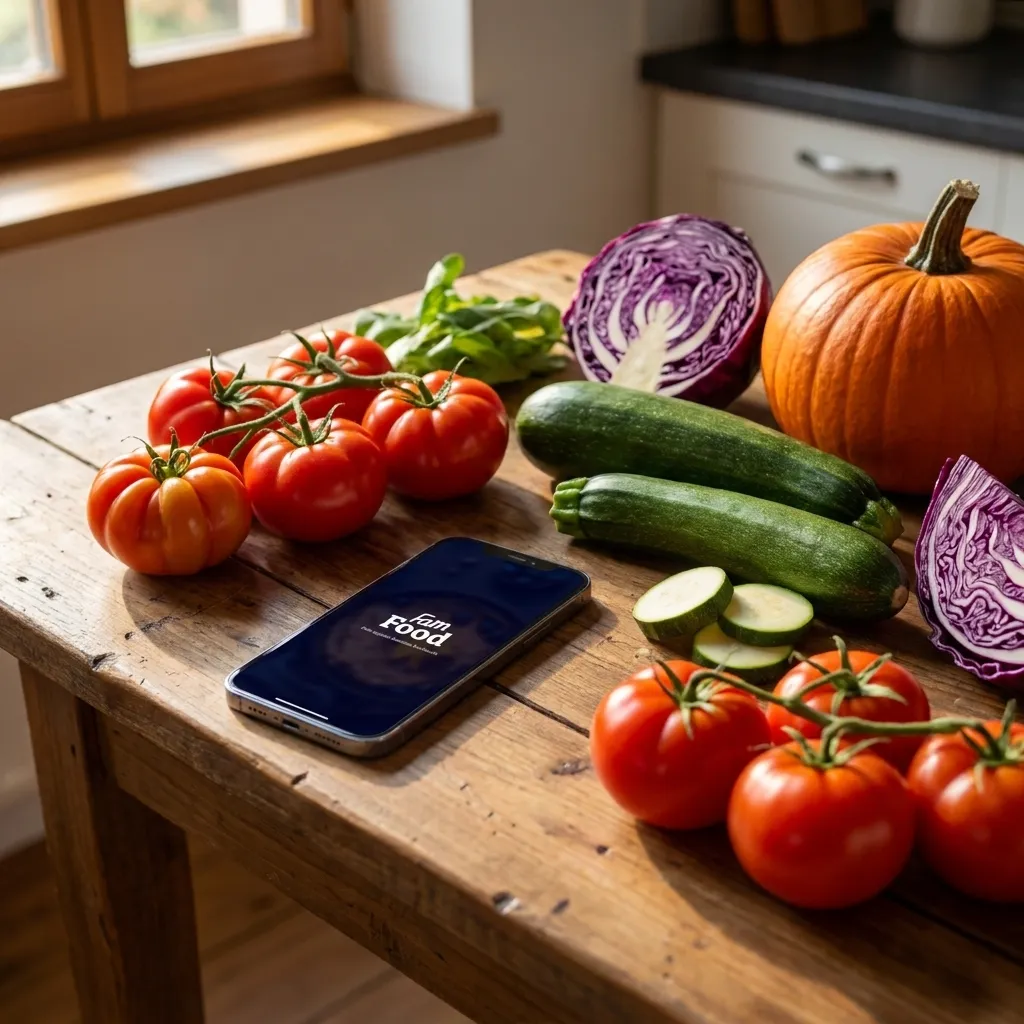
Seasonal Cooking: What's Really Worth It?
Most people who want to cook seasonally think: too complicated, too limiting, and the farmers' market doesn't fit the schedule. The opposite is true. When you cook with the seasons, you grab the cheapest produce on the shelf, need fewer random recipe ideas, and the food tastes better anyway. Here's the potential most families haven't tapped into yet.
The Bottom Line
- Seasonal produce costs 30–50% less than imports outside harvest time (German Consumer Center Federation, 2024).
- Freshly harvested vegetables contain measurably more vitamin C and folate than produce after long refrigerated transport (University of Hohenheim).
- Tomatoes from heated winter greenhouses generate up to 9 times more CO₂ than field-grown summer tomatoes (German Environment Agency, 2023).
- A single seasonal anchor vegetable per week is enough to start, no complete dietary overhaul needed.
What Does Seasonal Cooking Actually Mean for Families?
Seasonal cooking means buying fruit and vegetables when they're naturally harvest-ready in Germany, not when they've traveled thousands of kilometers. The term sounds simple but often gets mixed up with two related ideas: regional and organic.
Regional means short supply chains; seasonal means right timing. Together they're ideal, but neither requires the other. An organic apple from Chile in March is neither regional nor seasonal. A conventional apple from the Altes Land in October is both.
For families with kids, tight schedules, and real budgets, the seasonal approach is especially practical. The cheapest produce is always on the shelf when it's in season. Selection is wider, quality more reliable. Use that as your navigation point and you make faster shopping decisions without a meal plan or cooking class.
Seasonal cooking isn't a lifestyle. It's a practical buying strategy.
Does Seasonal Produce Really Taste Better?
Yes. Short transport distances mean less artificial ripening and more natural flavor. The University of Hohenheim has documented measurably higher nutrient levels in freshly harvested vegetables, especially heat-sensitive vitamins like C and folate.
Vegetables that ripen on the plant develop their flavor compounds fully. Produce picked green for long transport ripens in cold storage, a chemical process that builds sweetness and texture differently than natural sun-ripening. That's not marketing hype, that's biochemistry.
For families with small children, there's a practical bonus: the smell test at the market. Ripe strawberries smell from a meter away. Imported frozen strawberries in January smell like nothing. Kids who've felt that difference once ask for "real" vegetables on their own.
Once you've tasted August tomatoes straight from the field, you'd rather buy red cabbage in December than watery greenhouse tomatoes. Your taste memory works for the season, not against it.
How Much Cheaper Is Seasonal Cooking?
Seasonal produce costs an average of 30–50% less than out-of-season imports. According to the German Consumer Center Federation, strawberry prices swing up to 200% month to month, costing a fraction in June of what supermarkets charge in January.
The logic is simple: when harvest booms, supply exceeds demand. Oversupply drives down price. This works at the supermarket just as it does at the farmers' market. Build your weekly plan around the cheapest seasonal vegetable as your "anchor ingredient" and you save without sacrifice.
Price Chart: What Costs Least When?
Vegetable / Fruit | Cheapest Season | Typical Price Premium Outside |
|---|---|---|
Strawberries | May – July | up to +200% (Jan.–Apr.) |
Asparagus | April – June | barely available outside |
Zucchini | July – September | +40–60% (Nov.–Mar.) |
Tomatoes | July – October | +50–80% (Jan.–Mar.) |
Squash | September – November | +60% (Jan.–Mar.) |
Lamb's lettuce | October – March | year-round, but import-priced higher in summer |
Source: German Consumer Center Federation, price surveys 2023/2024
Use this chart as your shopping filter and you'll automatically make budget-smart choices without a price-comparison app.
Which Vegetables Are in Season When in Germany?
The seasonal calendar from the BMEL (Federal Ministry of Food and Agriculture) lists domestic harvest windows for every month, from lamb's lettuce in January to squash in October. It's free to access and organized by month.
For everyday use, a rough four-season overview is enough. Know these anchor vegetables and you've already mastered 80% of seasonal cooking.
Spring & Summer
Season | Anchor Vegetables & Fruit | Season Window |
|---|---|---|
Spring | Asparagus, radishes, young spinach | Mar. – June |
Spring | Strawberries, rhubarb | May – July |
Summer | Zucchini, cucumbers, green beans | July – Sept. |
Summer | Tomatoes, peppers, corn | July – Oct. |
Fall & Winter
Season | Anchor Vegetables & Fruit | Season Window |
|---|---|---|
Fall | Squash, red cabbage, broccoli | Sept. – Nov. |
Fall | Apples, pears (field-grown) | Aug. – Nov. |
Winter | Parsnips, salsify, Brussels sprouts | Oct. – Feb. |
Winter | Lamb's lettuce, endive, kale | Oct. – Mar. |
Source: BMEL Seasonal Calendar for Fruit and Vegetables from Germany
Fall and winter unfairly get labeled as "seasonally thin." Once you know parsnips, you don't need imported peppers in January. Salsify, kale, and Brussels sprouts have a flavor profile no summer vegetable can match, and they cost almost nothing in winter.
How Do I Start Cooking Seasonally as a Family?
One step is enough to begin: choose your main vegetable for the week seasonally and build the rest of the menu around it. No complete dietary overhaul, no new cookbook, no farmers' market obligation.
This "anchor vegetable strategy" works even for full-time working parents who shop at supermarkets. Nearly all major German supermarkets now label domestic seasonal produce separately, often with a regional flag or "grown in Germany" text. That's filter enough.
If you have a farmers' market nearby, you gain direct contact with growers and honest sourcing information. But it's not required.
Kids stay especially motivated when they choose actively during shopping: "Which squash should we pick?" or "Can you find the biggest strawberries?" builds enormous appetite for eating what they've selected. Self-chosen vegetables rarely get left on the plate.
During peak seasons, it pays to preserve: freeze strawberries, jar tomatoes, ferment zucchini as relish. It takes 30–60 minutes once, and the payoff spans the whole winter.
Does Seasonal Cooking Work with Meal Planning?
Seasonal and planned aren't opposites. In fact, knowing what's ripe in June lets you build a steadier weekly plan than with random shopping.
The practical flow: check the seasonal calendar first, pick that week's anchor vegetable, then choose recipes. It's a filter step before the real planning, and it makes everything easier because your options narrow. Fewer choices mean faster decisions.
A sample week in June might look like this: zucchini frittata on Tuesday, summer vegetable bean stew on Thursday, strawberry pancakes on Saturday. All seasonal, all affordable, all under 20 minutes prep.
If you organize your family recipes digitally, you can easily filter seasonal dishes and sort by month. FamFood does exactly that: collect recipes, filter by ingredients, and build your weekly plan directly from them. For effortless seasonal meal planning, it's the fastest route from calendar to table.
Want to test the seasonal plus structured combination? The app's ready-made templates adapt easily by season.
Does Seasonal Cooking Actually Help the Climate?
Short transport saves CO₂, but not as much as most people think. According to the German Environment Agency, one kilogram of greenhouse-grown winter tomatoes produces up to 9 times more greenhouse gas than field-grown summer tomatoes.
The deciding factor isn't the truck, it's the heating. A greenhouse kept at summer temperature in December uses enormous energy, whether it's in Almería or Lower Saxony. A tomato from Spain, field-grown and harvested in July, transported by truck to Germany, has a better carbon footprint than a German greenhouse tomato in January.
The family rule of thumb: Field-grown and in season beats organic import out of season. This holds even without the organic label.
For kids it's a concrete concept: "In summer we eat tomatoes because they grow outside then, and we don't need to heat a greenhouse to make them grow." Learn that early and you carry a habit into adulthood that costs nothing to maintain.
Frequently Asked Questions
Is seasonal the same as regional cooking?
No. Seasonal means the vegetable is harvested when it's naturally ripe in Germany. Regional means it comes from nearby. Together they're ideal, but not always possible. A regional fall apple is also seasonal. A Spanish organic tomato in July is seasonal but not regional.
Where can I find a current seasonal calendar for Germany?
The Federal Ministry of Food and Agriculture (BMEL) offers a free seasonal calendar for German fruit and vegetables, broken down by month and product category. It's available at bmel.de and updated regularly.
Can I cook seasonally if I only shop at supermarkets?
Yes. Major German supermarkets increasingly label domestic seasonal produce with sourcing information. Pay attention to "from Germany" or "harvest now" labels and keep the rough seasonal chart in your head, and you'll make seasonal choices at the supermarket without visiting a farmers' market.
How do I explain seasonal cooking to kids?
Best through direct experience: let them taste June strawberries, then put the watery January version next to them. Kids understand flavor instantly. For small children, "The vegetables sleep in winter" works. For older kids, the greenhouse explanation works: "In winter we'd have to heat the greenhouse like an apartment, which uses tons of electricity."
About FamFood
FamFood started because family cooking shouldn't require a culinary degree or a farmers' market schedule. We've tested hundreds of seasonal recipes with real families to understand what actually works: quick, budget-friendly, delicious. Every post here reflects that lived experience, not theory.




