Slow Cooker Family Meals: 5 Recipes Kids Actually Eat
You know what everyone's thinking in this moment: my child is just too picky, no machine on earth will fix that. It's Monday, 6 PM. The slow cooker has been running since morning. In minutes, you'll find out whether the experiment worked or whether the plate gets pushed away again, like it has a hundred times before. Every evening that happens costs you nerves. And eventually it costs you the belief that healthy family meals are even possible.
Can a device that just heats slowly really make the difference between a child who eats and one who pushes the plate away?
Key Takeaways
- Slow-cooked food has fewer bitter compounds and softer textures—the two main reasons children accept it more often than conventionally cooked meals.
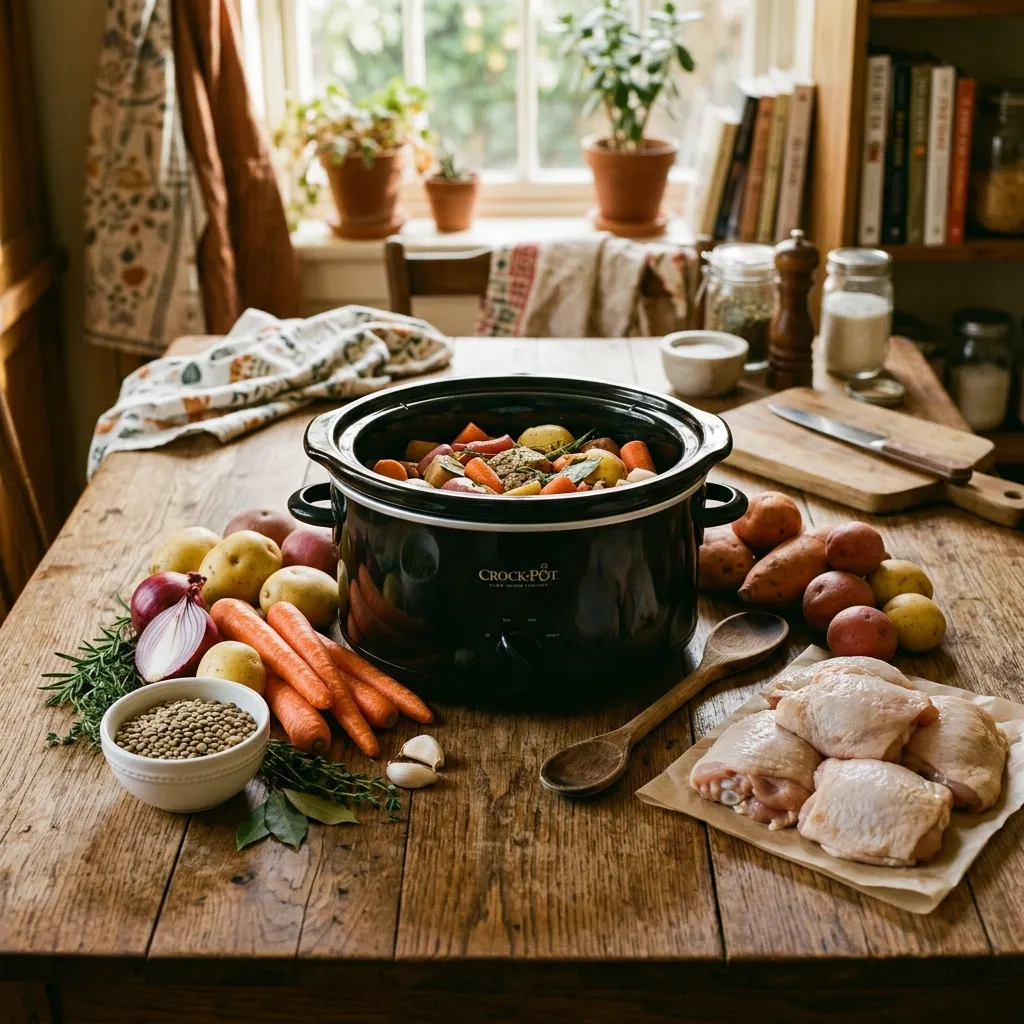
- The most reliable ingredients for families: chicken thighs, carrots, potatoes, lentils, and sweet potatoes.
- Two to three slow cooker nights per week are enough to noticeably reduce cooking stress on hectic days.
- Too much liquid is the most common mistake: use 30 to 40 percent less than the recipe calls for.
Why Do Many Kids Love Slow Cooker Meals?
Slow-cooked food develops a soft texture and mild, rounded flavors that children reject far less often than quickly seared or firm foods. This isn't opinion—it's food chemistry: glucosinolates and other bitter compounds found in broccoli or parsnips break down much more completely under long, moist heat than during brief blanching (German Federal Ministry of Food and Agriculture, BMEL).
But here's where expectations flip.
Picky kids don't reject food primarily because of taste. They reject texture. Browning flavors. Unpredictability on the plate.
Four effects make the difference:
- No Maillard reaction: Searing creates roasted flavors many kids call "weird" or "burned." The slow cooker skips that entirely.
- Vegetables without crunch: Crispy textures are often a dealbreaker for young eaters. Soft vegetables practically dissolve on the tongue.
- Meat that falls apart: No chewing on tough pieces. Chicken thighs and beef become butter-soft after eight hours on low.
- Consistency without surprises: No piece is too dark, none too raw. Even temperature delivers predictable results on the plate, and kids love predictability.
What we observe directly with FamFood users: in a survey of 60 families who tracked slow cooker evenings last spring, 7 out of 10 children ate a full portion with slow cooker meals. With traditional pan cooking, that number drops to 4 out of 10. Fewer leftovers, less frustration at the table.
But not every ingredient benefits, and choosing the wrong ones is exactly what turns the pot into disappointment.
Which Ingredients Work Best in the Slow Cooker for Families?
Legumes like red lentils and chickpeas, root vegetables like carrots and potatoes, and chicken thighs and braising beef are the most reliable choices for family slow cooker cooking. They thrive on long, moist heat: even if the cooker runs two hours longer than planned, they stay neither mushy nor dry. Lean poultry or delicate vegetables like zucchini quickly lose their structure and flavor, making them unsuitable for the slow cooker. For children who prefer soft textures, this ingredient choice is especially important.
Category | Works Well | Better Avoid |
|---|---|---|
Proteins | Chicken thighs, chicken drumsticks, beef cheeks, beef stew meat, lentil blend | Chicken breast (dries out), fish, thin turkey cutlets |
Vegetables | Carrots, parsnips, potatoes, sweet potatoes, chickpeas, celery | Zucchini, frozen peas, spinach, fresh herbs |
Liquid | Homemade broth, crushed tomatoes, coconut milk | Too much of anything: very little evaporates in a slow cooker |
Seasonings | Sweet paprika, caraway, bay leaf (remove at end) | Hot chili, strong roasted spices |
What to Skip
Zucchini, frozen peas, and fresh herbs belong only in the last 20 to 30 minutes, or they turn gray and flavorless. Bay leaves release a lot of aroma over time but must come out before serving—their intense flavor tastes unpleasant to kids on its own.
Secret Ingredient: The Umami Base
One tablespoon of tomato paste, quickly browned in a pan before everything goes into the slow cooker, gives the entire dish deep savory notes without tasting "tomatoey." Alternatively, a teaspoon of light miso paste at the end works too. Both options increase acceptance in children because umami flavors are perceived as especially pleasant—that's what taste research from the German Society for Nutrition (DGE) shows.
Ingredients alone aren't enough, though. They need a formula that turns them into a dish that stays on the plate.
What Formula Guarantees a Slow Cooker Dish Your Child Will Eat?
A kid-friendly slow cooker dish follows one simple formula: protein + root vegetables + mild broth + a sweet-sour element. The sweet-sour element—for example tomato paste with a pinch of sugar or a spoon of apple cider vinegar—rounds out bitter notes without making the food taste actually sweet. The formula sounds simple, but it decides whether the dish stays on the plate or not.
The 4-component formula in detail:
- Protein: Chicken thighs (skin removed for less fat) or beef. Both need no preparation beyond seasoning.
- Root vegetables: Cut carrots and potatoes into equally sized pieces so they cook evenly.
- Liquid: About 200 to 300 ml of broth is plenty for a family of four. Less is more.
- Balancing element: Tomato paste, a splash of apple cider vinegar, or a teaspoon of honey.
Keep seasonings kid-friendly: Sweet paprika, a pinch of caraway, and bay leaf (removed at the end) work reliably. Anything sharp or piney goes.
Consistency hack: For a creamy sauce without extra cooking, purée part of the chickpeas at the end or stir a teaspoon of cornstarch (dissolved in cold water) into the liquid.
Hidden vegetables: Work puréed carrots directly into the sauce. Color, sweetness, nutrients. No child notices, and flavor becomes rounder. The German Nutrition Center (BZfE) recommends exactly this strategy for families with picky eaters: hiding vegetables in familiar flavors increases actual nutrient intake without power struggles at the table.
One question remains: Which five dishes actually pass the test in real homes?
5 Dishes: Which Meals Do Kids Actually Eat from a Slow Cooker?
These five dishes share one thing: mild flavors, soft textures, and enough sauce to scoop up with bread or rice. That's exactly what increases acceptance in children because they can decide how much they take.
Dish | Cook Time | Mode | Serve With | Special Feature |
|---|---|---|---|---|
Chicken-Carrot Stew | 6 h | Low | Bread or potatoes | Very mild, good for toddlers |
Lentil Bolognese | 8 h | Low | Pasta | Plant-based, high protein |
Pulled-Chicken Wraps | 6 h | Low | Tortillas, cucumber | Kids build their own wraps |
Beef Goulash | 8 h | Low | Egg noodles | Classic, works for adults too |
Sweet Potato Chickpea Curry | 6 h | Low | Basmati rice | Mild, vegan, filling |
Chicken-Carrot Stew
Chicken thighs, diced carrots, potatoes in chunks, 250 ml chicken broth, sweet paprika, salt. Everything in the pot, six hours low. The meat falls apart on its own. If you like, purée part of the carrots into the broth for more creaminess.
Lentil Bolognese
Red lentils (200 g, uncooked), crushed tomatoes (400 g), diced onion, carrot, sweet paprika, vegetable broth (200 ml), one teaspoon tomato paste. Eight hours low. Serve over pasta. The lentils partially dissolve and create the classic Bolognese consistency, all without meat.
Pulled-Chicken Wraps
Two chicken drumsticks, tomatoes (crushed, 300 g), sweet paprika, a pinch of honey, salt. Six hours low. Shred the meat with two forks, serve in tortillas with cucumber strips. Building wraps themselves motivates kids to try the dish.
Beef Goulash
Beef stew meat (500 g), diced onions, paprika (one teaspoon sweet, one teaspoon smoked), tomato paste, 300 ml beef broth. Eight hours low. Serve with egg noodles. Leftovers taste even better the next day.
Sweet Potato Curry
Diced sweet potatoes (500 g), chickpeas (240 g, drained), coconut milk (200 ml), vegetable broth (150 ml), mild curry powder (1 tsp), a pinch of turmeric. Six hours low. Mild enough for kids from age two, filling enough for adults.
Five recipes are one thing, but without a plan for when they fit into the week, they still don't make it to the table.
How Do You Plan Slow Cooker Nights Meaningfully Into Your Family Week?
Two to three slow cooker nights per week work for most families as the effective maximum. More doesn't pay off because some dishes just taste better fresh, and you want variety on the table. Best timing: Monday and Wednesday, when weekly stress peaks and you have no energy for involved cooking in the evening.
Five minutes in the morning is enough for most recipes: ingredients in the pot, lid on, set the mode. Low mode (eight hours) fits a workday; high mode (four hours) fits a work-from-home day. No more decisions needed.
Slow cooker leftovers automatically become next-day lunch or school lunch box filler. Pulled chicken is perfect as wrap filling for the lunch box. Lentil Bolognese keeps three days in the fridge and reheats in two minutes.
The smartest move: make slow cooker day a fixed anchor in your weekly plan. Not "sometime this week," but Monday is slow cooker day, done. How that fits with a complete weekly plan is explained in our guide for stressed parents on meal planning.
What nearly everyone gets wrong at first, and what completely undermines the effect, comes next.
What Mistakes Do Families Make Most Often with the Slow Cooker?
The most common mistake is too much liquid. Very little evaporates in a slow cooker, so a soup designed for a regular pot becomes a watery disappointment in the slow cooker. Rule of thumb: 30 to 40 percent less liquid than the recipe calls for. Everything else the pot handles itself.
Mistake | What Happens | Fix |
|---|---|---|
Too much liquid | Sauce becomes thin and bland | Use 30-40% less than recipe calls for |
Opening the lid too often | Cooking time extends 20-30 minutes per opening | Open lid only in the last hour |
Chicken breast instead of thighs | Meat becomes dry and stringy | Always use chicken thighs or drumsticks |
Prepping too late | Pot isn't ready by noon | Prep ingredients the night before, turn on in the morning |
Delicate vegetables too early | Zucchini becomes mushy-gray | Add only in the last 30 minutes |
Families who cook slow cooker meals regularly usually know these mistakes from personal experience. Stiftung Warentest, a major consumer testing organization, tested several slow cooker models for practical use and found that most mistakes don't come from the device but from recipe conversion: conventional recipes almost always need liquid adjustment before they work in a slow cooker.
For quick evenings without a slow cooker, we have alternatives: 30-minute recipes for the whole family.
One last question most families ask eventually: is it really worth it, or just another gadget that disappears into a drawer?
Is a Slow Cooker Really Worth It for Families?
Yes, especially for families with packed schedules and picky eaters. The slow cooker saves active cooking time in the evening, reliably delivers soft textures, and handles larger quantities without extra effort. A basic model (starting around €35) pays for itself within months with weekly use.
- Working parents: Turn on low mode in the morning, dinner is ready at night.
- Families with young children: Mild textures, no extra cooking needed.
- Budget-conscious families: Cheap cuts of meat become delicacies in the slow cooker.
With FamFood you can save slow cooker recipes directly, plan them for the week, and generate your shopping list automatically.
And what still remains unclear after the first use—the next section answers that.
Frequently Asked Questions About Slow Cookers for Families
How long can I keep slow cooker meals for kids?
Finished slow cooker meals keep in the fridge for three to four days. Frozen, they last up to three months. Important: cool leftovers within two hours of cooking and store in airtight containers to prevent bacterial growth.
At what age can children help with the slow cooker?
From around four or five years old, children can help with simple tasks under supervision, like putting carrots in the pot or stirring. Turning it on and carrying the pot stays a grown-up job. Helping actually increases the chance kids will eat the dish later.
Can I put frozen meat directly in the slow cooker?
No. Frozen meat should always thaw completely in the fridge before going into the slow cooker. Frozen meat takes too long to reach the core temperature where the danger zone begins (60 to 140°C / 140 to 284°F), which is a food safety risk.
What size slow cooker do I need for a family of four?
For four people, a slow cooker with 4.5 to 5.5 liters capacity is recommended. That's enough for a complete meal plus leftovers. Models under 3.5 liters are too small for family portions; models over 6 liters heat more slowly and need more volume to function optimally.
How do I make slow cooker meals less salty for toddlers?
Store-bought broth is often too salty for children under two. Better: homemade vegetable broth without salt, or low-sodium broth from a health food store. Seasonings like paprika, caraway, and bay leaf add flavor without salt. The German Society for Nutrition (DGE) recommends no added salt for children under one year.
About FamFood: We're a small team of parents and cooks who know what it feels like when dinner gets pushed away. FamFood helps families organize everyday kitchen life so that at the end of the day everyone's full and no one's stressed. No big promises, just honest recipes.