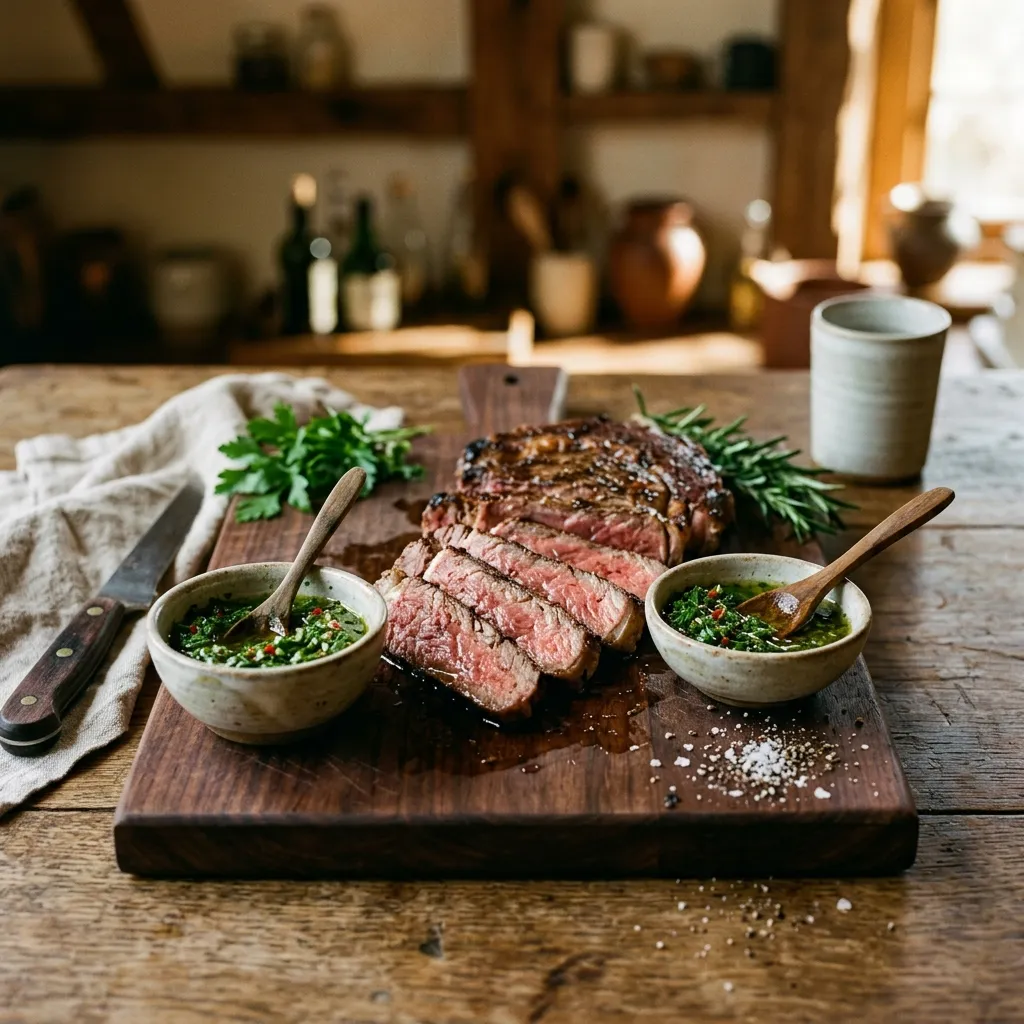
Tough Steak Rescue: 4 Fixes That Actually Work
The steak lands on the table. Everyone reaches for a knife. And then: rubber. You catch the glances, say nothing, keep cutting. Not every tough steak is a lost cause. And even if it is, you can still turn it into something the whole family will eat.
This post isn't about prevention. It's pure damage control. What do you do right now, today, this second?
Key Takeaways
- Tough steak almost always stems from one of three causes: wrong cut, wrong internal temperature, or the wrong way to slice it.
- Undercooked steak can be rescued in a 250°F oven. Overcooked steak can't be reversed, but it can be repurposed.
- Slicing thin against the grain cuts chewing effort in half, even when the meat has cooled.
- Repurposing ideas like tacos, stir-fry, or Bolognese save the evening for kids and adults alike.
Why Did Your Steak Turn Out Tough in the First Place?
Tough steak almost always has one of three causes: the wrong cut, too high or too low an internal temperature, or cut the wrong way. The good news: all three can be at least partially fixed after the fact if you know what you're dealing with.
Run your knife through the meat and look closely. If it feels hard to cut and the fibers pull apart like rubber bands, you're dealing with a lot of connective tissue. That means the cut simply wasn't suited for quick pan-searing. If the steak chews like dry, crumbly protein, it's overcooked. Fibers heated too high shrink and squeeze out liquid.
Not cooked quite long enough? Then the inside is still raw or gray-pink, and the steak springs back when you press it. That's the best-case scenario—it's fixable right now. Stayed in the pan too long? No amount of extra cooking will help. Time to repurpose.
Can a Tough Steak Actually Be Rescued?
Yes, often it can. An undercooked steak will come up to temperature gently in a 250°F oven in 10 to 15 minutes. Overcooked meat won't get juicy again—that's not possible—but with the right slicing technique against the grain and a fat-rich sauce (chimichurri, jus, or mustard butter), it becomes edible and acceptable to your family. For pieces under ¾ inch thick, finishing in a pan with low heat and frequent turning is more reliable than the oven, because oven heat cooks thin pieces from inside out too quickly. Whether and how well the rescue works depends heavily on whether the meat was undercooked or overcooked.
Check the internal temperature first if you have a meat thermometer handy. Under 130°F? Still too rare, and finishing is the right move. Over 160°F? The protein is already denatured and dried out. Repurposing is the better path, not more heat.
Honest expectations matter here: no trick on earth makes an overcooked steak juicy again. What you can do is cut the toughness down enough with slicing, sauce, and context so nobody at the table throws in the towel.
Finishing: How to Salvage What's Left
If the steak is still raw or gray-pink inside, you can bring it up to temperature in a 250°F oven without ruining the crust completely. Ten to fifteen minutes usually works, depending on thickness.
Here's how, step by step:
- Preheat the oven to 250°F, both racks.
- Place the steak on a rack over a baking sheet (not directly on the sheet—it'll steam).
- Insert a thermometer and wait for your target internal temperature.
- Then sear the top briefly (about 30 seconds) in a very hot pan if the crust got pale.
The pan alone won't work here: the surface burns before the inside cooks, turning a half-raw steak into a burnt, half-raw steak.
In FamFood data and feedback from hundreds of user recipes, we see the same pattern over and over: thin rump steaks under ¾ inch work worse in the oven because heat overcooks the inside too fast. Under ¾ inch, the pan with low heat and frequent turning is the more reliable choice. It's not an outlier—it shows up in nearly every piece of feedback on thin cuts.
Internal Temperature Targets at a Glance
Doneness | Internal Temp. | Description |
|---|---|---|
Rare | 120–125°F | Inside nearly raw, cool center |
Medium Rare | 129–135°F | Pink center, juicy |
Medium | 135–145°F | Faintly pink, firmer |
Medium Well | 150–160°F | Barely pink, noticeably firmer |
Well Done | 160°F+ | Fully cooked, no pink |
Source: Bundeszentrum für Ernährung (BZfE), guidelines for safe meat preparation.
What If the Steak Is Already Cold and Tough on the Plate?
Cold and tough means the protein has contracted further as it cooled. The fastest fix is slicing thin against the grain, paired with a sauce or rub that makes the meat flavorful again.
Slicing technique: Lay the steak down and look at which way the muscle fibers run. Then cut at exactly 90 degrees to that direction, in slices no more than ⅛ to 3/16 inch thick. This cuts through the fibers instead of leaving them long. When chewing, you'll have no more resistance than you would with a slice of ham.
Sauce as the lifeline: Fat-rich sauces work best because fat and acid together mask the sensation of dryness. Chimichurri (oil, parsley, garlic, vinegar) is the number one choice. Or make a quick pan sauce from the drippings, or melt mustard butter over the warm slices.
For families with kids: thin slices in a wrap or melted under cheese rarely get refused. If you call it "meat for wraps" instead of "steak," you usually win.
Repurposing a Tough Steak: 4 Ideas That Save Dinner
If finishing or slicing isn't enough, repurposing is your best bet. Tough, overcooked meat is excellent in tacos, stir-fries, sauces, or salads, where texture isn't the star anymore.
Idea 1: Strips in tacos or wraps. Cut the meat into thin strips, season with cumin and paprika. With enough cheese, guacamole, and salsa, the meat tastes completely different in a taco than as a standalone steak. Kids love this version because they can build their own.
Idea 2: Cubes in a broth-and-vegetable stew. Dice it into a pot with beef broth and vegetables (carrot, celery, onion), simmer for 20 to 25 minutes. The collagen that caused toughness during quick searing now breaks down slowly—according to the German Federal Ministry of Food and Agriculture (BMEL), collagen begins converting to gelatin only above 160°F over an extended period. The result isn't quite traditional stew, but it comes surprisingly close.
Idea 3: Slices on salad. Sliced thin as a topping on arugula with Parmesan and a lemon-mustard vinaigrette. The acid in the dressing does the work the sauce would. The meat becomes garnish, not the main event—and that's exactly what works.
Idea 4: Through a grinder as Bolognese. It sounds radical, but it's the most reliable fix for truly tough meat. Recipes like this are worth saving to your personal FamFood notes so you know exactly what to do next time.
How to Spot at the Butcher Which Cuts Might Turn Out Tough
Meat selection decides the outcome before you even turn on the heat. Cuts with lots of connective tissue, like brisket or chuck, will always be tough when seared quickly because collagen only softens above 160°F over time. That's not a cooking mistake—it's chemistry.
Supermarket steaks often come from cuts meant for braising because they're cheaper and look good on the package. The label says "braising steak" or "minute steak," but the meat comes from the chuck or neck.
Marbling is your quickest quality signal: fine white fat lines running through the meat mean the meat bathes in its own fat during searing. A well-marbled ribeye forgives more mistakes than a lean sirloin.
Steak Cuts at a Glance: Quick Sear or Long Braise?
Cut | Method | Why |
|---|---|---|
Tenderloin (Filet) | Quick sear | Low connective tissue, naturally tender |
Ribeye / Entrecôte | Quick sear | High marbling cushions toughness risk |
Sirloin (Hip) | Quick sear | Medium-fine texture, tender at correct temp. |
Rump steak | Quick sear | Good, but fat cap must sear too |
Flank steak | Quick sear + slice against grain | Coarse fiber, only works with technique |
Chuck / Shoulder | Braise | High collagen, softens only after 2+ hours |
Brisket | Braise | Classic for slow cooker and pot roast |
Shank (Ossobuco) | Braise | Collagen-rich, needs long cooking times |
Source: Stiftung Warentest, guide to meat quality and preparation.
The One Tool That Guards Against Tough Steak Most Reliably
A meat thermometer. Once you know the internal temperature, overcooked steak is off the table. A basic instant-read thermometer costs under $15 and eliminates the single most common mistake in home steak cooking.
A good instant-read shows temperature in under three seconds, has a thin probe (under 1⁄8 inch), and works with one hand. That's all you need.
The second worthwhile investment is a cast-iron skillet. Cast iron holds heat evenly and releases it evenly. Thinner stainless steel or nonstick pans have hot spots—meaning one part of the steak cooks faster than the other. If you want to know which pan fits your kitchen, check out the family skillet guide at FamFood.
Frequently Asked Questions
Can I tenderize a tough steak with marinade?
A marinade with acid (vinegar, lemon, buttermilk) can tenderize raw meat before cooking because it breaks down surface protein structures. On already-cooked, tough steak, it does almost nothing: acid barely penetrates cooled, cooked meat. Better than marinade is slicing thin against the grain combined with a fat-rich sauce.
Why does my steak always come out tough even when I sear it fast?
The most common mistake in quick-searing without a thermometer is pulling it off the heat too early—an internal temperature below 120°F, where the meat is still cold and firm inside. The second most common: the cut simply isn't suited for fast searing. Chuck, brisket, and shank will always be tough no matter how briefly you sear them. For a detailed breakdown of the most common cooking mistakes, check FamFood.
How long do I need to braise a tough steak to make it tender?
It depends on the cut. A tough braising steak from the chuck needs at least 1.5 to 2 hours in a closed pot with liquid at 190–210°F before the collagen turns to gelatin. A slightly overcooked rump steak can't be fixed by braising because the muscle protein is already dried out. Braising works on collagen-rich meat, not overcooked muscle fiber.
Does salting before searing make steak tougher or more tender?
More tender, if you salt early enough. Salt pulls moisture from the meat at first (after 5 to 10 minutes you'll see liquid on the surface), but after 40 to 45 minutes that liquid gets reabsorbed and makes the meat juicier. Salting and searing immediately is the worst option: moisture stays on the surface and prevents a good crust. Either salt 45 minutes ahead or salt right in the pan.
About FamFood: We're a small team of cooking enthusiasts and parents who wrestle with the same kitchen questions you do every day. FamFood is our attempt to gather family recipes and cooking knowledge in one place that's actually useful, not just pretty.