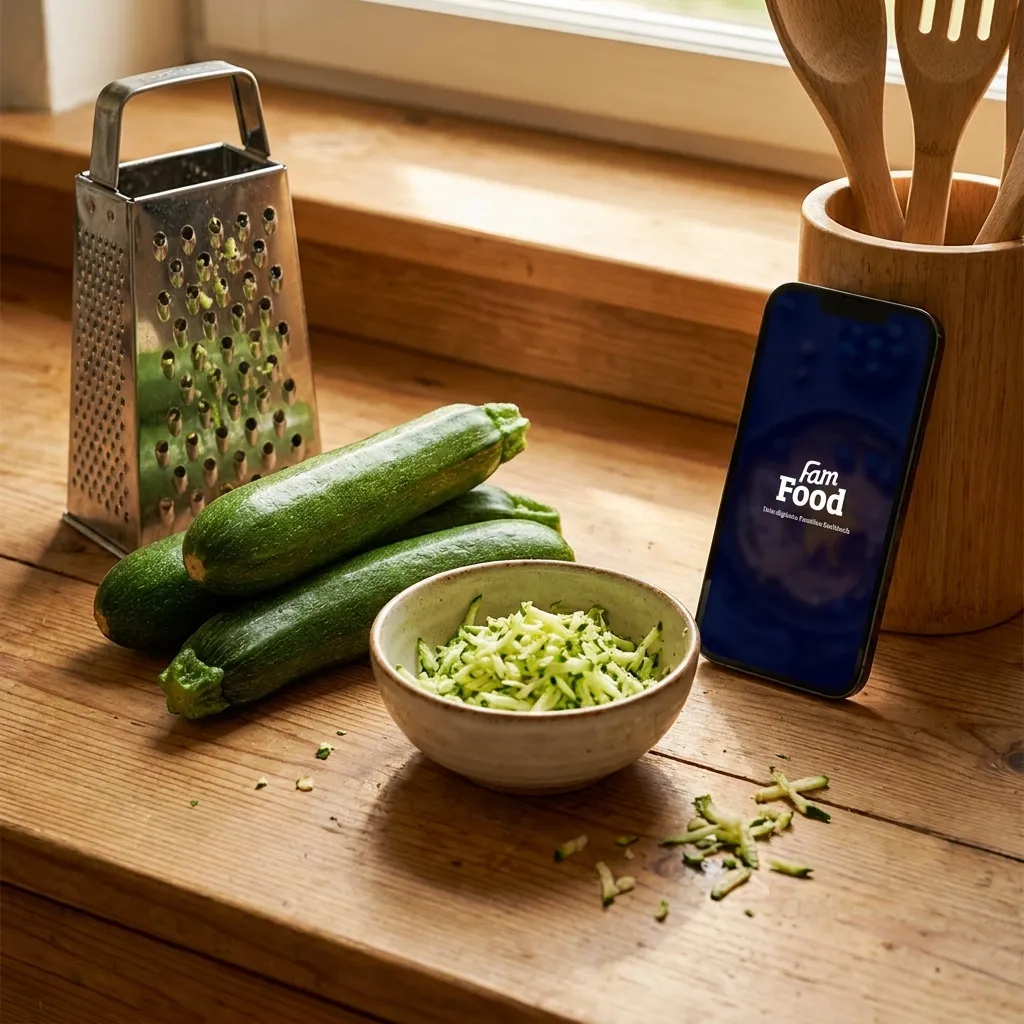
Zucchini for Kids: Get Everyone to Eat It
You're standing in the kitchen on an evening, the zucchini sits on the counter, and the kids are already shaking their heads. For the third time this week. The vegetable ends up unused in the fridge, rots away, money and sanity lost. And tonight, when everyone's hungry at the table, the question repeats itself: does the zucchini get another chance, or do you quietly throw it away?
Many parents think in that moment: my child just doesn't like zucchini, that's just how it is.
But is there a way to prepare it so kids actually eat zucchini, or is this vegetable simply a lost cause for families?
Key Takeaways
- Kids reject zucchini because of texture and appearance, not taste (BZfE, 2023).
- Grated into batter or crispy from the oven are the two most kid-friendly preparations.
- A medium zucchini keeps 5-7 days in the fridge. Grated and frozen, it lasts up to 6 months.
- 8-15 neutral food offerings are enough for kids to accept a new vegetable, according to BMEL recommendations.
- Two fixed zucchini days per week prevent harvest chaos and planning paralysis.
Why does zucchini end up unused in the fridge for so many families?
Kids reject zucchini because of texture and appearance, not taste. Change the form, change the acceptance.
That's the core of it. According to the German Federal Centre for Nutrition (BZfE), texture and appearance are the most common reasons kids under 10 reject vegetables, even before taste. The steamed version, which is how most German families prepare it, emphasizes exactly the mushiness that kids instinctively avoid. The food isn't the problem. The form is.
Then there's the seasonal problem. From July to September, gardens and farmers' markets deliver more zucchini than any family can use in a week. Without a clear strategy for using it, parents push the zucchini to the back of the fridge until it softens and ends up in the bin.
The third factor is recipe fatigue. "Steamed as a side dish" is the most common fate of zucchini in German families, and simultaneously the version kids most consistently refuse. If you only know that one format, you give up eventually.
All three causes have the same solution, but which preparation method is it, and why do kids actually like it?
Which preparation method do kids tolerate best?
Grated, baked, or hidden in batter: kids tolerate zucchini best when the texture either disappears completely (in muffins, pancakes, fritters) or becomes very crispy (roasted in the oven with Parmesan). The soft-steamed version is the most commonly rejected form because it emphasizes exactly the mushiness kids instinctively avoid.
Preparation | Texture Result | Kid Acceptance | Effort |
|---|---|---|---|
Steamed | Soft, wet | Low | Very low |
Pan-fried | Lightly browned, firm | Medium | Low |
Baked (oven) | Crispy outside, soft inside | High | Medium |
Grated in batter | Invisible | Very high | Medium |
The strategy also depends on the child. With very picky eaters, hiding it is the quickest entry point. With curious kids, it's worth trying the open version with oven sticks earlier, because arranging the food together already does half the convincing work.
Oven-baked zucchini sticks: the basic recipe
Cut zucchini into finger-thick sticks. Mix in a bowl with olive oil, grated Parmesan, a pinch of salt, and paprika powder. Spread on a baking sheet with space between them so they roast instead of steam. Bake at 220°C with fan for 18-22 minutes until the edges are golden. Serve with a dip of your choice: ketchup, tzatziki, or plain yogurt with lemon. Done.
Grated in batter: pancakes, muffins, fritters
The golden rule: always salt the grated zucchini lightly first and let it sit for 10 minutes, then squeeze it out. This keeps excess moisture out of the batter. 150g of squeezed zucchini fits easily into a standard pancake batter for 4 people without anyone tasting or seeing the vegetable.
Now comes the other problem: what do you do when the harvest is bigger than one dinner, and before the vegetable goes soft?
How do you use up a large amount of zucchini before it goes bad?
A medium zucchini (about 250g) keeps in the fridge for about 5-7 days. If you have more than the family can eat in a week, freezing (grated, portioned) or quick pickling are your best bets. Both methods take under 15 minutes and save the entire harvest.
Method | Shelf Life | Best Used For | Effort |
|---|---|---|---|
Fridge (whole) | 5-7 days | All fresh recipes | None |
Frozen (grated) | Up to 6 months | Batters, fritters, soups | 10 min |
Quick-pickled (carpaccio) | 4 days | Side dish, antipasti | 12 min |
Freezing done right: Grate zucchini, portion into 150g amounts, put into freezer bags, lay flat. Use straight from the freezer in pancake batter or soup, no thawing needed.
Quick pickling: Use a vegetable peeler to shave zucchini into thin strips. Mix with olive oil, white wine vinegar, salt, garlic, and fresh herbs. Let sit for 30 minutes and you have zucchini carpaccio that keeps 4 days in the fridge and works as a quick side dish through the week.
The seasonal calendar helps with planning: zucchini season is July to September, peaking in August. If you know that, you buy or harvest deliberately in bulk and freeze in August instead of having empty hands in October.
If you want to cook seasonally and find out which vegetables are best when, check out Cooking Seasonally: Your Year-Round Guide on FamFood.
Stockpiling is one thing, but which recipes can you actually manage when it's Monday at 6 p.m. and nobody has time?
Which 5-ingredient recipes can families actually pull off on a weeknight?
The most commonly cooked zucchini dishes in families with kids share one thing: maximum 5-6 ingredients and under 25 minutes prep time. Anything longer or with more components disappears from the weekly routine after the second try. That's not a motivation problem, it's a reality problem.
In FamFood testing, we've seen that recipes with more than 6 ingredients do get cooked on weekends but are consistently skipped during the week. The barrier isn't cooking itself, it's deciding and shopping.
Zucchini pasta: the quick recipe
Ingredients (4 servings): 500g pasta, 2 medium zucchini, 1 can diced tomatoes, 2 tbsp olive oil, Parmesan for serving.
Dice or grate zucchini. Sauté in olive oil for 5 minutes, add tomatoes, simmer 10 minutes. Meanwhile cook pasta. Mix everything together, add Parmesan on top. From first cut to table: 20 minutes.
The trick: if you grate the zucchini finely instead of dicing it, you automatically make the dish more accessible for picky eaters without having to cook two versions.
Zucchini pancakes: basic recipe and variations
Basic recipe (about 8 pancakes): 2 eggs, 150ml milk, 100g flour, 150g grated and squeezed zucchini, salt. Mix everything, cook in a pan with a little oil until golden brown on both sides.
Variations: add crumbled feta to the batter for more protein. Add grated carrot for color. Add applesauce instead of dip for kids who like it sweeter. The batter keeps in the fridge for a day, making it perfect for Sunday prep to get Monday's lunchbox ready.
For more ideas about what actually makes it to the table on weeknights, check out Creative Leftover Ideas: 9 That Actually Work on FamFood.
But what if the child doesn't just complain, but wants to cook too, and whether that even helps is a question almost everyone gets wrong?
Can kids actually help cook zucchini, and if so how?
Yes, and the effect on acceptance is measurable. Kids who have cooked a dish try it significantly more often than kids who were just served it, according to a University of Leeds study. Zucchini offers ideal entry-level tasks: the vegetable is large, robust, safe to eat raw, and can be grated safely with a child's grater.
- Age 3+: Wash zucchini, put it in the bowl, stir the batter.
- Age 6+: Grate with a box grater (no mandoline), shape fritters, help with serving.
- Age 9+: Cut sticks, set the oven timer, serve the finished dish yourself.
What we regularly observe in the FamFood community: the moment a child shapes their own fritter, they eat it with a naturalness that erases every previous table protest. Taking responsibility at the stove changes the dinner table dynamic.
And if even that doesn't work because really nobody will even try, then what?
What if absolutely nobody wants to eat the zucchini?
Total rejection isn't failure, it's a signal to change how you present it, not to give up on the vegetable. Three strategies work even with very picky eaters: hiding it in batter, acceptance through repetition (8-15 contacts according to BMEL recommendations for food acceptance in children), and combining it with a favorite flavor.
Zucchini-chocolate muffins sound bold but work: add 150g grated zucchini to a standard chocolate batter (the squeezed moisture makes the muffins juicy). No child tastes the vegetable, but everyone gets fiber and vitamin C.
Repetition without pressure: Offer zucchini regularly and neutrally, without comment, without expectation. No "just try one bite." Just leave it on the table. After the eighth or twelfth contact, the hesitation drops noticeably.
Favorite dip as a bridge: Put ketchup, tzatziki, or cheese dip next to the zucchini sticks. The dip lowers the barrier to that first try, the appeal comes from the dip, not the vegetable.
A warning: if hiding becomes the permanent strategy, the child never learns what zucchini actually looks and tastes like. At a certain age, open communication ("this is zucchini, it makes the batter juicy") works better than permanent disguise.
That leaves the question of how all this fits into a week without you having to decide something new every evening.
How do you actually plan zucchini into your family's week?
One simple principle helps: schedule zucchini on two fixed weekdays, once as the main component, once as a side or hidden in batter. This prevents harvest overwhelm and planning paralysis.
Concretely: Monday zucchini pasta (20 minutes, 4 ingredients), Thursday zucchini pancakes (batter mixed the night before). If you use a garden or farmers' market, freeze any extra on the weekend so you always have stock through the week.
The meal-planning feature on FamFood lets you bookmark seasonal recipes for the week ahead. That way the zucchini won't sit unused on your counter anymore because you already know where it's going on Tuesday.
Two fixed days sounds simple. But what exactly gets on the table those days and how you never forget your stockpile for it isn't quite what you'd expect.
Frequently asked questions about zucchini for the family
How long does zucchini keep fresh in the fridge?
A whole, uncut zucchini keeps 5-7 days in the fridge. Once cut, use it within 2-3 days or wrap it in plastic wrap. At room temperature it lasts only 2-3 days before it softens.
Can kids eat raw zucchini?
Yes. Raw zucchini is safe and well-tolerated. For kids, raw zucchini works best finely grated as a salad side or with a dip as a snack. The texture is firmer than cooked and some kids prefer exactly that.
How do you freeze zucchini properly so it doesn't get mushy?
Always grate zucchini before freezing, never whole or in pieces. Freeze grated portions of 150g each. Use straight from the freezer in hot pans, batters, or soups. This keeps the consistency good and avoids moisture problems when thawing.
Which zucchini recipes work for very picky eaters?
Zucchini-chocolate muffins, zucchini pancakes, and zucchini pasta with finely grated zucchini are the most reliable entry recipes. They all share one thing: the zucchini is either invisible or so changed by crispiness that the usual resistance doesn't kick in.
When is zucchini in season in Germany?
Zucchini season in Germany runs from June to October, peaking in July and August. During this time, zucchini is affordable, locally available, and tastes best. If you freeze in August, you'll have supply through winter.
About FamFood
FamFood is the digital family cookbook for everyday German life. We collect what actually works: on busy weekdays, with picky kids, with seasonal gluts from the garden. No perfection, just practice.




